Measuring Anisotropic Moisture Expansion across Packaging Grades
Hygroexpansion coefficients quantify cross direction sheet distortion under humidity swings, preventing misregistration and box score cracking during converting.


Swell

Directional Strain Mechanics
Cellulose fibrils expand radially as water molecules occupy internal sorption sites. Because the crystalline core of native cellulose stays impermeable to liquid water and vapor, sorption occurs only within amorphous cellulose domains and accessible hemicellulose matrices. Hydroxyl groups along the polymer chains form transient hydrogen bonds with incoming moisture, forcing adjacent microfibrils apart.
Since wood fibres align mainly with the travel of the paper machine wire, this microscopic radial expansion shows up macroscopically as directional movement across the trimmed web.
This dimensional movement shows strong anisotropy between sheet directions. Machine-direction alignment limits linear dimensional change along the longitudinal fibre axis, where covalent carbon-to-carbon bonds control structural response. In contrast, the cross direction has fewer aligned backbones and relies heavily on inter-fibre bonding networks.
As a result, cross-direction hygroexpansion routinely runs two to five times higher than machine-direction expansion, depending on wet-end draw, refining intensity, and furnish composition.
Cellulose absorbs ambient moisture rapidly.
Converting operations expose paperboard to sudden humidity changes during printing, coating, laminating, and die-cutting. An unexpected shift of twenty percent relative humidity changes blank dimensions enough to throw off mechanical registration, skew rotary creasing profiles, and cause post-press curl that jams high-speed folding equipment. Measuring hygroexpansion coefficients gives converters the baseline engineering data needed to calculate dimensional tolerances for different plant environments.
- Feed Jams occur when hygral growth expands corrugated or solid board blanks beyond the physical clearance of downstream hopper guides and transport belts.
- Register Drift degrades multicolour offset and flexographic printing alignments when moisture from aqueous ink formulations or dampening solutions expands the sheet between print stations.
- Scoreline Fracture emerges when dry folding boxboard rapidly absorbs moisture post-scoring, producing uneven localized swelling that splits the tensioned outer liner during folder-gluer erection.
- Flute Telegraphing manifests on laminated litho-laminates as moisture disparities between the liner and corrugated medium induce localized contraction ripples across the finished exterior face.
Litho-laminated flute telegraphing develops whenever the outer liner hygroexpansion coefficient deviates from the corrugating medium by more than 0.04 percent per percentage moisture change.
Hygroexpansion is standardly expressed as the ratio of linear expansion to baseline length per unit change in sheet moisture content or relative humidity. Converting calculations rely on the moisture-based beta coefficient ~ defined as percentage linear strain divided by percentage moisture shift. When reporting values against relative humidity, equilibrium conditions must be explicitly stated, since sorption isotherms vary considerably across pulping types.

Hysteresis

Moisture Sorption Dynamics
Equilibrium moisture content in paperboard fibres follows different paths during adsorption and desorption. When bone-dry stock absorbs atmospheric moisture in a humid room, its equilibrium moisture content at fifty percent relative humidity sits roughly one to two percentage points lower than when the same stock desorbs moisture from saturation. This hysteresis loop stems from molecular reorganization in the cellulose fibrils: during desorption, hydroxyl groups bond with adjacent fibril surfaces, creating crystalline contacts that resist water ingress in later adsorption cycles.
Dimensional expansion tracks this thermodynamic hysteresis loop. A folding boxboard sample exposed to a relative humidity rise from thirty to eighty percent follows an adsorption path that shows smaller incremental expansion per percentage moisture gain than the contraction measured during subsequent drying. The sheet’s absolute dimensions never return to their original baseline after a full adsorption-desorption cycle.
Virgin kraft fibres release internal stresses locked into the web during machine drying, resulting in permanent, irreversible shrinkage after their first complete humidity cycle.
Reaching equilibrium takes several hours.
Paperboard samples conditioned under ISO 187 at 23 degrees Celsius and 50 percent relative humidity achieve steady-state dimensional equilibrium only after twelve hours of uninterrupted air circulation.
This irreversible component makes process verification tricky on commercial converting lines. Mill certificates quoting hygroexpansion data often fail to state whether numbers reflect first-pass adsorption, stabilized cyclic desorption, or an average slope. Virgin grades show marked first-pass shrinkage as machine drying strains relax, while recycled grades release less dried-in strain because the fibres have already gone through repeated wetting and drying cycles.
The exact microstructural threshold where stress relaxation turns into permanent plastic collapse of the cell wall across different refining levels remains unresolved in papermaking physics.

Rig

Contact Extensometry and Optical Metrology
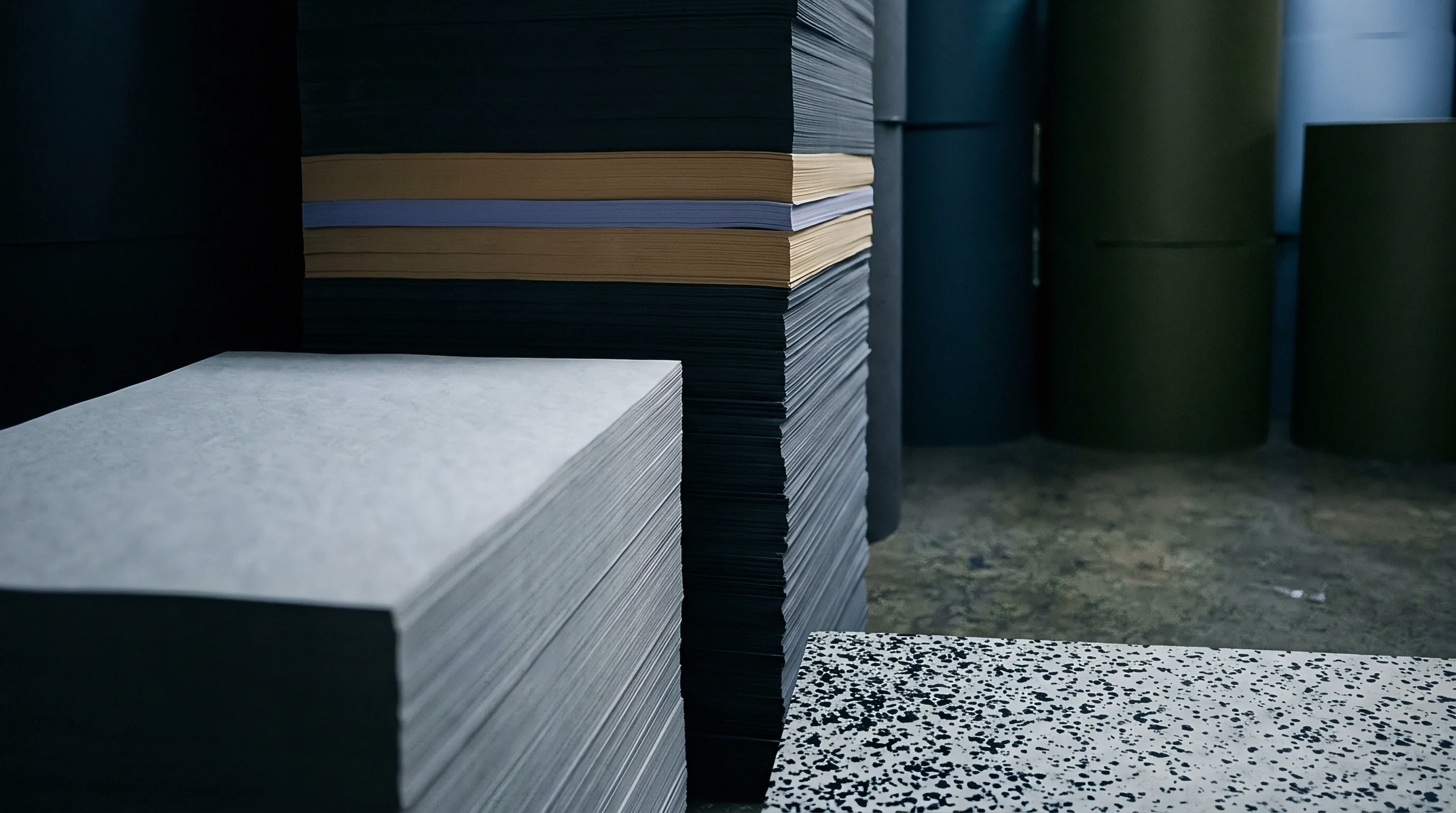
Standard test protocols for determining the hygroexpansion coefficient follow ISO 5635, DIN 53121, or TAPPI T 556, using mechanical contact extensometers or non-contact optical image correlation systems. Mechanical setups clamp a conditioned test strip ~ typically 100 to 150 millimetres long ~ between a fixed grip and an adjustable displacement transducer inside a controlled environmental chamber. The assembly applies a small seating tension between 0.05 and 0.20 Newtons per millimetre of sample width to remove slack without causing mechanical creep as the web moistens.
Optical image correlation avoids clamping artifacts entirely. Digital cameras track high-contrast speckle patterns applied to the board surface through a glass window in the environmental chamber. As temperature and humidity move through programmed setpoints, image processing software maps displacement vectors across thousands of surface facets.
This non-contact approach captures localized strain variations, revealing edge-to-centre hygroexpansion gradients caused by uneven wet-end draws across the mill deckle.
Can Variable Humidity Chambers Simulate High-Speed Converting?
Dynamic sorption chambers track environmental shifts over seconds rather than the hours required by static equilibrium methods. Fast moisture delivery systems inject saturated vapor straight into miniature analysis cells, allowing the instrument to record transient expansion curves that mirror web movement through an offset press or aqueous coating head. Because static methods measure only final steady-state dimensions, they mask transient hygral surges that cause sheet misfeeds during production runs.
A minimal holding tension prevents paperboard specimen buckling during environmental chamber cycling without inducing viscoelastic tensile deformation.
- Specimen Preparation cut twelve test strips along the machine direction and twelve along the cross direction to exactly 15.0 millimetres width using a dual-blade precision sample cutter.
- Equilibration Baseline pre-condition strips at 23.0 degrees Celsius and 30.0 percent relative humidity inside an environmental chamber for six hours until mass stabilizes within 0.02 percent over sixty minutes.
- Initial Gauge Recording clamp the sample in the displacement rig under 0.10 Newtons per millimetre seating tension and zero the linear variable differential transformer.
- Humidity Ramping advance chamber relative humidity from 30.0 percent to 80.0 percent at a controlled rate of 0.5 percent per minute, holding peak humidity for four hours.
- Dimensional Logging record specimen displacement continuously at intervals of ten seconds, tracking both the transient sorption curve and the final steady-state expansion dimension.
- Desorption Recovery drop the relative humidity back to 30.0 percent at 0.5 percent per minute, holding for four hours to measure permanent non-recoverable hygral set.
A mill specification citing ISO 5635 compliance without explicitly stating the initial conditioning path and applied seating tension fails to define an enforceable delivery threshold, leaving room to dispute converting rejections caused by out-of-spec sheet expansion.


Furnish
Substrate Morphology and Chemical Composition
Fibre morphology dictates both the absolute hygroexpansion coefficient and the ratio of cross-direction to machine-direction expansion. Virgin chemical pulps, like solid bleached sulfate (SBS), contain long softwood and hardwood fibres with intact cell walls. Chemical delignification exposes substantial amorphous cellulose and hemicellulose surface area, creating abundant sites for hydrogen bonding with atmospheric vapor.
While SBS board expands significantly across the sheet, its uniform formation and balanced fibre orientation yield predictable expansion vectors.
Mechanical pulps used in folding boxboard (FBB) cores behave differently. The stone groundwood or thermo-mechanical pulp middle plies contain substantial residual lignin, a hydrophobic cross-linked polymer encasing individual cellulose microfibrils. Lignin shields amorphous cellulose domains from water molecules, dampening the intrinsic hygroexpansion of individual mechanical fibres.
These fibres are less flexible, forming fewer inter-fibre bonds and higher bulk. The porous network absorbs water vapor without translating all internal microfibril expansion into macroscopic sheet movement.
Virgin kraft maintains higher tensile stiffness.
Do Recycled Packaging Fibres Exhibit Higher Hygroexpansion?
Recycled fibres undergo hornification during earlier drying cycles, collapsing internal cell wall pores irreversibly. This collapse reduces the overall water sorption capacity of secondary fibres compared to virgin chemical pulp. White lined chipboard (WLC) and testliner grades take up less water per gram of fibre at a given relative humidity than virgin SBS or unbleached kraftliner.
Even so, white lined chipboard shows equal or greater macroscopic hygroexpansion than virgin board because of mechanical processing factors.
Manufacturing recycled linerboard and cartonboard requires intensive secondary refining to rebuild the bonding area lost to hornification. This refining shortens fibres, creates micro-compressions, and increases sheet density. The resulting dense, tightly bonded network transfers swelling directly between adjacent fibres, leaving little internal void space to cushion the movement.
Higher mineral filler loadings in recycled fluting and chipboard offset this somewhat, since calcium carbonate and clay particles stay dimensionally inert when humidity fluctuates.
Cross-direction dimensional shifts dominate sheet movement.
| Grade Nomenclature | Furnish Construction | Grammage Range (g/m²) | MD Hygroexpansion Coefficient (%/Δ%RH) | CD Hygroexpansion Coefficient (%/Δ%RH) | Anisotropy Ratio (CD/MD) |
|---|---|---|---|---|---|
| Solid Bleached Sulfate (SBS) | 100% Virgin Bleached Chemical | 220 – 400 | 0.005 – 0.009 | 0.022 – 0.034 | 3.6 – 4.4 |
| Folding Boxboard (FBB) | Bleached Chemical Outer, Mechanical Core | 190 – 380 | 0.006 – 0.011 | 0.020 – 0.030 | 2.7 – 3.3 |
| White Lined Chipboard (WLC) | Recycled Newsprint, Office Waste, Kraft | 250 – 450 | 0.008 – 0.014 | 0.028 – 0.042 | 3.0 – 3.5 |
| Unbleached Kraftliner | Virgin Unbleached Softwood Kraft | 125 – 400 | 0.004 – 0.008 | 0.018 – 0.026 | 3.2 – 4.5 |
| Testliner 2 / 3 | 100% Recycled Corrugated Containers | 120 – 200 | 0.007 – 0.012 | 0.024 – 0.036 | 3.0 – 3.4 |
| Semi-Chemical Fluting | Virgin Neutral Sulfite Semi-Chemical | 110 – 180 | 0.005 – 0.009 | 0.016 – 0.024 | 2.6 – 3.2 |
Sizing treatments resist liquid water ingress without stopping vapor sorption. A hard-sized linerboard with a sixty-second Cobb value below 25 grams per square metre absorbs surface liquid very slowly. Yet placed in an atmosphere at 85 percent relative humidity, that same board reaches vapor sorption equilibrium at the same rate and shows the exact same total hygroexpansion as an unsized board of matching furnish.
Internal sizing agents like alkyl ketene dimer (AKD) or alkenyl succinic anhydride (ASA) coat fibril surfaces with hydrophobic chains that repel liquid drops, but leave gaseous vapor free to enter the porous cell wall.
Dense multi-ply sheets expand more through their thickness than across their width.
Coating layers alter the rate of moisture transfer without changing final steady-state hygroexpansion. Mineral coatings made of kaolin clay, calcium carbonate, and styrene-butadiene latex act as partial physical barriers against vapor diffusion. A double-coated folding boxboard exposed to a sudden humidity spike in an unconditioned pressroom shows delayed hygroexpansion compared to an uncoated kraft sheet.
Eventually, the coated board expands to its full equilibrium dimension as moisture diffuses through the coating matrix and unsealed edges. Uneven expansion between a barrier-coated top side and an uncoated reverse side creates severe curling forces across the sheet.
Board with higher internal bond strength expands more evenly across converting dies.

Register

Print Registration and Die-Cutting Tolerances
Multi-station sheetfed offset presses add moisture on every impression stroke through the dampening system. Aqueous fountain solution transfers from lithographic plates to the blanket and penetrates the uncoated back or lightly coated face of the board. As the sheet moves between print stations, the cross direction expands incrementally.
In an eight-color press run, this cumulative swelling forces operators to adjust cylinder packing or apply software plate compensation along the print length to counteract register drift across downstream ink units.
Digital presses introduce thermal gradients that complicate hygral behavior. High-output toner engines and high-speed aqueous inkjet webs expose paperboard to radiant drying temperatures over 100 degrees Celsius, driving moisture out of the sheet. The substrate contracts rapidly across the width, only to re-absorb room moisture on the delivery pallet.
If offline die-cutting happens before the pallet reaches equilibrium, blanks cut to exact tolerances expand in storage and jam automated cartoning equipment.
Off-grain sheeting multiplies register errors during printing.
| Converting Operation | Standard Tolerance Window (mm) | Allowable ΔRH Range (±% RH) | SBS CD Error at +20% ΔRH (mm) | WLC CD Error at +20% ΔRH (mm) |
|---|---|---|---|---|
| Multi-pass Sheetfed Offset Printing | ± 0.05 | ± 2.5 | 0.448 | 0.560 |
| Rotary Foil Stamping | ± 0.10 | ± 4.0 | 0.448 | 0.560 |
| Flatbed Die-Cutting and Creasing | ± 0.20 | ± 8.0 | 0.448 | 0.560 |
| High-Speed Window Patching | ± 0.35 | ± 15.0 | 0.448 | 0.560 |
| Folder-Gluer Automatic Erection | ± 0.50 | ± 22.0 | 0.448 | 0.560 |
To evaluate a production run, consider an 800-millimetre wide parent sheet of 300 g/m² white lined chipboard with a published cross-direction hygroexpansion coefficient of 0.035 percent per percentage relative humidity. An uncontrolled humidity swing from 45 percent to 65 percent relative humidity represents a shift of 20 percentage points. Multiplying the width by the coefficient and humidity shift yields a cross-direction expansion calculation: 800 millimetres times 0.00035 times 20 equals 5.60 millimetres per metre, producing an absolute width growth of 4.48 millimetres on the press bed.
This shift exceeds the allowable multi-pass printing tolerance by a factor of eight.
- Web Direction Alignment verify that carton blank long dimensions align with the machine direction, restricting high cross direction expansion to narrower panel widths.
- Pallet Moisture Equivalence inspect delivered substrate moisture with an insertion sword hygrometer to ensure pallet relative humidity sits within five percent of press hall ambient air.
- Barrier Wrap Integrity maintain poly-stretch packaging around raw board stacks until sheets attain full thermal equilibrium with pressroom temperatures.
- Die Layout Compensation adjust rule-to-rule dimensions on laser-cut flatbed steel dies to compensate for expected equilibrium expansion between cutting and erection.
Failing to match board hygroexpansion values with plant climate controls leaves carton blanks that exceed downstream blister-sealing and cartoner-magazine clearances, shutting down packaging lines and scrapping entire production runs.

Exposure
Procurement Specifications and Commercial Remediation
Technical data sheets from paperboard mills routinely omit anisotropic hygroexpansion coefficients, offering generic tensile stiffness, Scott bond, or water absorption values instead. A sourcing buyer negotiating large board contracts faces substantial financial exposure if humidity swings in maritime transit or converter storage cause dimensional distortion. Supply agreements for grades destined for tight-tolerance printing and forming should set hygroexpansion thresholds alongside standard grammage, caliper, and Cobb metrics.
Quality disputes often stall when converters cannot separate material variability from environmental drift. If a printing plant runs at 35 percent relative humidity during winter heating and 70 percent in summer, paperboard will distort regardless of furnish quality. Enforceable supply agreements bind both parties to specific operational limits: the mill guarantees a defined beta hygroexpansion range verified under ISO 5635, while the converter provides certified logs proving pressroom conditions stayed within agreed bounds.
Pallet stretch wrap slows moisture absorption.
Unexpected dimensional deformation often stems from converter pressroom climate variations rather than furnish or web-tension differences across the paper machine deckle.