Predicting Long Term Moisture Creep and Compression Collapse in Stratified Packaging Board Furnishes
Dynamic moisture creep reduces corrugated compression strength up to 92 percent, requiring furnish-specific derating beyond standard static McKee formulas.

Stack
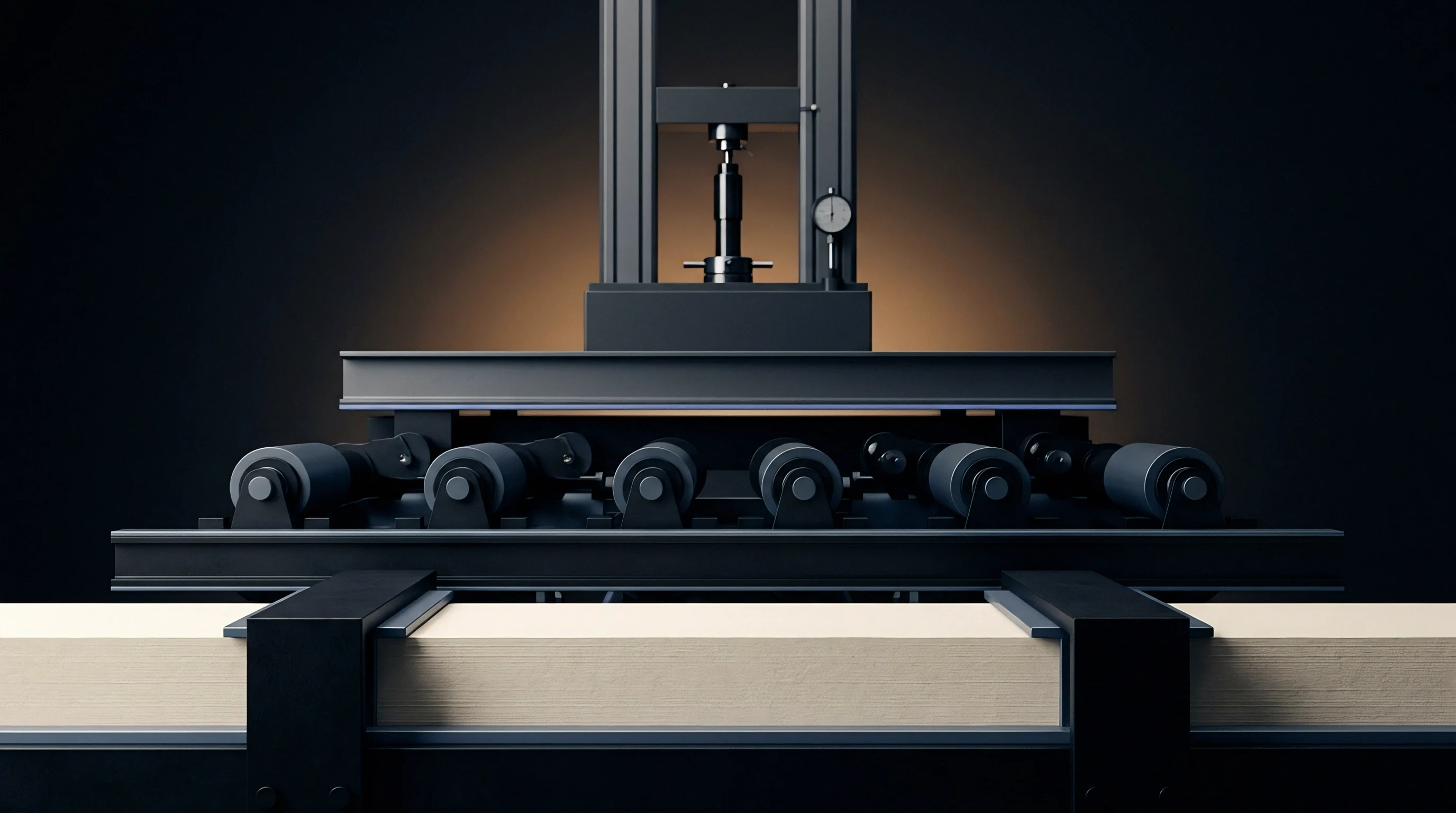
Box compression strength declines under sustained static loading, and the rate of that decline accelerates when relative humidity cycles between day and night storage conditions. Corrugated containers engineered to a static top-load capacity of 4,000 N often fail under 1,600 N after forty days in an unconditioned warehouse. The loss is mechanistic, predictable, and traceable directly to the furnish architecture of the constituent containerboard liners and fluting.
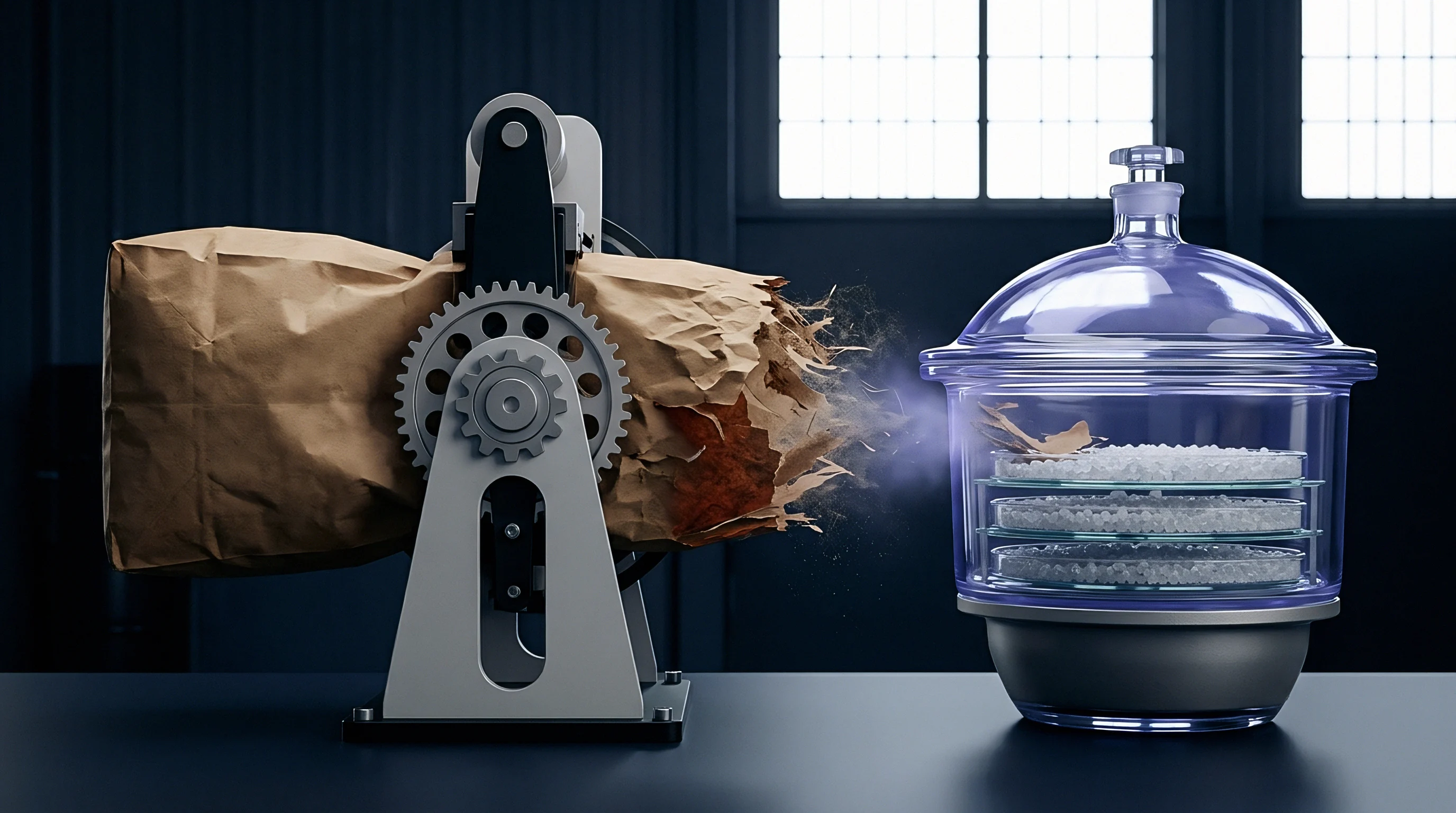
The physical mechanism driving this premature failure is mechano-sorptive creep. Under constant dead-weight loading, transient sorption cycles break and reform transient hydrogen bonds within the amorphous hemicellulose-lignin matrix of the wood pulp fibres. Each cycle of moisture adsorption and desorption slips the load-bearing microfibrils permanently, inducing cumulative strain at rates four to ten times higher than those observed under constant high humidity.
Predicting this collapse requires looking beyond the static box compression test (BCT) governed by TAPPI T 804 or ISO 12048. It demands an evaluation of the short-span compression test (SCT) under ISO 9895, the ring crush test (RCT) under TAPPI T 822, and the transverse moisture-expansion characteristics of each individual ply within multi-ply furnish constructions. Stratified containerboards, comprising multi-ply linerboards produced on multi-fourdrinier or gap-forming paper machines, segregate different fibre morphologies across their thickness.
A typical three-ply linerboard places virgin unbleached softwood kraft pulp on the outer facets to absorb flexural tensile and compressive stresses, while running high-yield semi-chemical pulp or recycled old corrugated container (OCC) furnish in the central core to build bulk and bending stiffness cheaply.
A multi-ply linerboard loses structural stability when differential hygroscopic expansion between adjacent plies generates interfacial shear stresses that exceed internal bond strength.
When relative humidity oscillates between 50 percent and 90 percent at 23 degrees Celsius, these stratified plies expand and contract at unequal rates. The outer softwood plies, rich in cellulose microfibrils aligned along the machine direction, exhibit a low hygroexpansive coefficient. The recycled core plies, rich in hornified fibres, fine fractions, and residual hemicelluloses, absorb water aggressively and swell extensively in the cross-machine and thickness directions.
The resulting internal shear stress promotes ply delamination, micro-buckling of the fluting, and rapid creep rupture long before the static safety factor would suggest. Packaging engineers who rely solely on standard McKee formulas run blind to this transient physical dynamic.

Furnish
Wood fibres behave anisotropically under hygroscopic exposure. Virgin unbleached kraft softwood fibres, derived from pinus taeda or picea abies via kraft pulping to a kappa number between 80 and 100, retain long fibre lengths of 2.2 to 3.2 mm. These fibres display intact crystalline cellulose cores with high intrinsic elastic moduli, typically 15 to 40 GPa along the fibre axis.
Conversely, recycled OCC furnish contains fibre populations subjected to multiple drying and rewetting cycles. These recycled fibres suffer from hornification, an irreversible structural collapse of the cell wall pore structure and internal delamination of the S2 layer. Hornified fibres possess reduced swelling capacity, weakened fibre-fibre contact area, and fractured cell walls that lower individual fibre axial compression resistance.
Semi-chemical pulps, pulped with neutral sulphite or sodium carbonate to yields of 75 to 82 percent, retain high proportions of lignin (15 to 20 percent) and hemicellulose (18 to 22 percent). Lignin acts as a hydrophobic cross-linking agent under static dry conditions, but amorphous hemicelluloses, primarily glucuronoxylans and glucomannans, represent the most hygroscopic constituent of the fibre wall. In high moisture environments, these hemicelluloses adsorb water molecules through hydrogen bonding, plasticizing the polymer matrix and lowering its glass transition temperature below ambient warehouse temperatures.
The mechanical response shifts from elastic to viscoelastic, initiating flow under load.
The stratification of these distinct fibre types within a single linerboard or fluting medium dictates the composite board’s rheology. Multi-ply machine headboxes deposit these distinct pulps sequentially onto the forming wire. A heavy linerboard of 300 g/m² basis weight frequently runs a 60 g/m² virgin top ply for printability and scuff resistance, an intermediate 180 g/m² core of 100 percent secondary OCC fibre combined with starch additives for bulk, and a 60 g/m² bottom ply of mixed virgin and recycled furnish.
Each ply possesses a unique equilibrium moisture sorption isotherm under ISO 187 conditioning, a unique short-span compression strength, and a distinct elastic creep compliance.
| Furnish Type | Basis Weight (g/m²) | Equilibrium Moisture at 50% RH (%) | Equilibrium Moisture at 85% RH (%) | SCT MD at 50% RH (kN/m) | SCT MD at 85% RH (kN/m) | Cross Direction Hygroexpansion Coefficient (strain/ΔRH) |
|---|---|---|---|---|---|---|
| Virgin Softwood Kraft | 125 | 6.8 | 11.2 | 3.85 | 2.45 | 0.00012 |
| Semi-Chemical Fluting | 127 | 7.4 | 12.8 | 3.10 | 1.80 | 0.00018 |
| Recycled OCC Liner | 130 | 7.9 | 14.1 | 2.60 | 1.35 | 0.00026 |
| Mixed Waste Testliner | 140 | 8.3 | 15.4 | 2.40 | 1.15 | 0.00031 |
The table shows that recycled OCC liner and mixed waste testliner lose more than 48 percent of their compressive resistance when relative humidity shifts from 50 to 85 percent, whereas virgin softwood kraft liner limits this loss to 36 percent. The cross direction hygroexpansion of recycled testliner is more than double that of virgin softwood kraft. When these materials are combined into stratified constructions, the mismatch creates extreme interfacial shear.
The moisture sensitivity is exacerbated by non-fibrous additives, particularly native starches applied at the size press to salvage compressive stiffness. Native starches are intensely hydrophilic, acting as moisture sinks that plasticize rapidly above 70 percent relative humidity, triggering premature creep acceleration.
Viscoelasticity
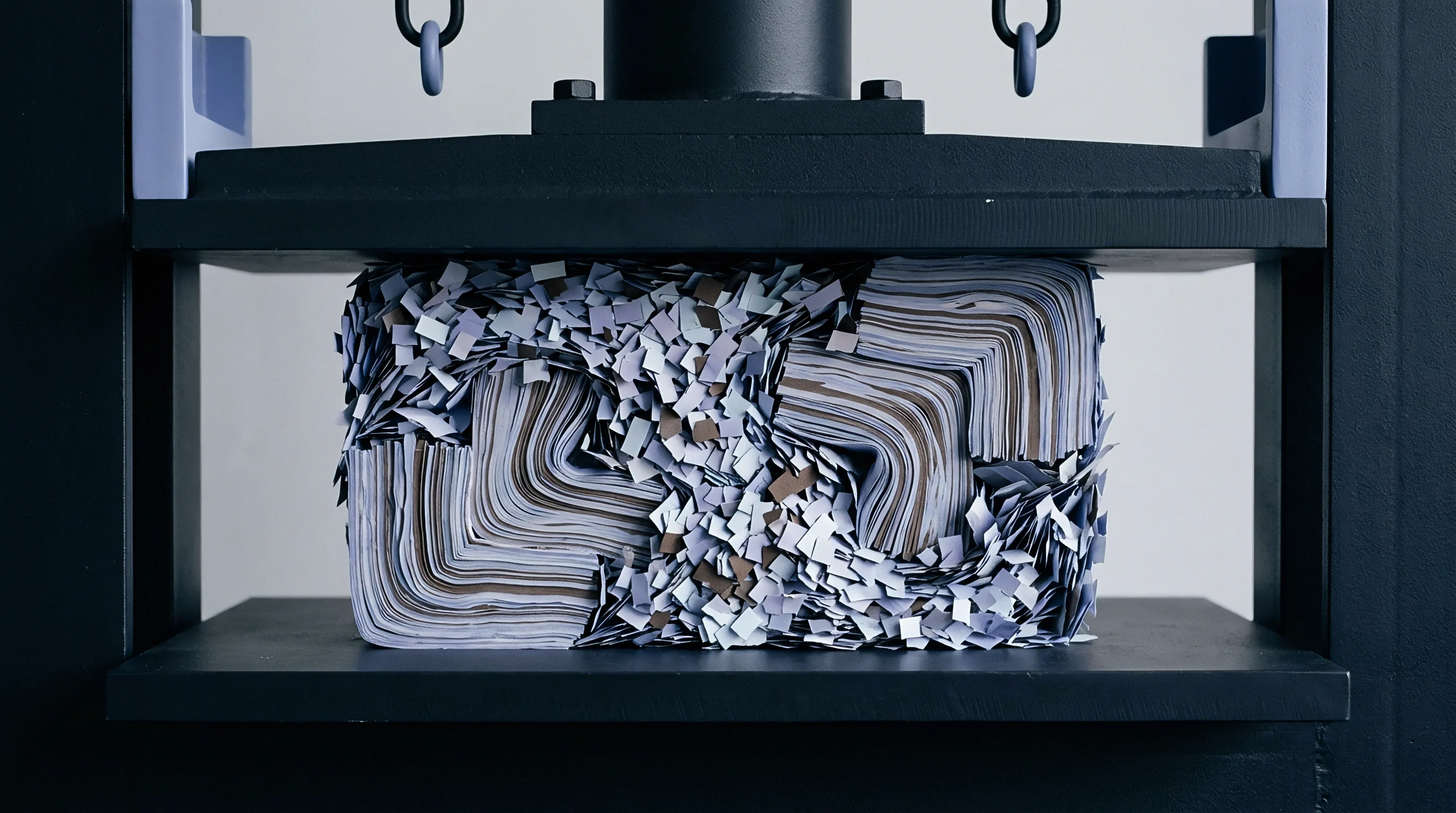
Cellulose and its associated cell-wall polymers exhibit time-dependent deformation under mechanical load. When a constant compressive force acts upon a paperboard structure, the resulting strain consists of three distinct components: instantaneous elastic strain, time-dependent reversible viscoelastic strain, and time-dependent irreversible plastic strain. In a static, invariant climate, the creep compliance function describes this deformation adequately.
Over extended intervals, the linear viscoelastic region transitions into tertiary creep, where the strain rate accelerates rapidly, terminating in brittle compression failure.
The mechano-sorptive effect changes this relationship entirely. When paperboard is subjected simultaneously to a constant mechanical compressive stress and cyclic relative humidity, deformation proceeds at an order of magnitude faster than the rate recorded under constant equilibrium at either the lowest or highest humidity boundary. This phenomenon violates linear viscoelastic superposition.
The anomalous deformation cannot be modeled through standard Maxwell-Wiechert or Burgers linear rheological networks unless variable mechano-sorptive dashpots and transient chemical affinity functions are incorporated into the mathematical formulation.
Under cycling relative humidity of 50 to 90 percent, a corrugated panel reaches critical collapse strain at 30 percent of the static dead-load capacity required to induce failure under constant 90 percent humidity.
The molecular driver of mechano-sorptive creep resides within the hydrogen bonding network linking cellulose fibrils. Sorption involves water molecules diffusing into the amorphous domains, severing existing hydroxyl-hydroxyl bonds between cellulose chains, and creating transient cellulose-water-hydroxyl bonds. Under compressive stress, the severed bonds re-establish at thermodynamically favoured, strained positions once the water molecule desorbs or moves deeper into the substrate.
The continuous breaking and reforming of these structural cross-links acts as a molecular slip mechanism. The external compressive load biases every rearrangement in the direction of strain, resulting in macroscopic shortening of the structural plies.
In stratified boards, the mechano-sorptive rate varies through the z-direction thickness. The recycled core, possessing a higher specific surface area, elevated fines content, and a greater number of disrupted microfibril angles, exhibits faster moisture uptake kinetics than the virgin outer plies. During an adsorption swing, the core swells and undergoes rapid mechano-sorptive softening, transferring its compressive load onto the stiffer, drier outer virgin plies.
During the subsequent desorption swing, the surface plies dry and stiffen while shedding moisture, yet now experience a reverse stress differential. This dynamic transfer of internal stress cycles between plies causes progressive microbuckling within the individual cell walls of the fibres, destroying the internal bond strength (Scott Bond, TAPPI T 569) of the stratified matrix.
Buckling
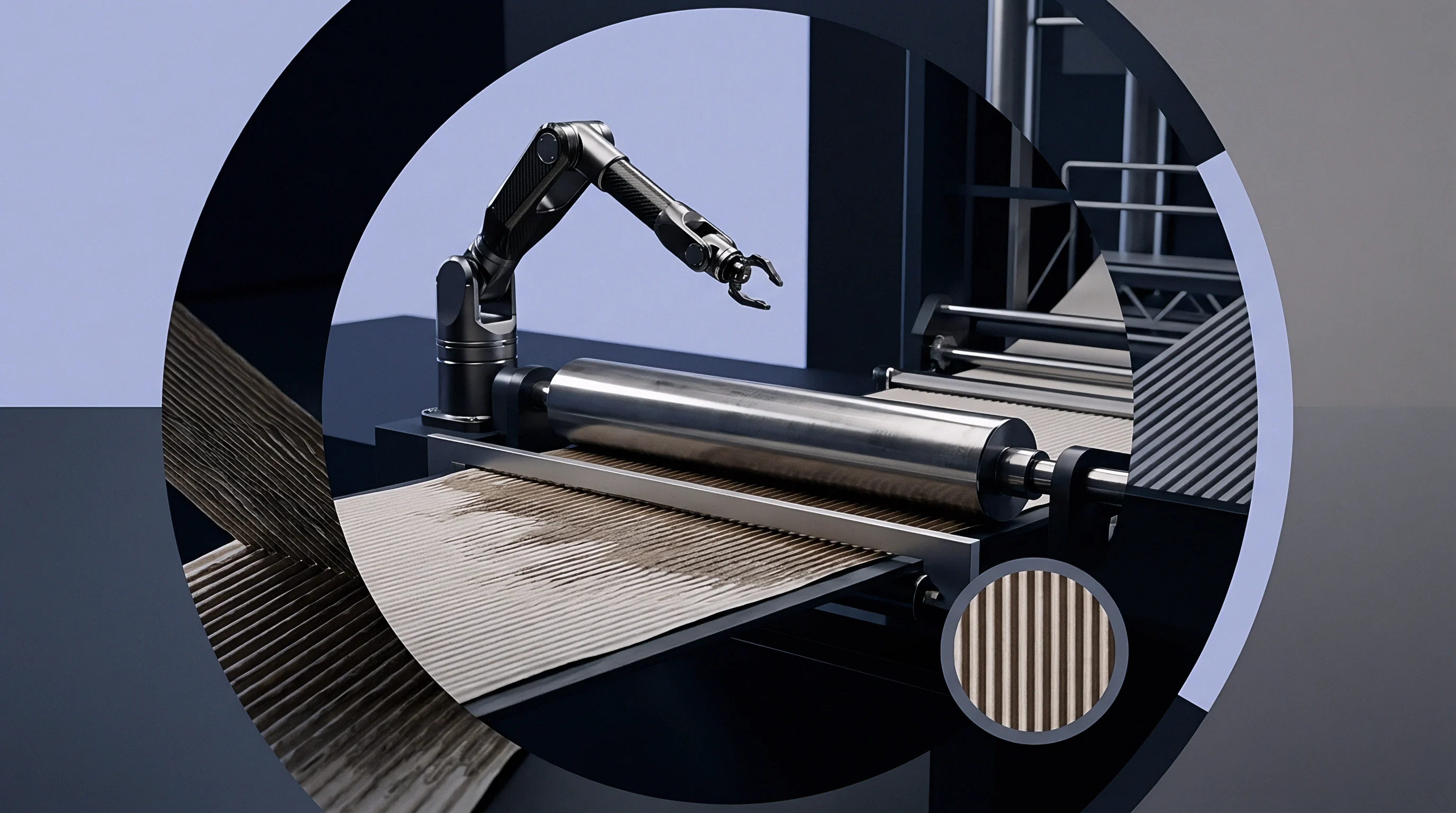
Structural failure in an assembled corrugated box rarely initiates as a uniform material yielding across the entire panel. Primary failure manifests as elastic or inelastic plate buckling of the vertical linerboards, followed immediately by local fluting collapse. The classical McKee formula for predicting box compression strength operates as a simplified simplification of plate mechanics:
BCT = 2.028 × ECT^0.746 × (MD Bending Stiffness × CD Bending Stiffness)^0.127 × Box Perimeter^0.494
The formula establishes that the edge crush test (ECT) value of the combined corrugated board and the geometric flexural stiffness of the composite structure dictate compressive load-bearing limits. However, the classical McKee equation presumes invariant, dry elastic moduli and stable edge boundaries. It assumes the structural liner plies remain planar until geometric plate buckling intervenes.
In humidified supply chains, the physical constants governing this formula degrade continuously over time. As moisture permeates the paperboard, the modulus of elasticity (E) drops precipitously, proportional to the square of the moisture content increase. Bending stiffness (S = E × I, where I is the area moment of inertia) collapses even more severely, because internal delamination between the stratified plies reduces the effective cross-sectional thickness contributing to structural inertia.
If interfacial shear strength fails due to hygroscopic stress, the plies bend independently rather than as a monolithic plate, lowering the flexural stiffness by a factor proportional to the square of the number of delaminated layers.
Local buckling of the facing linerboard between adjacent fluting tip glue lines represents the catastrophic event in long-term compression creep. The spacing between fluting tips acts as the critical unsupported column length (L) for the liner. The Euler critical buckling load per unit width (P_cr) of this unsupported liner strip is formulated as:
P_cr = (π² × D) / L²
where D represents the flexural rigidity of the linerboard strip across the cross-machine direction. Under mechano-sorptive strain, the liner creeps, inducing transverse out-of-plane micro-deflections. As these micro-deflections grow, the compression force acts with an increasing eccentricity, converting purely compressive stresses into combined compression and out-of-plane bending.
The fluting tips, bonded with starch adhesive conforming to standard moisture-resistant formulations, must resist intense peeling and shearing forces. When secondary fibres in the fluting undergo mechano-sorptive softening, the flute tips flatten, increasing the unsupported span (L), which reduces P_cr exponentially until the entire panel buckles outward.
Kinetics
Engineers predicting the service lifespan of stratified packaging boards under static top loads must quantify the acceleration factor induced by cyclic moisture exposure. The static life to failure (t_f) under constant environmental conditions follows an exponential relationship known as the modern packaging creep equation:
t_f = t_0 × exp( -A × (σ / σ_0) )
where σ represents the applied compressive dead-load stress, σ_0 is the instantaneous short-span compressive strength (SCT) at the test conditions, and A is an empirical decay constant typically varying between 15 and 25 for dry, virgin kraftliner boards. When the packaging board is placed into an unconditioned, oscillating relative humidity environment, the decay constant A increases dramatically, shortening the lifespan by orders of magnitude for an identical stress ratio.
Can Cyclic Humidity Shifts Be Quantified by an Acceleration Index?
The acceleration of creep under dynamic moisture environments can be modeled mathematically by introducing a cycle-dependent damage accumulation variable, D_c. This variable scales the baseline creep rate by an envelope function derived from the amplitude and frequency of relative humidity shifts. The effective compressive strain rate (dε/dt) during active cyclic sorption is structured through the following continuum constitutive formulation:
dε/dt = (dε_0 / dt) + k_m × |dm/dt| × σ + dε_cr / dt
The term dε_0 / dt describes the initial instantaneous elastic compliance, the middle term represents the true mechano-sorptive coupling where |dm/dt| is the absolute rate of change of moisture content over time, k_m is the furnish-specific mechano-sorptive compliance coefficient, and dε_cr / dt constitutes the baseline viscoelastic creep rate at the instantaneous moisture content. The absolute value of moisture rate ensures that creep accelerates during both adsorption (wetting) and desorption (drying) phases.
| Furnish Construction | Mechano-Sorptive Coefficient k_m (MPa⁻¹ · % moisture⁻¹) | Viscoelastic Decay Constant A | Static Life at 40% Static Load at 50% RH | Static Life at 40% Static Load at 90% RH | Cyclic Life at 40% Static Load (50% to 90% RH) |
|---|---|---|---|---|---|
| 100% Virgin Kraftliner (Monolithic) | 0.0018 | 18.4 | 1200 days | 45 days | 6.2 days |
| Stratified Liner (Virgin Outer / OCC Core) | 0.0034 | 21.2 | 850 days | 22 days | 2.1 days |
| 100% Recycled Testliner (Multi-ply) | 0.0058 | 26.5 | 420 days | 8 days | 0.7 days |
| Semi-Chem Fluting Medium (Virgin NSSC) | 0.0022 | 19.8 | 1100 days | 38 days | 5.4 days |
| Recycled Fluting Medium (Wellenstoff) | 0.0064 | 28.1 | 310 days | 5 days | 0.4 days |
The empirical data shows that a 100 percent recycled testliner subjected to a constant 40 percent dead load collapses in less than 17 hours (0.7 days) under a cycling humidity profile between 50 and 90 percent. That identical testliner survives 420 days under constant 50 percent relative humidity, and 8 days under constant 90 percent relative humidity. Cycling humidity accelerates the collapse mechanism far beyond what would be estimated from the highest moisture equilibrium state alone.
The furnish architecture governs this vulnerability: the stratified liner board, containing an OCC core sandwiched between virgin skins, collapses three times faster than monolithic virgin kraftliner due to internal shear failures and accelerated mechano-sorptive strain in the secondary core layer.
The mechano-sorptive compliance coefficient, k_m, represents the governing material property for high-humidity pallet design. For virgin softwood kraft, k_m remains below 0.0020 MPa⁻¹·%⁻¹, whereas for secondary furnish containing high lignin fractions and short recycled fibres, k_m exceeds 0.0055 MPa⁻¹·%⁻¹. This physical reality proves that safety factors cannot remain uniform across differing furnish specifications.
A safety factor of 3.0 may prove adequate for virgin containerboard operating in controlled climates, but that same factor yields catastrophic structural collapse within three days if specified for recycled testliner operating in non-conditioned maritime transport.

Appraisal
Designing corrugated packaging capable of surviving long-term multi-tier palletization demands precise calculation of dynamic degradation factors. The standard method for engineering a box involves applying a combined service factor (K_total) to the initial BCT value to determine the allowable continuous dead-load capacity (P_allowable):
P_allowable = BCT_initial / K_total
The combined service factor is historically defined as the product of independent, uncoupled derating multipliers:
K_total = 1 / (F_moisture × F_creep × F_stack × F_handling)
Under traditional assumptions, F_moisture represents a static derating based on the highest expected equilibrium moisture content (often 0.50 to 0.60 for 85 percent RH), F_creep represents static creep under fixed conditions (typically 0.55 to 0.65), F_stack accounts for pallet stacking patterns such as column or interlocked alignments (0.80 to 1.00), and F_handling handles transport shock and vibratory degradation (0.70 to 0.90).
How Can Sourcing Engineers Formulate Rigorous Creep Deratings?
The traditional multiplicative formulation fails whenever cyclic humidity is present, because the true degradation is synergistic rather than linearly independent. To accurately predict long-term performance, sourcing specifications must isolate and recalculate the combined moisture-creep interaction factor (F_MC) based directly on the furnish specification of the linerboards and fluting mediums:
- Furnish Architecture Classification determines the baseline vulnerability of the board grade. The specifying team audits the linerboard construction, classifying it as Class 1 (100 percent virgin unbleached kraft facings and semi-chemical medium), Class 2 (stratified linerboards with virgin facings and OCC cores with semi-chemical medium), or Class 3 (100 percent recycled testliners and recycled fluting mediums).
- Environmental Cycle Amplitude Mapping establishes the operating delta of the relative humidity swings. A storage profile running between 40 percent and 60 percent RH incurs an amplitude rating of ΔRH = 20 percent; an unconditioned warehouse subjected to coastal tropical diurnal shifts running between 50 percent and 95 percent RH incurs an amplitude rating of ΔRH = 45 percent.
- Coupled Dynamic Creep Multiplier Derivation extracts the precise dynamic creep derating factor (F_MC) through empirical constitutive matrix mapping. The multiplier is selected directly from dynamic cyclic testing protocols rather than through static reference charts.
- Effective Static Capacity Verification calculates the maximum allowable warehouse dead load. The calculation applies the empirical F_MC factor directly against the short-span compression test (SCT) and edge crush test (ECT) values verified at standard conditioning under ISO 187.
| Board Furnish Class | Constant 50% RH | Constant 85% RH | Diurnal Cycle: 50% to 75% RH | Diurnal Cycle: 50% to 90% RH | Diurnal Cycle: 60% to 98% RH |
|---|---|---|---|---|---|
| Class 1: All-Virgin Kraft / Semi-Chem | 0.68 | 0.42 | 0.38 | 0.28 | 0.19 |
| Class 2: Stratified Virgin/OCC Liners | 0.62 | 0.34 | 0.27 | 0.16 | 0.09 |
| Class 3: 100% Recycled Liners and Mediums | 0.55 | 0.26 | 0.18 | 0.08 | 0.03 |
The quantitative divergence documented in the derating table exposes the extreme commercial risks associated with unvetted paperboard substitution. If a Class 3 recycled board is deployed into a tropical logistics environment with diurnal cycles oscillating between 50 percent and 90 percent relative humidity, the allowable dead-load factor drops to 0.08. A box showing an initial bench-tested BCT of 5,000 N under standard ISO 187 conditions can safely bear a static load of only 400 N on the bottom tier of the pallet without collapsing before the twentieth day.
Underestimating this interaction leads to immediate structural collapse in warehouse facilities.
To implement this methodology in commercial purchasing, calculate the financial trade-off between basis weight downgauging and furnish upgrades. Assume a packaging order demands bottom-tier compression resistance of 1,200 N sustained over 30 days under dynamic 50 to 90 percent RH cycles. Selecting a Class 3 recycled board requires an initial dry BCT of 15,000 N (1,200 N divided by 0.08).
Achieving this BCT demands a double-wall board construction combining heavy 250 g/m² testliners and 175 g/m² recycled fluting mediums, yielding a combined board weight of approximately 950 g/m². Conversely, specifying a Class 1 virgin kraftliner and semi-chemical construction requires an initial dry BCT of only 4,285 N (1,200 N divided by 0.28). This performance is reliably achieved using a single-wall C-flute construction utilizing 175 g/m² virgin kraft facings and a 130 g/m² semi-chemical medium, yielding a combined board weight of only 540 g/m².
The yield differential transforms the unit economics. The lighter Class 1 board uses 43 percent less raw material by mass, lowering shipping freight costs, reducing automated erecting machine jams, and slashing domestic packaging waste compliance fees tied to placed-on-market tonnage. The virgin containerboard carries a higher cost per metric ton on the open paper market, yet the finished corrugated box manufactured from the virgin board costs less per thousand units than the excessively heavy recycled alternative mandated by the dynamic creep derating calculation.
Downgauging through structural furnish engineering reliably defeats downgauging through blind basis-weight reduction of secondary fibres.
A commercial containerboard purchase order that specifies basis weight without fixing the furnish classification and short-span compression minimums guarantees pallet failure under seasonal humidity shifts.
Goods-in inspection protocols must verify that delivered reels or converted sheets match the specified furnish architecture. Mills producing stratified linerboards regularly alter the ratio of virgin to recycled fibre within the core plies depending on prevailing pulp index prices. A sudden jump in unbleached softwood kraft pulp (NBSK) prices frequently incentivizes the mill to increase the recycled OCC fraction in the core while dropping the virgin skin basis weights from 60 g/m² down to 40 g/m².
This alteration preserves nominal total basis weight and dry burst strength, but it destroys the z-directional shear modulus and accelerates the mechano-sorptive creep rate. Verifying compliance requires cross-sectional microtome image analysis to measure precise individual ply thicknesses, alongside automated Scott Bond testing (ISO 16260) to confirm internal ply adhesion exceeds 350 J/m² across the entire web profile.

Clearance
Mitigating long-term compression creep in stratified packaging substrates requires embedding precise, auditable mechanical and furnish thresholds into master supply agreements. Standard trade customs allowing mills a plus-or-minus five percent basis weight tolerance without performance penalties fail to protect the buyer against catastrophic compressive collapse under moisture dynamics. Procurement documents must transition from descriptive basis-weight line items to functional rheological performance clauses.
Contractual stock schedules must define furnish purity explicitly. Where Class 1 or Class 2 boards are specified, the agreement must stipulate the maximum allowable percentage of secondary fibre within each individual layer of the stratified sheet, verified via fibre furnish analysis according to ISO 9184. The specification must explicitly limit the total ash content (measured via combustion at 525 degrees Celsius under ISO 1762) to less than 2.5 percent for virgin kraft facings and less than 8.0 percent for recycled core layers.
Elevated ash content confirms the presence of calcium carbonate or clay fillers, which severely impair fibre-to-fibre contact and accelerate moisture creep under static compression.
Furthermore, standard purchase specifications must mandate minimum transverse internal bond strength alongside minimum Short-Span Compression (SCT) values measured across both standard (ISO 187, 23 degrees Celsius and 50 percent RH) and elevated (ISO 187, 23 degrees Celsius and 85 percent RH) environments. If the ratio of the wet SCT (85 percent RH) to the dry SCT (50 percent RH) falls below 0.60 for linerboard or below 0.55 for fluting medium, the lot is subject to rejection prior to conversion. This requirement prevents mills from achieving dry compression targets using low-grade recycled fibres held together by heavy topically applied native starches that instantly liquefy their hydrogen bonding networks under high relative humidity.
The contract line fixing these operational mechanics dictates that when third-party laboratory verification confirms delivered reels fail the cyclic humidity creep compliance threshold of 0.0035 MPa⁻¹·%⁻¹, the converting mill bears the full financial liability for scrap conversion costs, box replacement, and documented field warehousing collapses. Shifting the legal burden from post-failure warehouse litigation to pre-shipment mechanical qualification closes the performance gap between test certificates and logistics reality.