Measuring Multi-Layer Paperboard Structural Thickness under Mechanical Pressure
Standardized 50 kPa micrometer pressure measures multi-ply board thickness by controlling viscoelastic compression across dense chemical outer liners and bulky core plies.
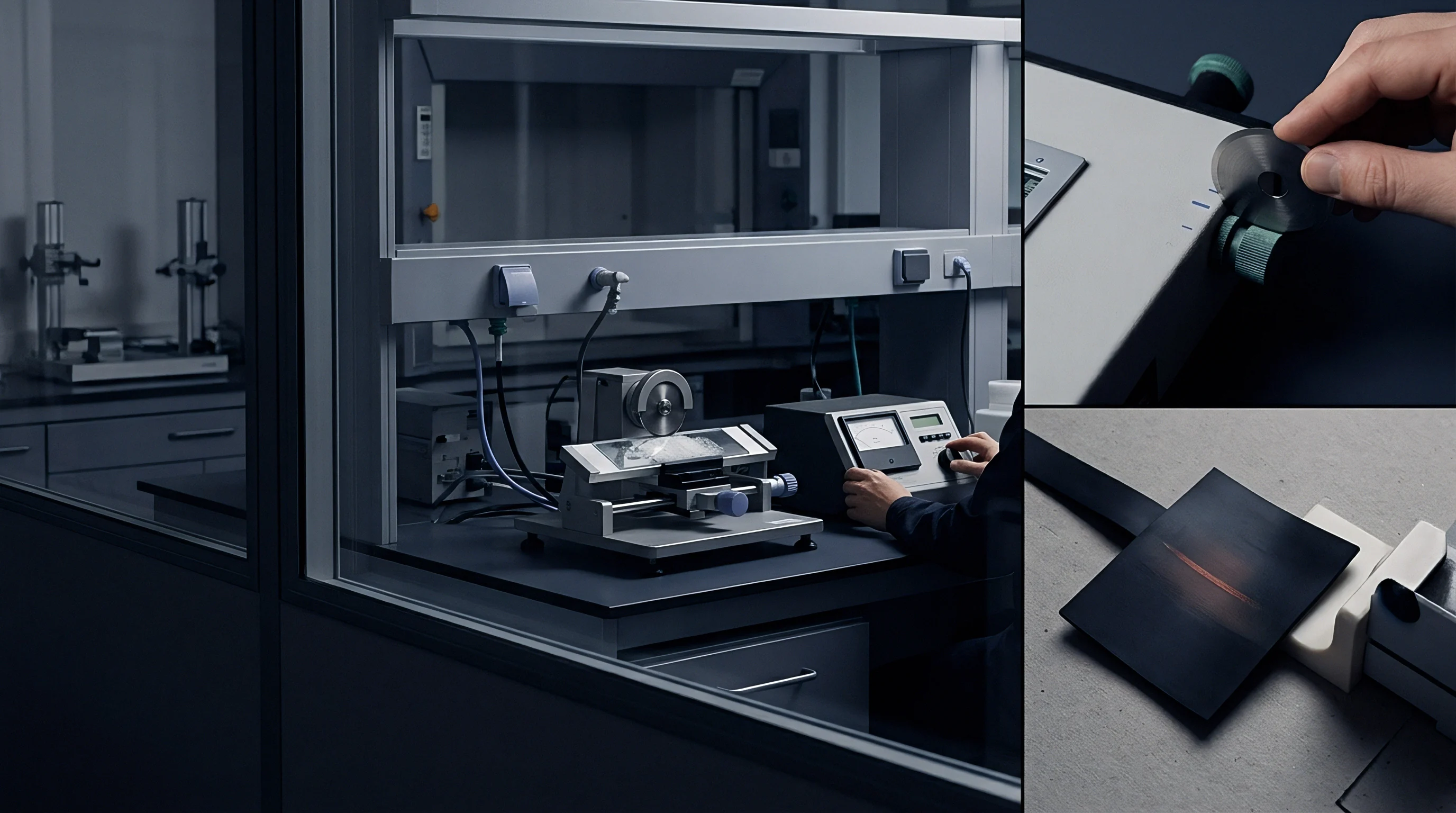

Gauge
Static micrometer measurements on multi-layer paperboard capture a moving target because the substrate compresses under the weight of the testing instrument itself. A single sheet of boxboard consists of discrete furnish layers, each displaying distinct density, moisture absorption characteristics, and structural stiffness. When a dead-weight micrometer foot descends onto the coated surface, the recorded caliper reflects both the uncompressed physical dimensions and the local resistance of the fibre network to mechanical load.
Test results vary significantly depending on whether the contact anvil strikes a dense, bleached chemical pulp outer liner or a bulky, mechanical pulp center layer.
In multi-layer board constructions like Folding Boxboard (FBB) or Solid Bleached Board (SBS), the distribution of mass across the sheet profile dictates how mechanical force redistributes through the thickness. Chemical pulp plies on the exterior act as tensile membranes, while the interior mechanical or recycled plies act as compressible cores. Applying even a minor static load triggers immediate micro-deformations within the bulk layer before the gauge stabilizes.
Consequently, a thickness reading obtained without specifying the exact contact pressure and foot surface area provides incomplete operational data for packaging design.

Mechanical Contact Foot Physics
Dead-weight micrometers operate by lowering a ground steel contact anvil onto a specimen supported by a stationary base plate. ISO 534 and TAPPI T 411 define the standardized static pressure at 50 kPa, applied over a circular contact area of 200 square millimeters. At this specific pressure, the downward force equals exactly 10 N. The structural response of the fibre matrix under 50 kPa involves localized bending of cell walls and gentle compaction of interstitial air spaces within the middle plies.
Lowering the applied pressure to 20 kPa increases the recorded thickness by three to six percent on bulky mechanical grades, demonstrating that nominal caliper is an artifact of the measurement boundary.
A static loading pressure of 50 kPa reduces the apparent thickness of a 350-micrometer folding boxboard by up to 18 micrometers compared to a low-pressure optical measurement.
Frictional drag inside the mechanical plunger assembly further distorts caliper accuracy if maintenance intervals are neglected. Dust accumulation on the sliding spindle introduces stray forces, altering the net contact load from the specified standard. A variance of just 5 kPa in applied pressure shifts measured thickness readings beyond the mill manufacturing tolerance band for premium carton board grades.
Calibration of the instrument requires verification of both static mass and dynamic mechanical friction across the full spindle travel distance.

Ply Density Gradients across the Sheet
Multi-cylinder and multi-fourdrinier board machines lay down individual fibrous webs that are couched together while wet, forming a single consolidated sheet. The top and bottom layers utilize heavily refined chemical fibres to maximize surface smoothness and tensile strength. The interior plies utilize stone groundwood, chemithermomechanical pulp (CTMP), or recovered paper stock, leaving larger void spaces between coarse fibres.
Under mechanical loading, these porous interior zones exhibit lower elastic moduli than the dense outer layers, bearing the majority of the compressive displacement.
Fiber orientation within each individual layer also dictates load bearing performance under dead-weight compression. Machine direction alignment offers greater flexural resistance, whereas cross direction orientation allows larger lateral deformation of the network under identical vertical forces. When testing single sheets versus bulked stacks of multiple sheets, lateral stress transfer between adjacent surfaces creates additional compressive resistance.
Suppliers routinely defend thickness variations on mill certificates by claiming that multi-ply consolidation naturally creates localized density variations that fall within acceptable trade customs.
Platen
Standardized measurement protocols exist to remove laboratory testing ambiguities, yet differences between international test standards create discrepancies across global supply chains. A buyer evaluating board specified under European ISO standards against North American TAPPI standards encounters distinct instrument geometries, anvil drop rates, and loading dynamics. These physical parameters alter the initial impact force and subsequent force relaxation, producing systematically different thickness metrics for identical paperboard lots.
Anvil parallelization represents the primary mechanical source of measurement error in benchtop micrometers. If the upper contact foot tilts relative to the lower base plate by more than one micrometer across its diameter, force concentrates along a single edge of the circular foot. Localized pressure along that edge easily exceeds 150 kPa despite the total mass indicating a standard 50 kPa load.
This concentration crushes the soft middle plies locally, producing artificially low caliper readings across the sheet sample.
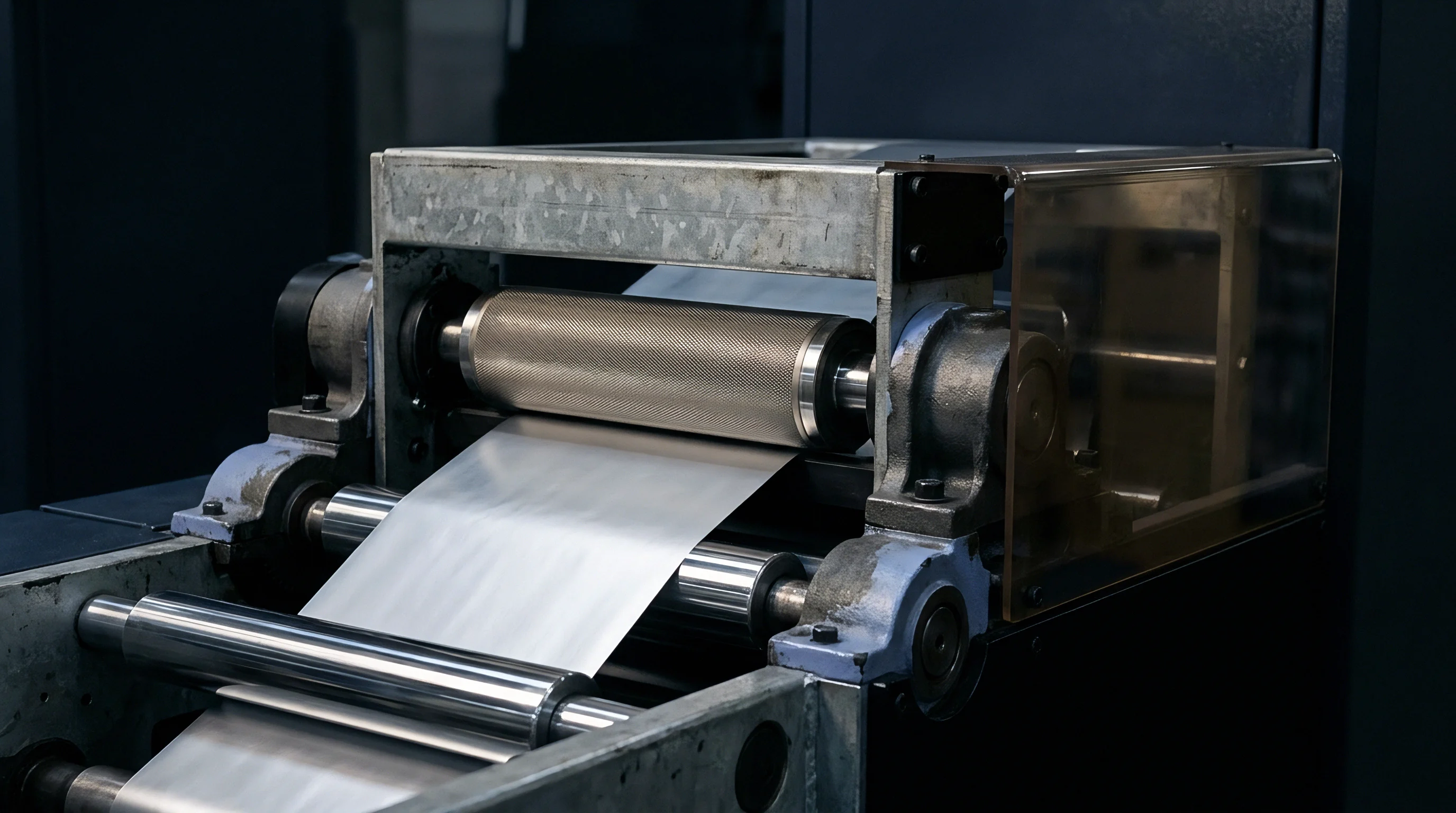
Standardized Method Comparison and Load Profiles
Differences in specified foot size, static load, and dwell time prevent direct conversion of micrometer data without empirical adjustment factors. TAPPI T 411 prescribes a foot pressure of 50 ± 2 kPa with an anvil area of 200 square millimeters, matching ISO 534 closely in basic parameters. SCAN-P 7 specifies identical nominal pressures but permits alternate anvil geometries for high-density boards.
FEFCO Method No. 3, applied primarily to containerboard and combined corrugated fluting, uses a substantially higher pressure profile to measure structural thickness under extreme converting conditions.
| Standard Designation | Applied Pressure (kPa) | Contact Foot Area (mm²) | Anvil Descent Speed (mm/s) | Standard Dwell Time (s) |
|---|---|---|---|---|
| ISO 534 | 50.0 ± 2.0 | 200 ± 5 | 0.8 to 1.2 | 2.0 ± 0.5 |
| TAPPI T 411 | 50.0 ± 2.0 | 200 ± 5 | 0.8 to 1.2 | 2.0 to 4.0 |
| SCAN-P 7 | 50.0 ± 1.0 | 200 ± 2 | 1.0 ± 0.2 | 2.0 ± 0.2 |
| FEFCO No. 3 | 100.0 ± 5.0 | 100 ± 2 | 0.5 to 1.0 | 3.0 ± 0.5 |
Calibration procedures for test instruments require routine verification using gauge blocks of known, non-compressible dimensions. Steel gauge blocks confirm the accuracy of the electronic displacement transducer but fail to reveal dynamic overshoot caused by high anvil lowering speeds. A micrometer that reads a steel block accurately can still record incorrect figures on paperboard if the foot drops rapidly enough to impact the flexible fibre network dynamically.
How Does Anvil Speed Change Measured Thickness?
Dropping the contact foot onto the specimen at speeds exceeding 2.0 millimeters per second introduces kinetic energy that exceeds the standard static load balance. Kinetic impact drives the contact foot deeper into the porous CTMP core before the dead-weight mechanism counterbalances the momentum. Internal laboratory trials show that doubling the descent velocity from 1.0 mm/s to 2.0 mm/s reduces the recorded caliper of a 400-micrometer FBB sample by 4.5 micrometers.
Lowering speeds below 0.5 mm/s avoid impact transients but increase total test duration beyond practical throughput limits for high-volume quality control laboratories.
Sequential calibration steps eliminate instrument errors through systematic mechanical adjustment.
- Clean the ground surfaces of the upper foot and lower anvil using lint-free optical wipes dampened with pure isopropyl alcohol.
- Inspect the base plate beneath monochromatic light using an optical flat to confirm surface planarity within 0.5 micrometers.
- Lower the contact foot gently onto the bare anvil to zero the digital displacement transducer under zero-specimen conditions.
- Verify parallel alignment by inserting a 100-micrometer feeler gauge at four orthogonal positions around the perimeter of the contact foot.
- Set the motorized lowering mechanism to maintain an anvil drop speed strictly between 0.8 and 1.2 millimeters per second.
- Check load delivery by placing a calibrated miniature load cell onto the anvil plate and reading peak dynamic force during contact.
- Confirm measurement reproducibility by testing certified ceramic gauge blocks across five consecutive cycles, demanding variance below 0.2 micrometers.
According to standard commercial purchasing terms, thickness claims are valid only when supported by test reports generated on instruments calibrated within thirty days of testing under ISO 534 parameters.
Viscoelasticity
Paperboard exhibits complex viscoelastic behavior under mechanical pressure, combining instantaneous elastic deflection with time-dependent plastic creep. The cellulose polymer matrix, coupled with hydrogen bonding between adjacent fibres, responds to applied stress through immediate strain followed by continuous stress relaxation. When pressure is applied, hydrogen bonds within heavily consolidated zones resist initial deformation, while unbonded fibre segments within high-bulk layers shift position immediately.
Time under load governs the final thickness reading obtained from any mechanical testing device. Releasing the applied pressure triggers partial elastic recovery, but structural deformation within mechanical pulp plies creates permanent set. The degree of structural recovery depends on the duration of load application, ambient moisture content, and the specific furnish composition of the internal board layers.

Time Dependent Compressive Strain
Applying a constant load of 50 kPa results in an instantaneous elastic yield, followed by secondary creep where the sheet continues to thin slowly. Over a 60-second dwell period, a 450-micrometer multi-layer sheet experiences up to 3 percent additional thickness loss beyond the initial contact reading. The rate of creep decays logarithmically, which is why standard testing protocols specify a strict 2.0-second dwell time before reading the digital transducer.
Deviating from this dwell time window alters the recorded value without changing the physical substrate.
Standard ISO 534 testing requires reading thickness at exactly two seconds post-contact to capture the sheet state before secondary viscoelastic creep dominates the reading.
Moisture content accelerates viscoelastic deformation by acting as a plasticizer within the amorphous regions of cellulose microfibrils. As ambient relative humidity rises, moisture breaks inter-fibre hydrogen bonds, permitting greater sliding movement between individual fibres under mechanical load. Consequently, paperboard tested at 65 percent relative humidity demonstrates greater structural compression under identical anvil pressures than paperboard conditioned at 50 percent relative humidity.
Ply Thickness Loss and Permanent Set
Compressive stresses split unevenly among the individual structural plies of multi-layer folding boxboard. A three-ply grade featuring a chemithermomechanical pulp core sandwiched between bleached chemical pulp liners exhibits asymmetrical compression under dead-weight load. The table below details the differential compressive strain and permanent set across individual plies subjected to a standard 50 kPa mechanical load for two seconds.
| Ply Description | Furnish Type | Nominal Unloaded Caliper (µm) | Compressed Caliper at 50 kPa (µm) | Permanent Thickness Loss (µm) | Elastic Recovery (%) |
|---|---|---|---|---|---|
| Top Liner | Bleached Chemical Kraft | 60 | 58.2 | 0.4 | 77.8 |
| Middle Core | Bleached CTMP | 280 | 262.5 | 10.2 | 41.7 |
| Bottom Liner | Unbleached Chemical Kraft | 60 | 58.5 | 0.5 | 75.0 |
| Full Sheet Total | Consolidated Multi-Ply | 400 | 379.2 | 11.1 | 46.6 |
Mathematical modeling of multi-layer structural compression requires evaluating each layer as an independent spring element connected in series. Consider a 400-micrometer sheet with a composite elastic modulus under compression derived from its individual components. The chemical outer liners possess an elastic modulus of 4.2 MPa under out-of-plane compression, whereas the CTMP core possesses a modulus of only 1.1 MPa under identical stress states.
Calculating overall structural deflection under a 50 kPa load involves summing the localized strain per layer. The outer liners, each 60 micrometers thick, experience a strain equal to stress divided by modulus, yielding approximately 0.71 micrometers of compression per liner. The 280-micrometer CTMP core experiences substantial strain under the same 50 kPa stress, compressing by 12.7 micrometers.
Total structural thickness under load drops to 385.8 micrometers during initial contact, matching physical lab observations within a 1.5 percent error margin.
Removing the static load allows immediate elastic rebound, but internal fibre wall collapses within the CTMP core prevent complete structural restoration. The permanent set of 11.1 micrometers represents unrecoverable void space reduction within the core, directly lowering the finished sheet bulk. Packaging calculations relying on uncompressed bulk figures overestimate the ultimate flexural rigidity of the finished carton wall after converting pressure exposure.
Determining the exact point where viscoelastic deformation transitions from reversible micro-strains to permanent cell wall fracture remains a topic of active debate among pulp research scientists.
Conditioning
Cellulose fibres expand and contract in response to atmospheric water vapor, altering both individual fibre dimensions and overall sheet thickness. Standardized conditioning rules set atmospheric parameters at 23 ± 1 degree Celsius and 50 ± 2 percent relative humidity according to ISO 187. Deviations from these parameters drastically alter the mechanical response of paperboard under micrometer clamping loads.
Moisture acts directly on the amorphous cellulose regions, reducing the compressive elastic modulus and making the sheet substantially more compressible.
Storage of paperboard rolls or sheet pallets in unconditioned converter warehouses creates moisture gradients across the material. Sheet edges absorb or release moisture rapidly, while the interior of the stack remains at mill-exit moisture levels. Testing samples taken from unconditioned sheet edges leads to erroneous conclusions regarding total mill batch caliper compliance.
Moisture Driven Modulus Shifts
Increasing board moisture content from 6.0 percent to 8.5 percent drops the Z-axis compressive elastic modulus of mechanical pulp cores by nearly thirty percent. Under a standard 50 kPa testing foot, a high-moisture sheet deforms further, yielding a lower caliper reading than the same sheet tested at standard moisture. Conversely, overly dry paperboard exhibits artificial structural stiffness, yielding high caliper values during testing that disappear once the material equilibrates to ambient pressroom humidity.
Hysteresis effects complicate the relationship between relative humidity and structural caliper. Paperboard brought to 50 percent relative humidity from a higher moisture state holds more bound water than paperboard brought to 50 percent from a lower moisture state. This difference in moisture content at identical ambient relative humidity alters the measured thickness under load by up to two percent, making sample pre-conditioning history a critical testing variable.
Equilibrium Creep under Clamping Pressure
Long-term storage of heavy paperboard rolls under high winding tension introduces localized static compression across inner wraps. The pressure exerted within a tightly wound roll core can exceed 200 kPa, remaining active over weeks of transport and storage. This continuous mechanical pressure drives long-term viscoelastic creep, permanently reducing the caliper of inner wraps compared to outer wraps from the same production log.
Conditioning board samples to equilibrium under ISO 187 parameters eliminates up to four percent caliper measurement error caused by environmental moisture variation.
Measuring caliper immediately after unwinding high-tension rolls produces lower values than measuring the same material after twenty-four hours of stress-free conditioning. Time allows partial viscoelastic relaxation and moisture re-absorption, restoring portion of the lost structural thickness. Skipping the conditioning period leads to unnecessary rejection of mill rolls that would otherwise meet caliper specifications after stress release.
A simple operational guideline mandates that no caliper test report be accepted for commercial settlement unless the sample material underwent uninterrupted conditioning inside a certified ISO 187 atmosphere for a minimum of twenty-four hours.

Converting
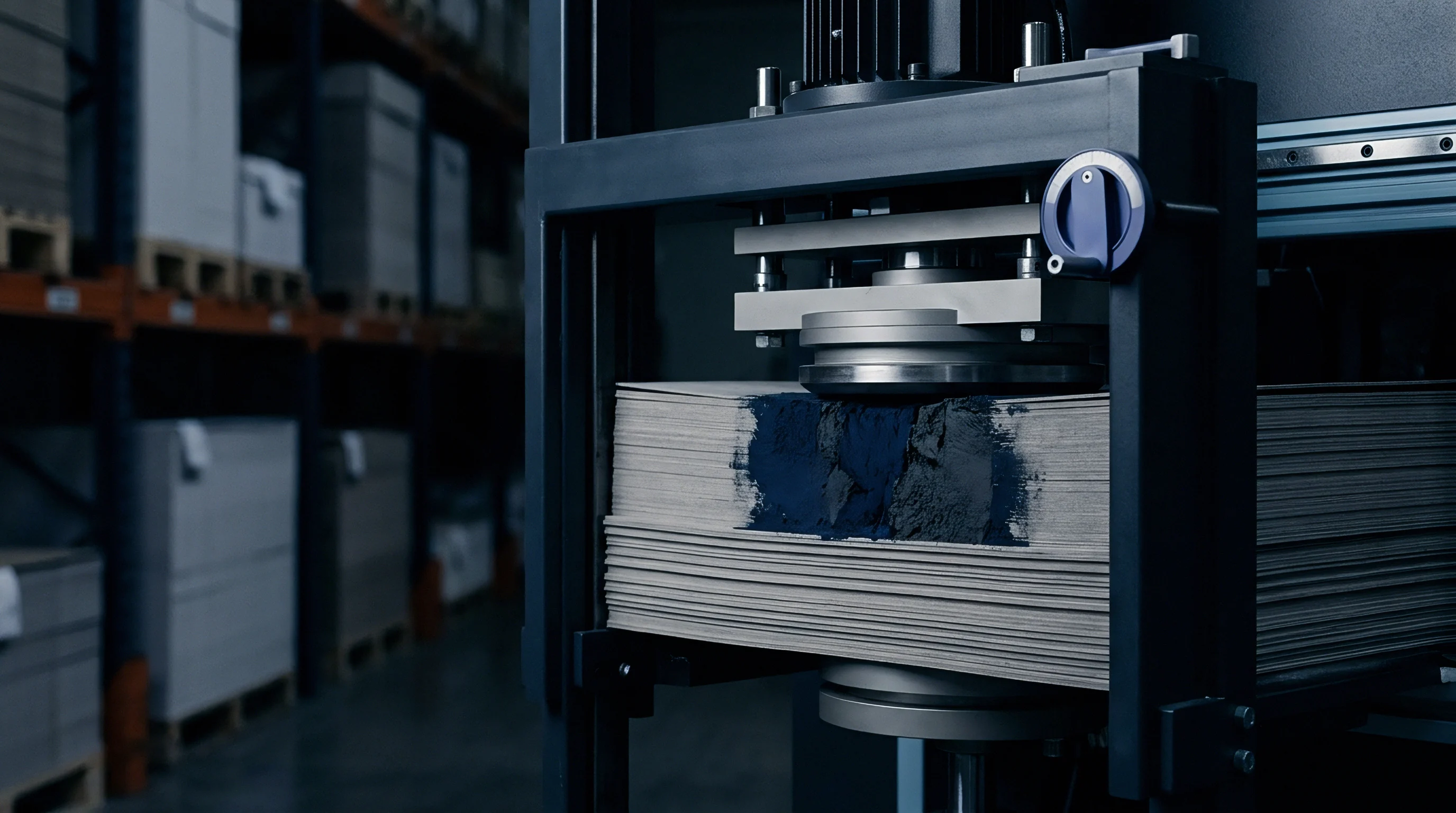
Converting operations apply extreme dynamic mechanical pressures to paperboard substrates, far exceeding the modest 50 kPa standard micrometer load. Die-cutting platen presses, creasing matrices, embossing dies, and folder-gluer pressure belts exert localized forces ranging from 2 MPa to over 20 MPa. These operational stresses permanently compress the multi-layer fibre network, reducing finished carton dimensions and modifying flexural rigidity.
Scoring and creasing deliberately destroy internal bonds within specified zones to create reliable, clean hinge lines for folding. The mechanical pressure applied by the creasing rule pushes the top liner inward, forcing the middle plies to delaminate locally in a controlled shear failure. If the substrate exhibits excessive compliance or uncalibrated caliper under pressure, the creasing tool fails to establish clean internal shear planes, leading to exterior surface cracking during folding.

Structural Compression during Die Cutting and Scoring
Die-cutting machines compress the total sheet surface under feeder rubber elements and nicking positions prior to knife entry. Mechanical pressure under high-speed flatbed die-cutters can reduce the nominal caliper of recycled board grades permanently by five to eight percent across unprinted blank areas. Mechanical pulp cores maintain better post-compression caliper than recycled cores, preserving carton bending stiffness despite high press tonnage.
Creasing rule geometry must match the compressed thickness of the paperboard rather than its nominal benchtop thickness. Selecting crease channel widths based on uncompressed caliper specifications results in excessive male rule penetration and severe core crushing. The table below highlights physical structural failure modes arising from improper alignment between machinery parameters and substrate compressed thickness.
- Crease line delamination cracking occurs when excessive rule pressure crushes outer chemical liners instead of forcing internal ply separation.
- Carton score bead rollover happens when loose middle plies collapse sideways under creasing load due to inadequate core shear resistance.
- Feeder double sheet rejections stem from unexpected edge caliper swell following high-humidity storage of die-cut blanks.
- Folder gluer belt slippage arises when localized caliper compression reduces surface friction against rubber drive belts.
- Embossing detail wash-out results from elastic rebound of mechanical plies flattening fine design relief immediately after die release.
Crease Recovery Force and Caliper Decay
Folding a creased board panel through 90 or 180 degrees creates a spring-back force that automated packaging machinery must overcome during cartooning. Crease recovery force depends directly on residual structural thickness within the hinge zone following mechanical creasing. Severe structural compression under the creasing rule lowers the folding resistance, but excessive pressure damages the outer kraft liners, reducing the ultimate tear resistance of the carton edge.
High-speed packaging lines require consistent crease recovery forces to prevent carton jams in cartoning machines running at 400 packs per minute. If caliper variations cause erratic crease depths, the force required to erect the carton blank fluctuates beyond machine limits. Controlling incoming paperboard thickness under mechanical pressure directly stabilizes cartoning performance and prevents line stoppage costs.
Ignoring the distinction between uncompressed benchtop caliper and converted structural thickness leads to carton structural failure on automated filling lines and invalidates warranty claims against substrate manufacturers.

Allowance
Purchasing paperboard involves paying for weight while engineering packages based on substrate thickness and bulk. Mill pricing operates strictly on metric tonnage, but packaging functionality requires guaranteed minimum thickness to meet stacking strength targets. Bridging the gap between weight-based procurement and performance-based application demands precise tolerance management and rigorous yield calculations under standardized mechanical loading conditions.
Mill specifications provide nominal caliper figures accompanied by allowable manufacturing tolerance bands, typically set at ± 5 percent for virgin fiber boards and ± 7 percent for recycled grades. A 400-micrometer specification with a 5 percent tolerance allows delivered stock to vary between 380 and 420 micrometers across production lots. Purchasing agents must account for these variations when calculating sheet yields and total landed pack costs.
Substrate Yield and Landed Sheet Costs
Calculations for packaging yields depend on the inverse relationship between grammage, caliper, and bulk. High-bulk folding boxboards achieve required structural thickness at lower basis weights, yielding more printable sheets per metric tonne than dense solid bleached boards. Substituting a 350 gsm FBB with a caliper of 450 micrometers for a 400 gsm SBS with an identical 450-micrometer caliper reduces total tonnage requirements by 12.5 percent for an identical carton volume.
A worked commercial example illustrates the yield and cost mechanics when buying board for a 500,000-carton production run. Assume a sheet format of 720 x 1020 millimeters, yielding 8 cartons per parent sheet, requiring 62,500 net parent sheets. Allowing 4 percent for press make-ready and converting spoilage pushes total required parent sheets to 65,000.
Case A utilizes a Solid Bleached Board (SBS) with a basis weight of 380 gsm and a nominal thickness of 420 micrometers, priced at 1,450 USD per metric tonne. Total sheet area equals 0.7344 square meters per sheet. Total job weight equals 65,000 sheets times 0.7344 square meters times 0.380 kilograms per square meter, totaling 18,139 kilograms or 18.14 metric tonnes.
Total raw substrate cost equals 18.14 tonnes multiplied by 1,450 USD, yielding 26,303 USD.
Case B substitutes a Folding Boxboard (FBB) featuring a CTMP core, offering the same 420-micrometer structural thickness at a lower basis weight of 310 gsm, priced higher at 1,600 USD per metric tonne due to advanced multi-ply forming technology. Total job weight equals 65,000 sheets times 0.7344 square meters times 0.310 kilograms per square meter, totaling 14,813 kilograms or 14.81 metric tonnes. Total substrate cost equals 14.81 tonnes multiplied by 1,600 USD, yielding 23,696 USD.
Despite paying a 10.3 percent higher price per tonne for the FBB grade, the yield gain resulting from superior structural bulk under mechanical load cuts total raw material expenditure by 2,607 USD. The landed cost per thousand finished sheets drops from 404.66 USD under SBS to 364.55 USD under FBB, landing direct savings straight to the bottom line.
Specification Tolerances for High Speed Packaging Lines
Tightening caliper tolerances on purchase orders below standard mill capability incurs substantial price surcharges from paper mills. Mill sales offices add 8 to 15 percent price premiums for orders requiring restricted thickness bands of ± 2.5 percent, as these narrow windows force mills to reject out-of-spec rolls back to the repulper. Buyers must weigh the price premium for restricted tolerance against the potential downtime costs of running wide-tolerance board on sensitive packaging lines.
Incoming inspection procedures at converter facilities must audit delivered reel and pallet thickness against certificate data using calibrated test apparatus. Taking ten micrometer readings across the width of a parent sheet reveals profile drift caused by uneven calendar roll pressure during manufacturing. Rejecting non-compliant lots at goods-in prevents costly press downtime, waste generation during printing, and commercial disputes over finished carton quality.
Documenting batch caliper drift requires logging exact conditioning times, testing temperatures, and micrometer contact pressures directly on the formal rejection certificate sent to the mill.