Pore Air Pressure Dynamics in High Velocity Board Creasing
High speed board creasing generates localized pore air overpressure that causes delamination unless vented through open fiber channels or wider tooling.

Pore
Paperboard substrates contain significant void volume distributed throughout their multi-ply fibrous matrices. High-density outer plies and bulkier middle plies establish a network of interconnected capillary passages. Atmospheric gas occupies these voids under standard ambient conditions.
When a creasing die contacts the board at high velocity, this internal void space undergoes rapid physical compression, forcing the trapped gas to re-distribute or evacuate.
Void Fraction and Fibre Network Architecture
Solid bleached sulphate sheets exhibit internal density variations driven by mechanical refining levels and wet-end consolidation. The volume of air held within uncompressed board ranges from thirty to sixty percent of total sheet caliper. Uncoated virgin kraft structures maintain open void networks with high fluid passage potential.
Conversely, heavily loaded recycled boxboard contains crushed fibres and fine mineral fills that restrict internal gas pathways.
Internal void volume distribution varies across individual layers. Top and bottom liners are heavily refined to maximize tensile strength and print smoothness. Middle plies use mechanical pulp or recycled furnish to maintain bulk and bending stiffness at lower basis weights.
Air trapped inside expands. This structural gradient creates an anisotropic flow environment where gas moves more freely laterally through the middle plies than vertically through dense surface layers.
Permeability testing under ISO 5636 conditions establishes baseline gas dissipation rates prior to high-speed converting press setup.
Z-Direction Air Permeability Metrics
Gas transmission through the web face follows Darcy dynamics governed by viscous drag across interstitial channels. Standard test methods measure Gurley or Bendtsen air resistance by forcing a set volume of gas through the sheet thickness under static pressure. These static laboratory metrics reveal structural openness but fail to capture transient fluid resistance during impact events lasting under two milliseconds.
Z-directional air permeability drops exponentially as compression forces consolidate the fibre network. Initial compression reduces average pore radius, increasing flow resistance precisely when gas displacement rates peak. Gas evacuation halts.
Dense coated folding boxboards exhibit Z-direction permeabilities two orders of magnitude lower than unprinted, uncoated kraft stocks.
Selection of board grades requires evaluating both total bulk and internal void structure. The list below identifies critical laboratory screening criteria for board stocks prior to tool setup:
- Permeability screening measures Z-direction gas transmission under TAPPI T 460 standards to isolate dense, non-porous lots.
- Density profiling detects localized caliper swings across the parent web that concentrate air volume in thick zones.
- Ply adhesion testing verifies whether inter-ply bond strength withstands rapid localized expansion forces without structural breakdown.
Whether inline micro-perforation along the score line can lower peak entrapment without compromising moisture barrier integrity remains an open technical challenge.
Impact
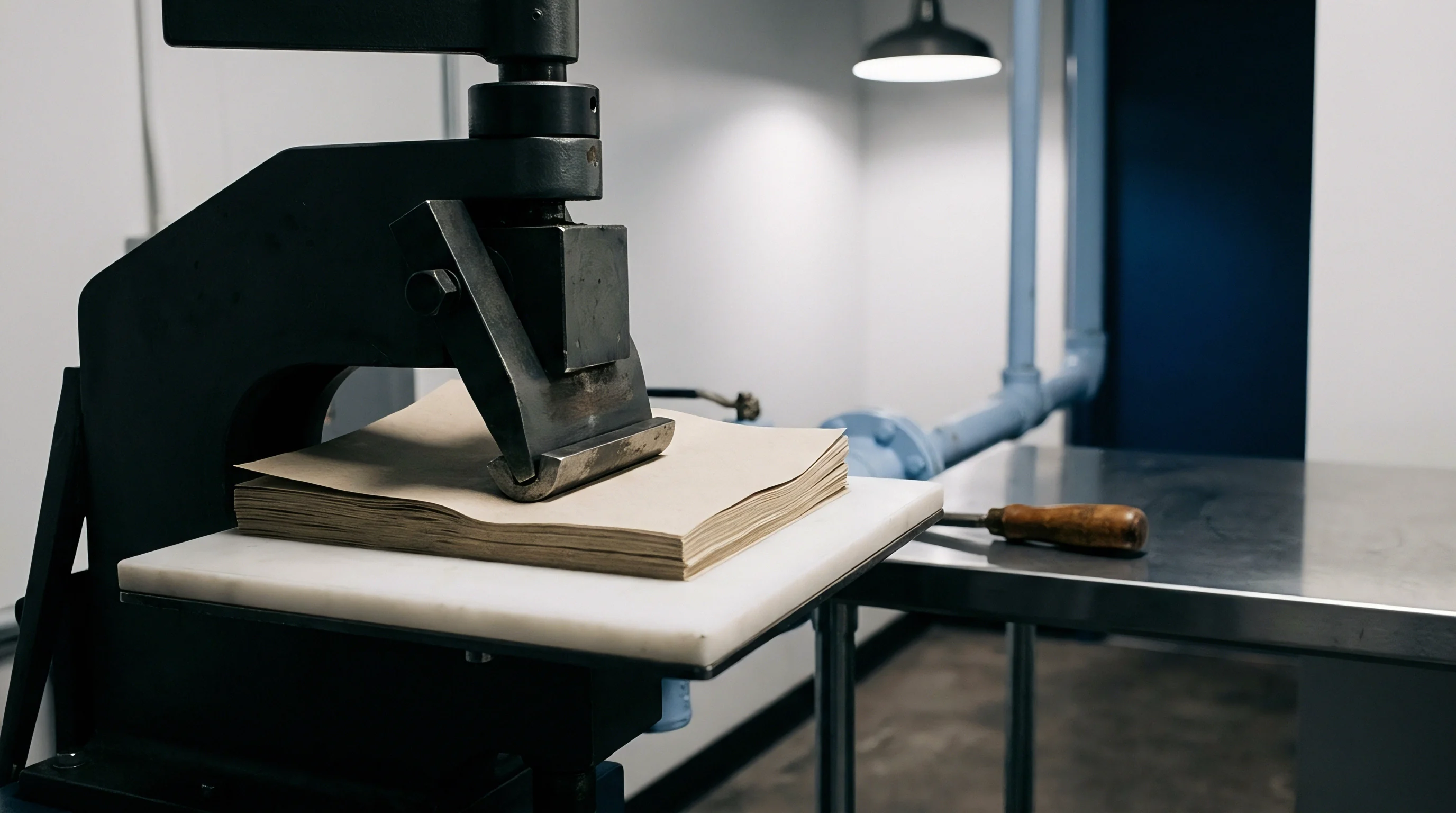
During high-speed folding box conversion, a steel male tool strikes the moving web at linear speeds exceeding three hundred meters per minute. The contact duration between the male rule and the board inside the matrix channel ranges between one and three milliseconds. This brief deformation window creates extreme compression rates within the score zone.
Kinematics of Millisecond Crease Indentation
When male tooling drives paperboard into a female channel, localized volume drops by forty to sixty percent within two milliseconds. The matrix compressed. This rapid reduction in available internal void volume forces instant compression of trapped air.
Press speed governs time.
Fluid movement inside the board matrix cannot keep pace with the mechanical displacement rate. Air behaves as a compressible gas trapped within a shrinking container, triggering a sharp spike in transient internal pore air pressure. This localized pressure pulse propagates outward from the center of the crease impact zone.
At a press velocity of ten thousand sheets per hour, internal gas compression occurs within a time window of one point eight milliseconds under ISO one hundred eighty conditioning.
Transient Air Overpressure Calculation
Gas volume reduction within closed structural cavities generates localized fluid forces that scale directly with deformation velocity. Rapid void compression causes adiabatic heating of the trapped air, raising local gas pressure beyond levels predicted by simple isothermal models. Peak pressure scales with the square of indentation velocity when boundary outflow is restricted.
The total pressure differential generated across the board thickness depends on sheet moisture, initial void ratio, and tool tip geometry. Dynamic pore air pressure routinely exceeds one hundred kilopascals during high-speed production runs. This internal force acts directly against the structural bonds holding the paperboard plies together.
| Substrate Grade | Caliper (µm) | Contact Time (ms) | Volume Contraction (%) | Calculated Peak Pressure (kPa) |
|---|---|---|---|---|
| Solid Bleached Sulphate (SBS) | 450 | 1.5 | 48 | 112 |
| Folding Boxboard (FBB) | 520 | 1.8 | 54 | 135 |
| White Lined Chipboard (WLC) | 480 | 1.4 | 42 | 98 |
| Coated Unbleached Kraft (CUK) | 500 | 1.6 | 50 | 124 |
Crease depth settings that work on slow platen presses always generate internal web fractures when transferred to high-speed rotary convertors without widening the groove.
Bleed
Gas trapped inside the structural core during rapid displacement seeks escape paths through the upper coating or lower liner surfaces. The rate of air bleed determines whether internal pressure dissipates safely or builds to catastrophic levels. Barrier coatings and dense surface sizing severely constrain Z-directional gas evacuation pathways.
Coating Barrier Layers and Lateral Venting Pathways
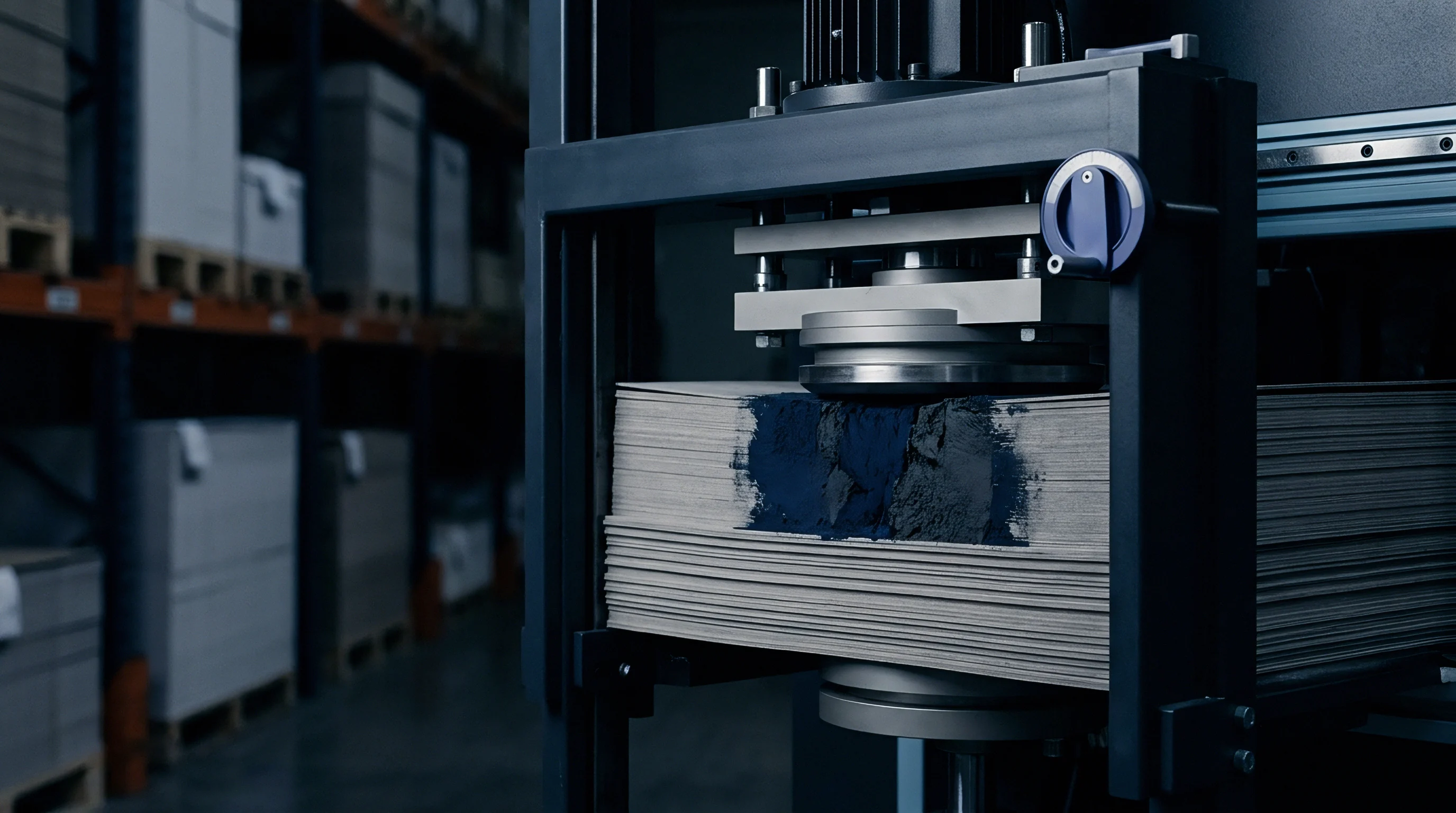
Double calcium carbonate surface applications create continuous mineral barriers that prevent gas displacement through the sheet top. Surface coatings resist flow. Trapped gas must travel laterally along the machine direction or cross direction within the bulky middle plies to escape the compressed zone.
Lateral flow distance to uncompressed regions of the sheet is significantly longer than vertical flow through the board thickness. High fluid resistance along these extended internal paths creates a temporary gas lock. The compressed air stays localized within the deformation zone during the entire millisecond impact window.
Failure to meet the minimum ISO 5636 permeability threshold in delivered paperboard nullifies vendor warranty obligations for score-line blister damage during high-speed conversion.
Counter Matrix Relief Channels
Phenolic die base grooves provide physical space for displaced paperboard fibres during high-velocity tool insertion. Surface coatings on the back liner force trapped gas into these channels if back-side micro-cracks open under tension. Inadequate counter channel depth prevents back-liner gas escape, accelerating internal pressure buildup.
When air bleed pathways are restricted by non-porous coatings or tight channel geometry, structural defects occur across the score line. The failure modes listed below stem directly from restricted gas bleed during high-velocity conversion:
- Top-liner blistering appears when entrapped gas pushes mineral coatings away from the underlying fibre web.
- Shear wall rupture occurs when expanding gas forces open micro-tears along the vertical edges of the groove.
- Internal ply separation divides internal board layers along weak fiber transitions prior to folder-gluer operations.
- Coating flaking sheds microscopic mineral particles into the die cutter during high-velocity production runs.
Ignoring internal gas venting path restrictions leads to severe carton rejection rates at customer filling lines due to score splitting during high-speed opening.

Splitting
Internal ply integrity determines whether a substrate absorbs transient pneumatic surges or undergoes catastrophic structural failure. Paperboard creasing relies on controlled internal delamination to form a flexible hinge. Uncontrolled internal splitting destroys the structural integrity of the carton corner.

Scott Bond Thresholds under Dynamic Pneumatic Stress
Internal cohesive resistance measured under ISO sixteen two hundred sixty defines the energy required to pull internal layers apart. Fibre bonds fail. Standard Scott Bond values reflect static mechanical adhesion but do not account for internal pneumatic stress introduced by compressed pore air.
Gas pressure acting within internal voids imposes pure Z-direction tensile stress on adjacent fibre bonds. When dynamic pore pressure exceeds the local inter-ply bond strength, delamination shifts from a controlled mechanical shearing process to an explosive pneumatic rupture. Fibre bonds tear prematurely ahead of the tool tip.
Higher refining levels in mechanical pulp layers increase internal surface area while dramatically restricting gas evacuation paths during rapid compression.
Micro-Fracture Propagation in Multi-Ply Structures
When internal gas forces exceed sheet cohesion, invisible internal separations expand rapidly along weakness planes. This creates structural defects. The pressure wave forces micro-cracks to merge into extended internal blisters along the crease axis.
Internal plies separate rapidly.
Moisture content alters this stress balance by softening hydrogen bonds between fibres and modifying web stiffness. High ambient humidity increases fiber flexibility but lowers Z-directional tensile strength, making the middle plies vulnerable to gas-driven splitting. Dry board exhibits higher bond strength but lacks the elongation capacity needed to absorb mechanical deformation.
| Substrate Class | Furnish Type | Scott Bond (J/m²) | Sheffield Porosity (SU) | Critical Gas Limit (kPa) |
|---|---|---|---|---|
| Bleached Hardwood/Softwood | 100% Virgin Chemical | 210 | 45 | 165 |
| Folding Boxboard (CTMP core) | Virgin Chemical + Mechanical | 140 | 120 | 130 |
| Coated Recycled Board | 100% Deinked Recycled | 95 | 15 | 85 |
| Unbleached Kraft Board | Virgin Softwood Kraft | 260 | 80 | 190 |
Paperboard mills frequently assert that score line delamination stems entirely from incorrect die matrix widths rather than low Z-directional tensile strength in middle plies.
Rules
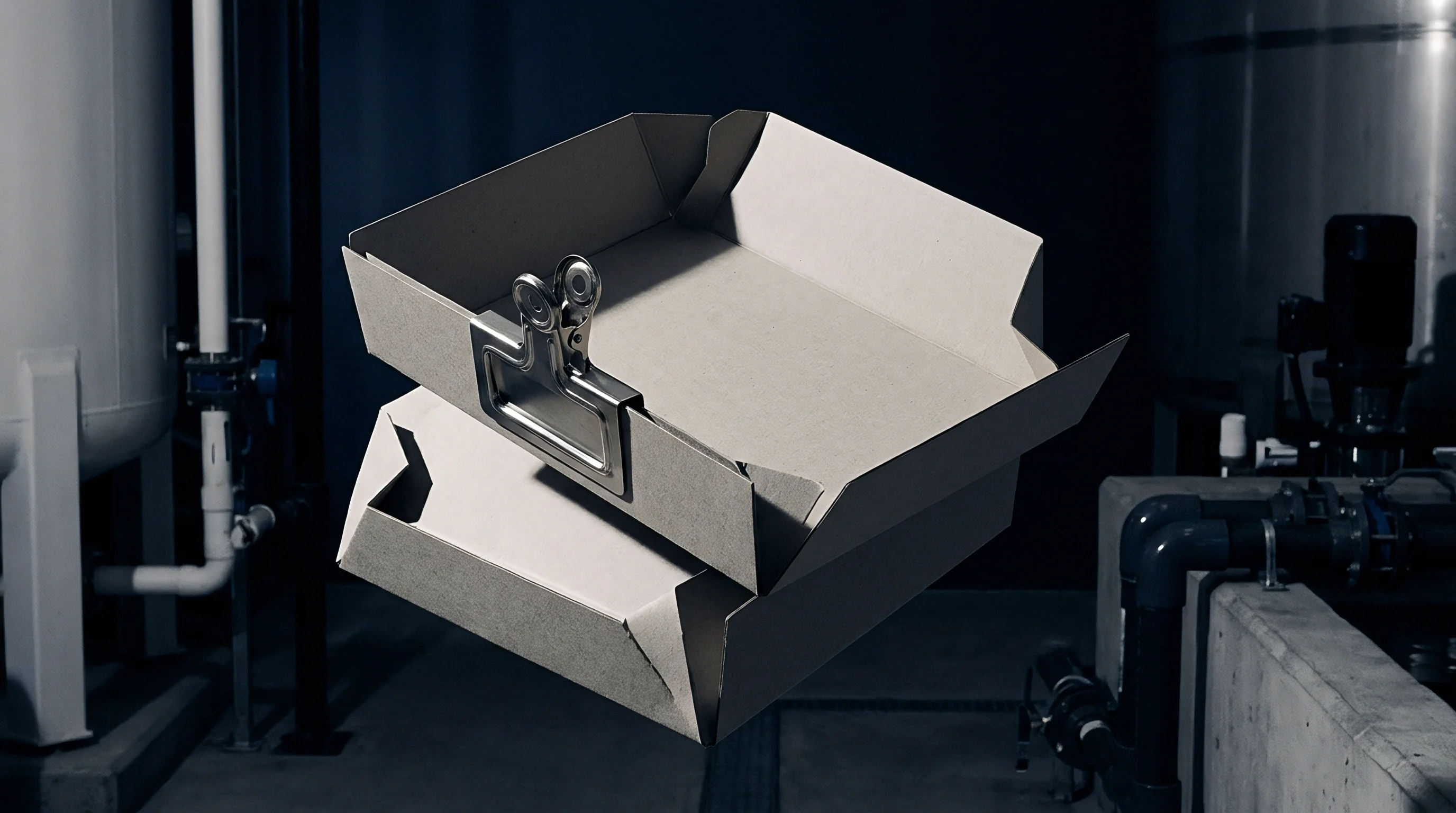
Tooling design directly influences fluid pressure accumulation by governing displacement geometry and mechanical clearance during indentation. Optimizing rule profiles and matrix dimensions allows press operators to manage air displacement without slowing production speeds. Tool clearance alters pressure.

Bevel Geometry and Venting Rule Modification
Customizing male steel strip radius dimensions redistributes compressive displacement forces over a broader surface area. Narrow or sharp rule crowns concentrate volumetric displacement into an extremely small area, raising localized air pressure. Rounded tool contours lower peak compression rates, providing extra time for gas dissipation through adjacent matrix channels.
Vented creasing rules feature micro-grooves ground across the contact face to provide escape pathways for air trapped against the sheet surface. These relief passages allow air on the board face to bleed outward during impact. The seam ruptures.
Vented rules prevent top-coating blistering on double-coated boxboard grades without requiring reduced press speeds.
Widening the female channel by ten percent lowers peak internal gas buildup more effectively than reducing male tool penetration depth.

Why Crease Depth Adjustments Fail at High Speed?
Decreasing mechanical clearance on high-velocity converting lines increases volumetric compression rates faster than gas can evacuate through the paper matrix. Shallow indentation depth leaves internal plies un-delaminated, causing high folding resistance. Proper tooling prevents blowout.
Increasing matrix channel width provides room for physical board displacement while relieving lateral gas compression forces within the middle plies. The numbered sequence below outlines the procedure for configuring matrix width and rule height to minimize internal air overpressure:
- Measure baseline substrate caliper and Gurley air resistance under standard ISO 187 laboratory conditions.
- Select female groove width using a three-point expansion multiplier based on total board thickness.
- Install micro-grooved polyurethane channel inserts to provide secondary gas dissipation channels during tool penetration.
- Set initial male tool penetrating depth to fifty percent of total board caliper.
- Increase press speed incrementally while inspecting score lines under ten-times magnification for internal gas blistering.
Inserting ISO 1924 tensile ratio limits into raw material procurement specifications forces substrate vendors to maintain consistent fiber orientation for effective strain absorption.


Ream
Converting efficiency depends on balance between press velocity, raw material selection, and scrap rates caused by score line cracking. Substrate substitution choices made without accounting for air evacuation capabilities destroy press margins through continuous line stoppages and elevated scrap waste. Yield determines profit.

Spoilage Arithmetic and Speed Penalty Calculation
Running converting machinery below rated capacity to prevent internal board rupture imposes continuous financial losses across high-volume production operations. Slowing a line from eleven thousand sheets per hour to eight thousand sheets per hour raises fixed machine-hour allocations per unit produced. Moisture changes internal stress.
Waste rates rise exponentially.
A scrap rate reduction of two percent achieved by running at lower speeds rarely compensates for the capacity loss on modern flatbed or rotary die cutters. Selecting higher-permeability virgin board grades often delivers lower landed cost per thousand cartons than running low-cost dense recycled boards at reduced press speeds.
| Operating Strategy | Selected Substrate | Press Speed (sheets/hr) | Scrap Rate (%) | Run Duration (Hours) | Landed Cost / 1,000 ($) |
|---|---|---|---|---|---|
| Baseline High Speed | Standard Recycled WLC | 11,000 | 6.2 | 18.5 | 42.10 |
| Slowed Speed Strategy | Standard Recycled WLC | 8,000 | 1.5 | 24.2 | 44.80 |
| Upgraded Substrate | Porous Virgin FBB | 11,000 | 0.8 | 17.4 | 39.60 |

Substrate Selection and Landed Unit Economics
Choosing virgin kraft fiber furnish options increases raw material expense while eliminating internal delamination waste at maximum machine speeds. Porous middle plies allow high-velocity gas evacuation, maintaining structural integrity across folding operations. The initial cost premium paid per tonne is offset by higher net output per operating shift.
Procurement teams evaluating board specifications must compare air resistance metrics alongside traditional basis weight and caliper parameters. Ordering stock with verified Z-direction gas permeability tolerances prevents costly production failures on high-speed packaging lines. A thorough evaluation of internal density, ply bonding, and permeability allows converter engineers to match tooling configurations to specific board lots before committing capital to high-velocity packaging production runs.