High Speed Paperboard Creasing Kinematics and Tooling
Precision matching of creasing rule thickness and counter channel width prevents outer liner cracking and stabilizes folding force on high speed lines.
Strain
Creasing paperboard forms a controlled hinge along designated fold lines without fracturing the outer liner surfaces. At press speeds exceeding 300 meters per minute on rotary die cutters or 9,000 sheets per hour on automatic flatbed platens, mechanical displacement happens in milliseconds. The goal is to break the internal Z-directional bond strength within the sheet while keeping top and bottom liner plies intact.
This localized structural damage reduces bending stiffness along the crease line, allowing clean ninety-degree and one-hundred-eighty-degree box folding on downstream packaging equipment.
Shear Deformation Mechanisms in Multiply Boxboard
Pressing a vertical male rule into a constrained channel drives high out-of-plane forces through the paperboard thickness. Male steel rules deform surface fibers. As the rule descends into the female channel, severe shear stresses concentrate at the entry radius of the channel edges.
Multiply structures like Folding Boxboard (FBB) and Coated Unbleached Kraft (CUK) combine distinct fibrous plies built for specific mechanical jobs: dense chemical pulps in the top and back plies provide high tensile energy absorption, while middle plies use mechanical pulps or recycled fibers to add caliper and flexural rigidity.
Effective scoring forces middle plies to delaminate into discrete, parallel sub-layers. When internal plies slip past one another along these delamination planes, shear failure absorbs the displacement energy. This controlled breakdown keeps high tensile stress from concentrating in the outer chemical pulp liner.
If internal delamination fails to develop, the outer liner behaves as a solid beam during folding, stretching past its ultimate elongation limit under ISO 1924 tensile test conditions and cracking open.
Conditioning paperboard samples at 23 degrees Celsius and 50 percent relative humidity under ISO 187 establishes a 7.2 percent equilibrium moisture content required for repeatable Z-direction shear testing.
Board caliper and furnish composition dictate the force needed to start ply separation. Solid Bleached Board (SBS), made entirely from chemical pulps, shows high internal bond strength when tested to TAPPI T 569 Scott Bond standards, requiring greater rule penetration force to initiate delamination. Recycled board grades (WLC) carry shorter average fiber lengths and higher ash filler content, so internal plies tend to collapse under compression instead of splitting into clean, continuous delamination planes.
High-speed converting failures stem directly from poorly calibrated shear strain distribution through the sheet thickness:
- Liner fracture occurs when peak tensile strain along the outer ply exceeds the ultimate elongation limit during female die engagement.
- Internal compression failure happens when weak middle plies collapse prematurely without generating discrete shear planes across the sheet thickness.
- Crease roll-out arises from insufficient displacement depth, leaving residual bending stiffness above 45 percent of the uncreased board value.
- Back-side splitting occurs when counter channel width falls below the threshold needed for natural ply displacement under load.

Substrate Anisotropy and Ply Delamination
The gap between machine-direction tensile strength and cross-direction elongation governs how individual fibrous layers slip past each other during scoring. Machine direction (MD) alignment yields high flexural stiffness with little stretch, whereas cross direction (CD) orientation offers greater stretch capacity at lower initial tensile resistance. Scoring parallel to the machine direction forces CD fibers to stretch around the male rule radius, increasing the risk of surface cracking on low-stretch recycled sheets.
Moisture changes directly affect board tensile strength, and dynamic delamination depends on tight moisture control to keep the fiber network flexible. Below 5.5 percent moisture, individual cellulose fibers harden and lose stretch, causing brittle shear failure across outer plies. Above 8.5 percent moisture, middle mechanical plies soften excessively and crush under the male rule without forming distinct delamination zones, leaving spongy, imprecise scores that spring back during automated box assembly.
Whether sub-millisecond dynamic loading alters the fundamental ratio between shear failure and tensile elongation in high-speed rotary converters remains open to definitive empirical measurement.


Anvil
Tooling geometry dictates the shape and stress distribution of the crease. The assembly comprises a rounded-tip male steel rule, a female counter channel, and anvil backplates supporting the counter under impression load. Operating smoothly at high speeds requires exact ratios between substrate caliper, male rule thickness, counter channel width, and channel depth.
Getting these proportions wrong creates severe conversion defects no matter how good the paperboard is.
Geometric Ratios for Rule and Channel Dimensions
Setting male steel rule width against female slot depth depends on board caliper and cross-direction compressibility. Standard rules are designated in point sizes, where one point equals 0.356 millimeters (0.014 inches): a two-point rule measures 0.71 mm wide, a three-point rule measures 1.07 mm wide, and a four-point rule measures 1.42 mm wide. Rule selection matches board caliper boundaries to maintain proportional displacement area during impression.
Female grooves define the score geometry. Calculating counter channel width relies on a standard engineering formula: channel width equals male rule thickness plus 1.5 to 1.7 times nominal paperboard caliper for folding boxboard, or 1.4 to 1.6 times caliper for solid bleached board. Expressed mathematically: W = t + (1.6 C), where W represents channel width, t represents rule thickness, and C represents sheet caliper.
Channel depth normally equals a single sheet caliper (D = C); setting depth shallower than sheet caliper crushes the score rib, whereas setting it deeper prevents sufficient compression along internal delamination planes and splits outer plies.
| Board Caliper (mm) | Board Caliper (pt) | Rule Thickness (pt / mm) | Channel Width SBS (mm) | Channel Width FBB (mm) | Channel Depth (mm) |
|---|---|---|---|---|---|
| 0.30 to 0.40 | 12 to 16 | 2 pt / 0.71 mm | 1.25 | 1.35 | 0.35 |
| 0.40 to 0.50 | 16 to 20 | 2 pt / 0.71 mm | 1.45 | 1.55 | 0.45 |
| 0.50 to 0.65 | 20 to 26 | 3 pt / 1.07 mm | 1.95 | 2.10 | 0.58 |
| 0.65 to 0.80 | 26 to 32 | 3 pt / 1.07 mm | 2.25 | 2.40 | 0.72 |
| 0.80 to 1.00 | 32 to 40 | 4 pt / 1.42 mm | 2.80 | 3.00 | 0.90 |
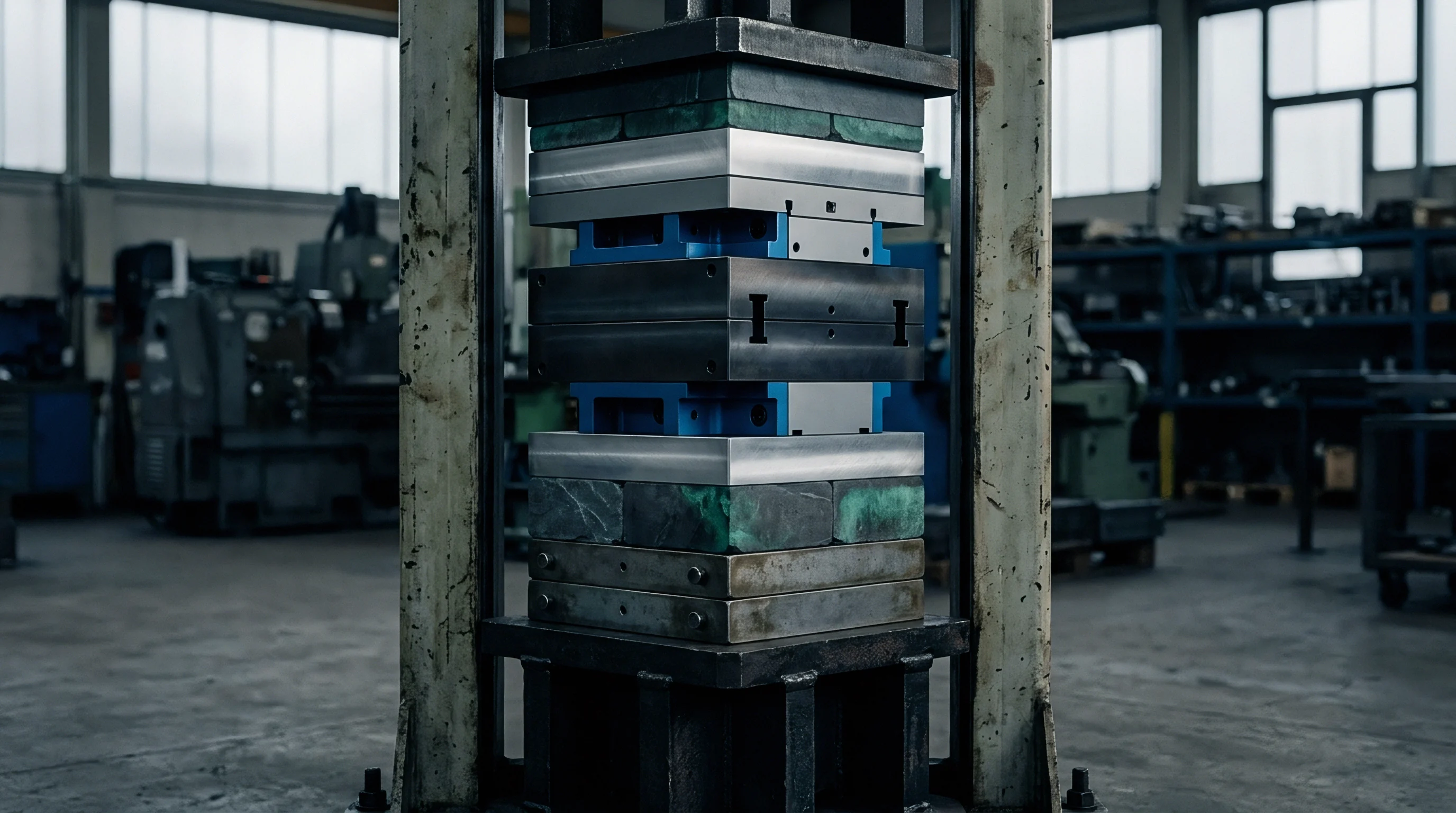
Counter Groove Depth and Chamfer Configuration
Machining counter plates with edge relief angles between 30 and 45 degrees prevents stress concentration from tearing the reverse side of coated stocks. Straight-walled grooves shear into paperboard during high-speed impression, inducing micro-fractures along fold edges. Beveling or rounding the top edges of the channel walls lets material move smoothly into the recess, protecting the surface liner from rupture.
Precision setup requires sequential verification steps on the converting floor:
- Measure substrate caliper across five points on the web using a digital micrometer under ISO 534 testing standards.
- Select a male steel rule thickness corresponding to double point or three point sizing based on board caliper boundaries.
- Calculate required counter channel width by summing the rule thickness with 1.5 to 1.7 times the nominal sheet caliper.
- Set counter groove depth equal to one single caliper thickness of the target paperboard stock.
- Verify die-to-counter alignment using pressure-sensitive foil across the entire format area prior to running production speed.
Selecting counter channel widths based on board softness rather than raw caliper preserves reverse liner integrity across variable production lots.
Velocity
Kinematic behavior changes dramatically as line speed increases. On flatbed platen presses operating at 9,000 sheets per hour, the entire die face contacts the substrate simultaneously, creating a dwell time of roughly 15 to 25 milliseconds. On rotary die cutters running at web speeds up to 450 meters per minute, engagement occurs across a narrow nip line, cutting contact dwell time to less than 1.5 milliseconds.
Dynamic Strain Rates in Rotary versus Flatbed Converting
High linear speeds reduce press dwell time to milliseconds, forcing paperboard layers to absorb impact forces under rapid loading. Under high strain rates, polymers in the cellulose fibers and coating binders turn stiffer and more brittle. Materials that deform plastically during slow laboratory tests respond elastically or crack when struck rapidly on high-speed rotary lines.
Rotary creasing introduces complex contact kinematics. Male rules mounted on a cylinder travel along an arc, entering and exiting the female groove at an angle relative to the moving web. This angular penetration concentrates localized shear stress at both the leading and trailing edges of the score.
Unless cylinder diameters are large enough—typically above 400 mm—rotary rules drag against channel walls, scuffing printed surfaces and distorting crease symmetry.
| Kinematic Parameter | Flatbed Platen Press | Rotary Die Cutter (Small Cylinder) | Rotary Die Cutter (Large Cylinder) |
|---|---|---|---|
| Line Speed / Output | 7,000 – 9,000 sheets/hr | 200 – 350 m/min web | 350 – 550 m/min web |
| Impression Dwell Time | 15.0 – 25.0 ms | 0.8 – 1.5 ms | 1.2 – 2.2 ms |
| Rule Penetration Angle | 0 degrees (Vertical) | 3.5 – 6.0 degrees arc | 1.5 – 3.0 degrees arc |
| Strain Rate (sec⁻¹) | 100 – 300 s⁻¹ | 1,500 – 3,500 s⁻¹ | 1,000 – 2,200 s⁻¹ |
| Dominant Failure Risk | Crease spring-back | Leading edge liner tear | Channel wall friction scuffing |
Viscoelastic Behavior and Deformation Recovery
Rapid mechanical displacement triggers elastic spring-back in bleached chemical pulps before permanent ply separation takes hold. When dwell time drops below the relaxation time constant of the furnish, internal plies fail to complete plastic delamination. The sheet retains elastic memory, making the score bead uncoil after leaving the press nip.
That residual spring-back elevates initial folding torque on high-speed packaging lines, causing feed jams.
Increasing linear line speed without widening the female counter channel accelerates surface liner fracture on high-density virgin fiber boards.
Speed adjustments require precise depth corrections. Running a rotary line at 400 meters per minute means increasing male rule penetration by 0.03 mm to 0.05 mm compared to flatbed platen settings on identical stock. The added depth compensates for the instantaneous elastic recovery that happens during ultra-short dwell contact.
High-speed score cracking is frequently attributed to inconsistent sheet moisture rather than geometric limitations in rotary die nip engagement.

Counter
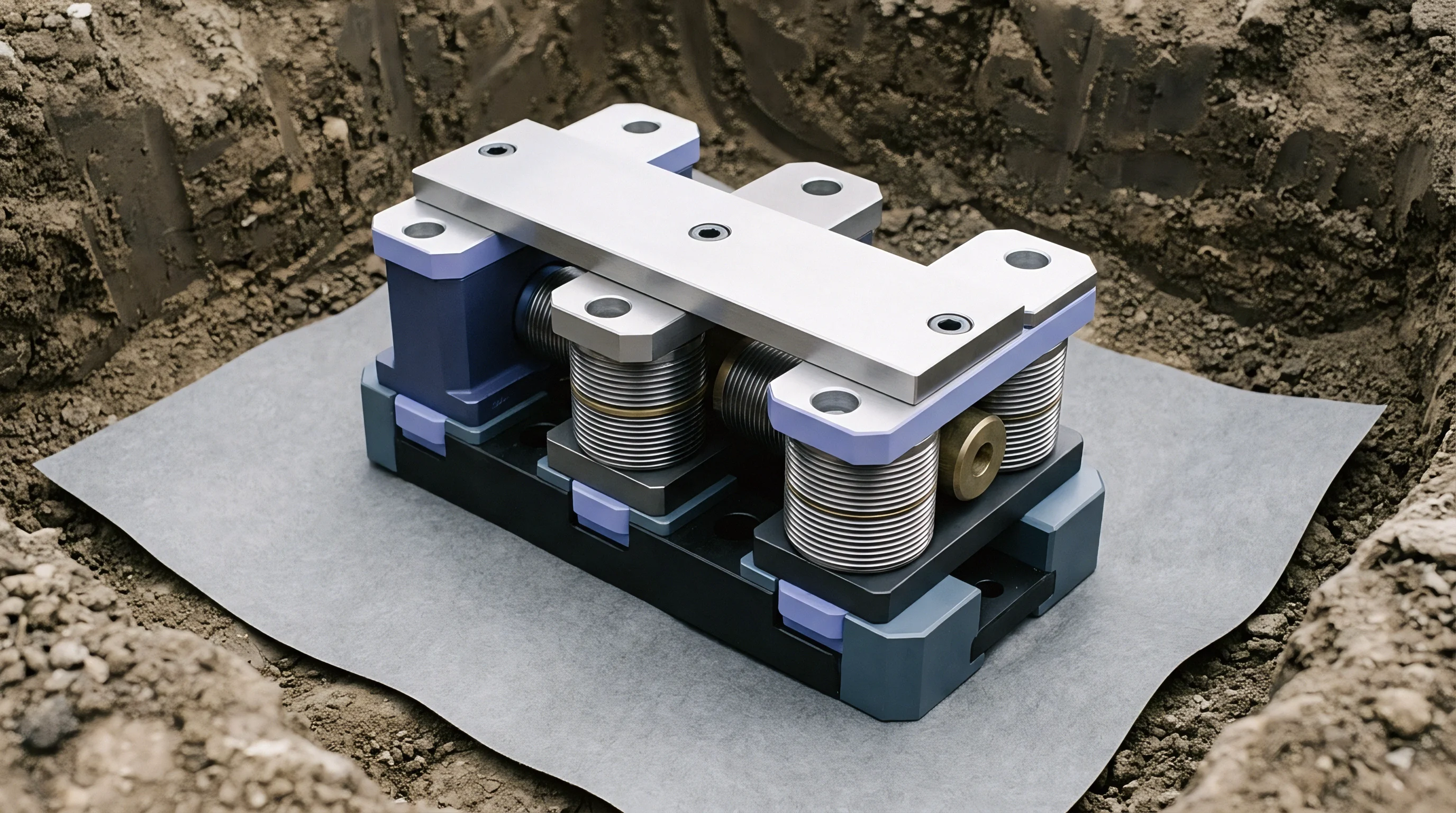
Counter materials transmit impression force into paperboard structures. Female channels range from temporary self-adhesive vulcanized fiber matrix strips to precision CNC-milled phenolic plates and hardened steel counter jackets. Tooling selection balances run length, dimensional stability, and job setup costs.
Material Physics of Phenolic versus Milled Steel Plate Channels
Resistance to surface abrasion under continuous cyclic impression dictates whether female slots maintain crisp edge definition over extended press runs. Phenolic counter plates made of resin-impregnated glass cloth or paper laminates offer solid dimensional stability and impact resistance. Machined on precision milling routers, they feature custom chamfer geometries matching die rule layouts while maintaining channel edge stability.
Hardened steel counter plates deliver maximum wear durability. Milled to Rockwell C 58-62 hardness, steel plates withstand tens of millions of impressions without channel wall breakdown, holding widths within +/- 0.005 mm tolerances across long production runs. By contrast, phenolic plates show channel wall rounding after 250,000 to 500,000 impressions on abrasive recycled boards, leading to gradual loss of score definition and increased carton folding variation.
Adherence to DIN 55437 score quality guidelines binds packaging converters to maintain crease bending force ratios below 50 percent of uncreased board stiffness.
Matrix Creep and Adhesive Shear under Continuous Impression
Self-adhesive synthetic channels can move laterally when press bed temperatures rise during long runs. Press vibration and cyclic shear forces push matrix channels sideways across the backing plate, and adhesive creep degrades alignment precision. A matrix shift of just 0.10 mm off-center alters score symmetry, causing uneven bead deformation, panel skew, and carton misregistration in the folder-gluer.
Tooling parameters determine long-term run stability:
- Substrate composition governs the selection between resin-bonded phenolic counters for short runs and hardened steel plates for long packaging campaigns.
- Operating temperature dictates matrix tape adhesive selection to prevent lateral channel migration across continuous twelve-hour shifts.
- Channel chamfer angle requires alignment with cross-direction elongation properties to eliminate reverse liner scoring.
- Groove surface roughness must remain below 1.6 micrometers Ra to prevent localized scuffing along carton fold lines.
Incorporating ISO 2493 bending force compliance thresholds into mill purchase contracts allows buyers to reject board lots that exhibit erratic delamination behavior during high-speed scoring.

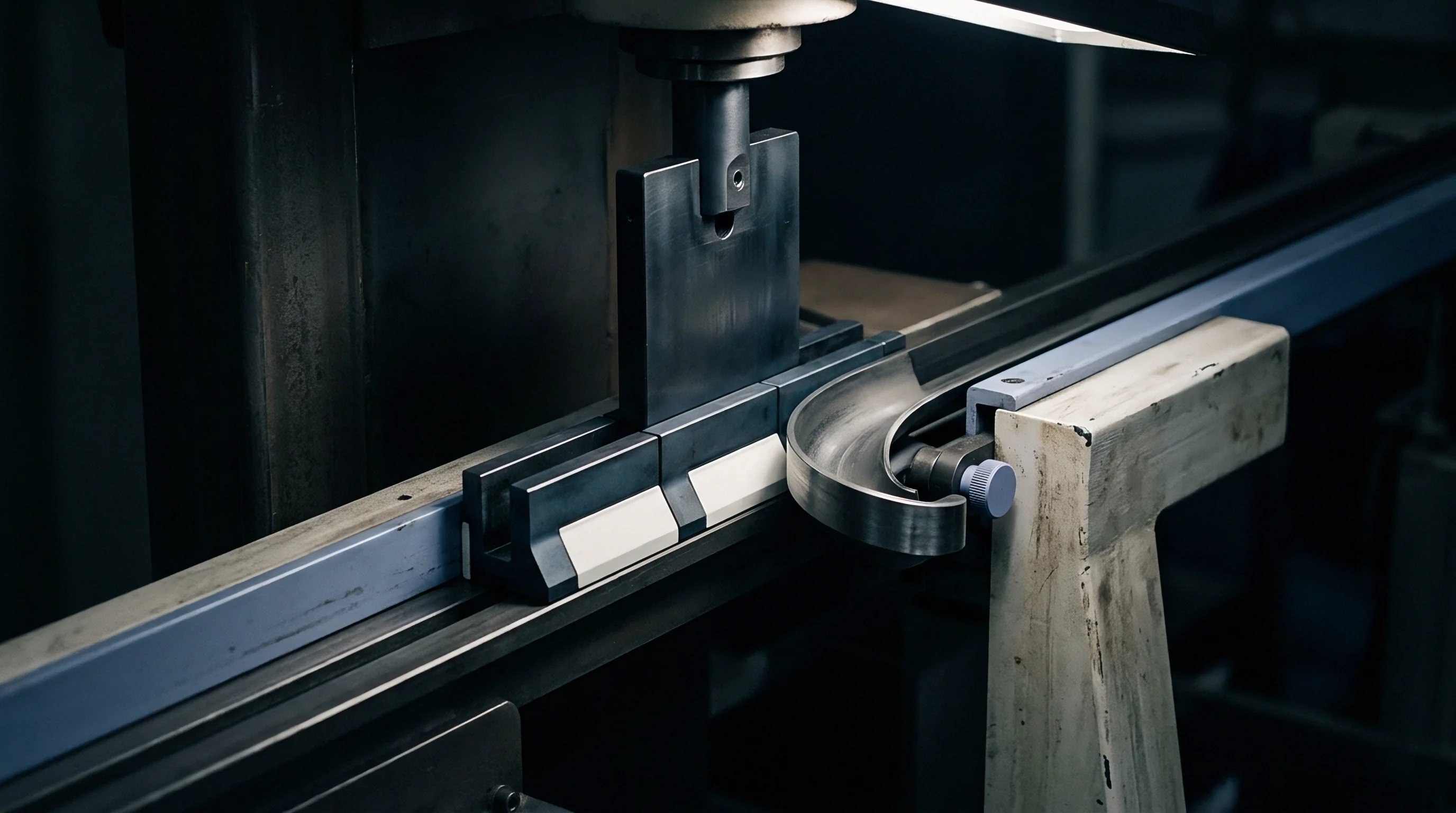
Inspection
Verifying crease quality requires objective physical testing under standard laboratory conditions. Visual checking catches severe surface liner cracking, but fails to measure internal delamination or predict high-speed folding performance. Instrumental evaluation isolates the structural parameters controlling converting behavior.
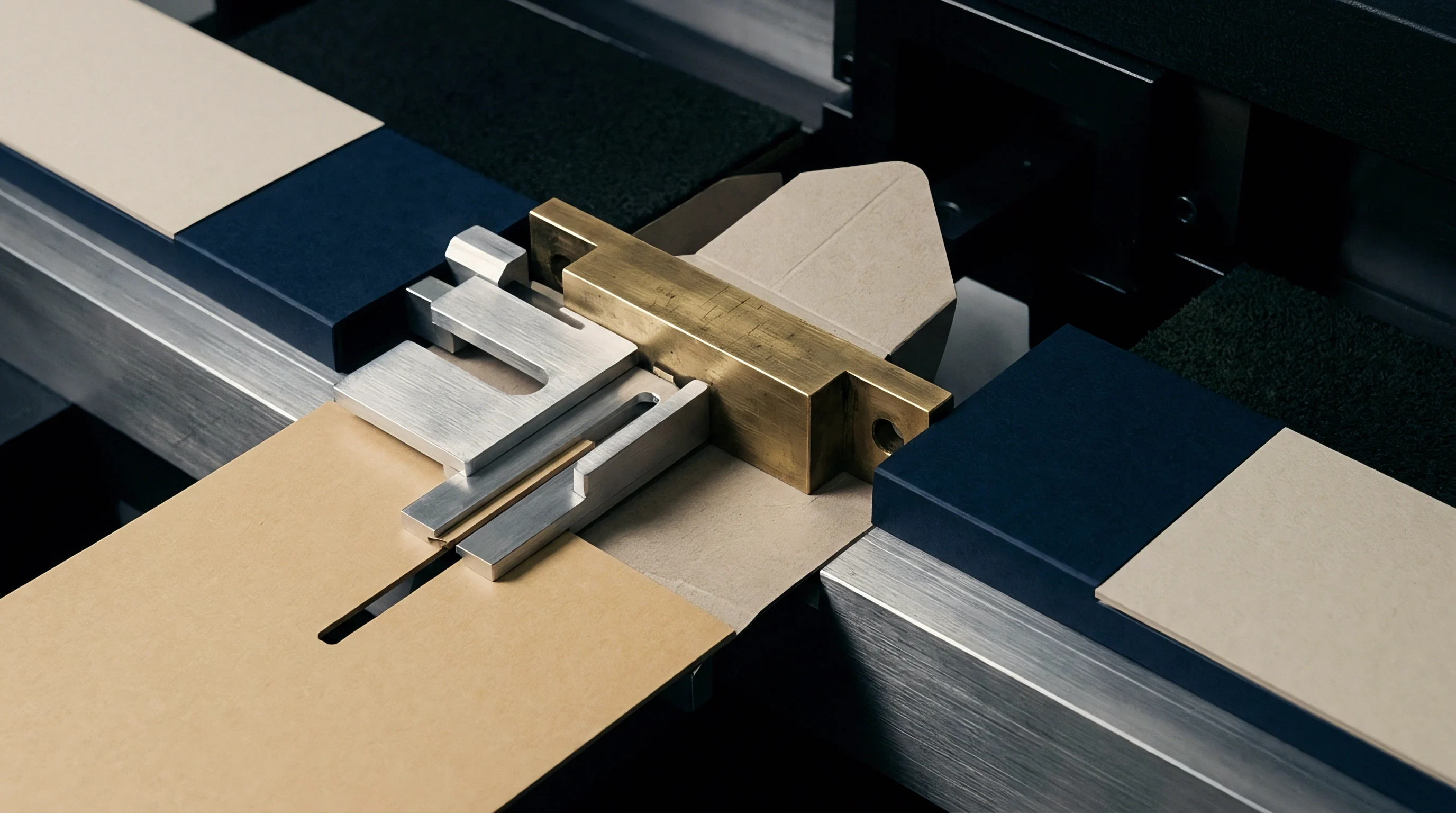
Instrumental Measurement of Score Bending Stiffness
Pneumatic test rigs record peak torque as a pre-broken creased sample rotates through a ninety-degree arc. Tests performed under ISO 2493 or TAPPI T 829 establish two key values: uncreased board bending stiffness (S_u) and creased score bending stiffness (S_c). Dividing creased stiffness by uncreased stiffness gives the Crease Stiffness Ratio (CSR), expressed as a percentage: CSR = (S_c / S_u) 100.
Because score stiffness governs folder-gluer feeding, optimal crease performance demands a Crease Stiffness Ratio between 30 percent and 45 percent. A ratio above 50 percent indicates insufficient internal delamination, forcing folding mechanisms to exert excessive force that bows box side panels. A ratio below 20 percent signals complete fiber rupture along the fold line, producing weak scores that buckle during automatic box filling.
Quality Control Thresholds for High Speed Folder-Gluer Lines
Converting downtime drops significantly when folding resistance stays within a narrow, predictable window across incoming board pallets. Modern folder-gluers run at belt speeds exceeding 400 meters per minute. At these velocities, inconsistent score stiffness causes folding hooks to hit carton blanks off-center, triggering machine jams, skewed glue seams, and high scrap rates.
Quality assurance documentation for high-speed score qualification specifies four critical physical parameters:
- Batch identification numbers track mill roll provenance and original web winding position for every converting master carton.
- Conditioned thickness values document caliper uniformity across five distinct test points under standard laboratory humidity.
- Bending moment profiles detail uncreased stiffness versus post-scoring resistance values recorded at fifteen and ninety degrees fold rotation.
- Liner integrity records document visual microscopic inspection results for outer ply fiber rupture following standardized fold cycles.
Operating high-speed folder-gluers with unverified score stiffness tolerances leads to line jams, damaged folding blank edges, and costly carton repacking cycles.
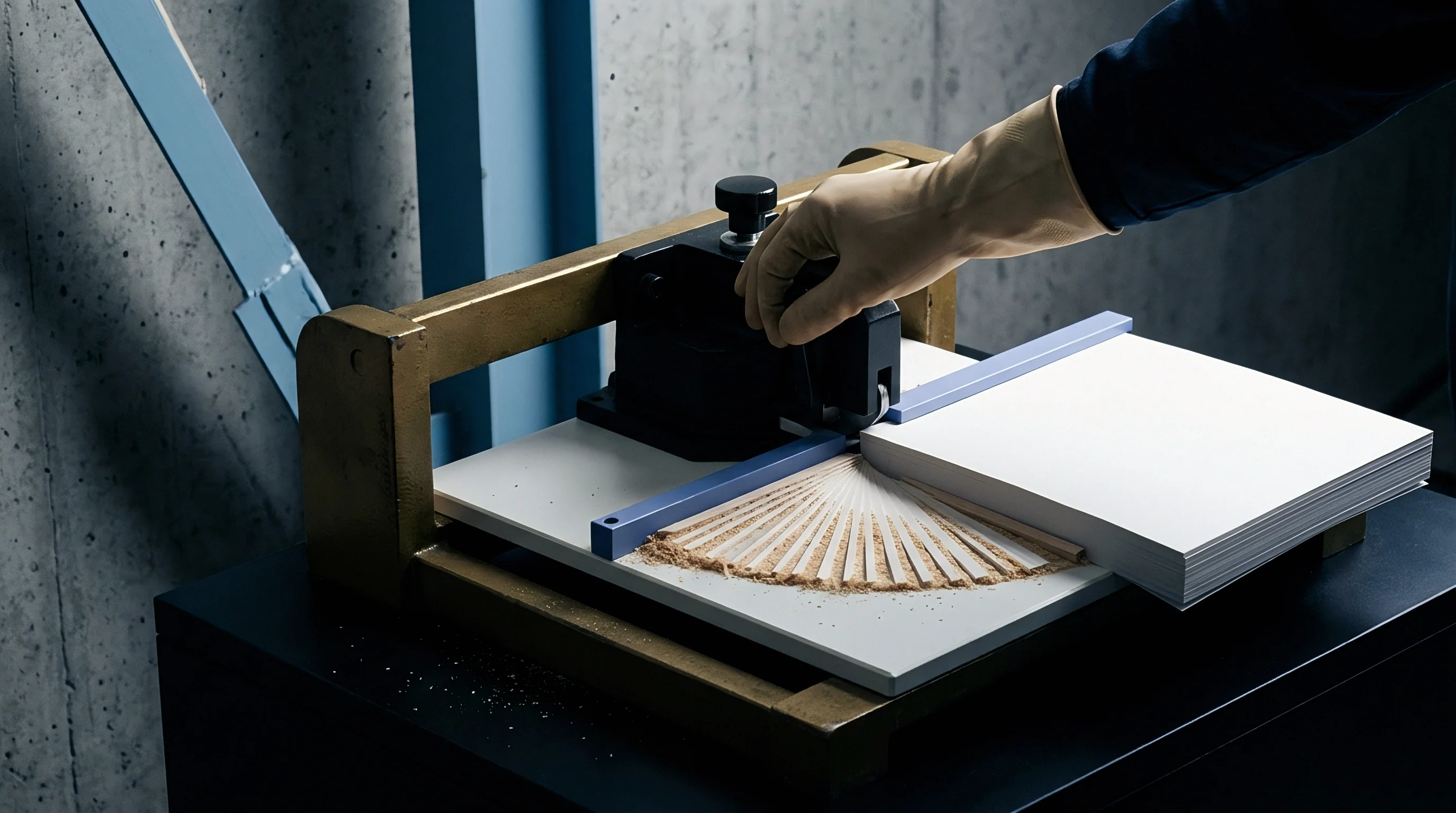
Outlay
Score quality decisions drive converting efficiency, make-ready waste, and overall unit costs. Low-cost tooling like plastic matrix strips seems economical during setup, but its instability increases waste and press downtime on long runs. Precision milled steel counter plates carry higher upfront costs, but reduce make-ready scrap and yield lower overall expenses per thousand finished cartons.

Commercial Impact of Counter Technology Selection
Capital expenditure on precision tooling pays returns by reducing press setup scrap and extending runs between counter replacements. On a press running at 8,000 sheets per hour, replacing worn matrix strips every 75,000 impressions consumes 45 minutes of active production time per shift, forfeiting 6,000 potential printed blanks per changeover.
Worked Economic Calculation for Matrix versus Steel Counter Tooling
Evaluating total cost per thousand units for five hundred thousand folding cartons demonstrates how tooling durability outweighs initial die preparation fees. Consider a 500,000-unit production run of 400-micron Folding Boxboard (FBB) converted on a 106 cm flatbed die cutter. Matrix strip setup costs 150 EUR in materials plus two hours of hand-channel application at 120 EUR per press hour, totaling 390 EUR.
However, matrix wear requires four channel replacements during the run, adding 600 EUR in material and downtime costs. Total matrix tooling cost reaches 990 EUR.
By contrast, a CNC-milled steel counter plate requires an upfront investment of 1,200 EUR and one hour of mounting setup at 120 EUR, totaling 1,320 EUR, but eliminates mid-run channel wear and press stoppages entirely. Matrix alignment drift causes a 2.5 percent spoilage rate (12,500 ruined blanks), whereas steel counter precision limits total scrap to 0.5 percent (2,500 blanks). At a board cost of 110 EUR per thousand blanks, matrix spoilage totals 1,375 EUR compared to 275 EUR for steel.
Combined tooling and scrap costs come to 2,365 EUR (4.73 EUR per thousand cartons) for matrix channels, versus 1,595 EUR (3.19 EUR per thousand cartons) for the steel plate. Milled steel tooling delivers net savings of 770 EUR on a single run.
| Performance Metric | Adhesive Matrix Strips | Milled Phenolic Plate | Hardened Steel Counter |
|---|---|---|---|
| Initial Tooling Material Cost | 150 EUR | 450 EUR | 1,200 EUR |
| Press Setup / Mounting Time | 2.0 hours | 0.5 hours | 1.0 hours |
| Channel Wear Life Limit | 75,000 impressions | 350,000 impressions | 10,000,000+ impressions |
| Mid-Run Maintenance Stoppages | 4 replacements (3.0 hrs) | 1 replacement (0.5 hrs) | 0 replacements (0 hrs) |
| Average Spoilage / Scrap Rate | 2.5 percent | 1.2 percent | 0.5 percent |
| Combined Tooling & Scrap Cost | 2,365 EUR | 1,822 EUR | 1,595 EUR |
| Net Tooling Cost / 1,000 Blanks | 4.73 EUR | 3.64 EUR | 3.19 EUR |
Milled steel counter plates lower total cost per thousand cartons on runs exceeding three hundred thousand units despite initial tool preparation expenses.
Because narrow channels increase required bending torque, matching counter channel geometry to substrate mechanical properties yields measurable reductions in waste scrap while protecting finished box structural integrity on high-speed filling lines.