Analytical Testing and Chain of Custody Audit Methods for Boxboard Sourcing
Boxboard claims require exact invoice codes, LC-GC-FID MOSH/MOAH testing under EN 16995, and ISO 2859-1 receiving audits to prevent customs holds.


Origin
Validation of boxboard raw materials begins on public certificate databases before a single pallet leaves the mill floor. Purchasing managers holding a claim of certified forest management check the fifteen-digit license code on the official database portal of the Forestry Stewardship Council or the Program for the Endorsement of Forest Certification. A valid supplier certificate number guarantees that an independent auditing body visited the mill within the trailing twelve months, yet it does not guarantee that the specific grade delivered carries certified status.
Chain of custody claims attach to specific line items on delivery notes and commercial invoices, identified by explicit claim codes such as FSC Mix Credit, FSC Recycled 100%, or PEFC 70% Certified. Without these exact invoice declarations, physical board delivered with a claim logo on the outer wrapping defaults to uncertified material under trade customs regulations.
Audit mechanics vary significantly between transfer systems and credit systems across board manufacturing networks. In a transfer system, every unit of input material carries an identical claim that passes directly to the finished folding boxboard, solid bleached sulfate, or coated recycled board. Credit systems allow mills to mix certified and uncertified virgin pulp within defined limits, generating volume credits that the mill assigns to a specific output batch.
A mill operating a credit ledger creates volume credits based on physical input weight adjusted for moisture content and process yield factors. Converting operations that purchase board from a credit-based mill need to confirm that the mill maintains an active credit ledger audit matching the exact mill order number specified in the mill specification sheet.
Credit claims transfer strictly through invoice declarations rather than physical markings on pallet wrappings.
Discrepancies in claim transfers frequently emerge at the interface between primary mills and independent board converters or off-site sheeting facilities. Converting facilities processing master rolls into custom sheets must maintain an independent chain of custody certificate to pass the certified claim onto the finished folding carton. An uncertified sheeter breaks the documentary chain, instantly converting certified mill rolls into non-certified board sheets regardless of the physical pulp origin.
Scope checks on supplier certificates require verifying three distinct parameters before placing production contracts:
- Product Group Scope confirms the certificate explicitly lists folding boxboard or coated recycled board under code P3.1 or P3.2, preventing suppliers from using a generic paper certificate to cover technical packaging substrates.
- Output System Qualification details whether the mill operates under credit, percentage, or transfer rules, which establishes how batch-level volume calculations are audited during annual surveillance reviews.
- Subcontractor Inclusions specifies whether third-party off-site storage, sheeting, or lamination facilities operate under the mill’s certified management system or hold separate operational certificates.
Contractual agreements for certified boxboard specify that failure to supply matching chain of custody invoice codes upon delivery grants the buyer immediate right of rejection, with all returned freight costs and converting schedule penalties assessed directly to the mill balance.

Fibre
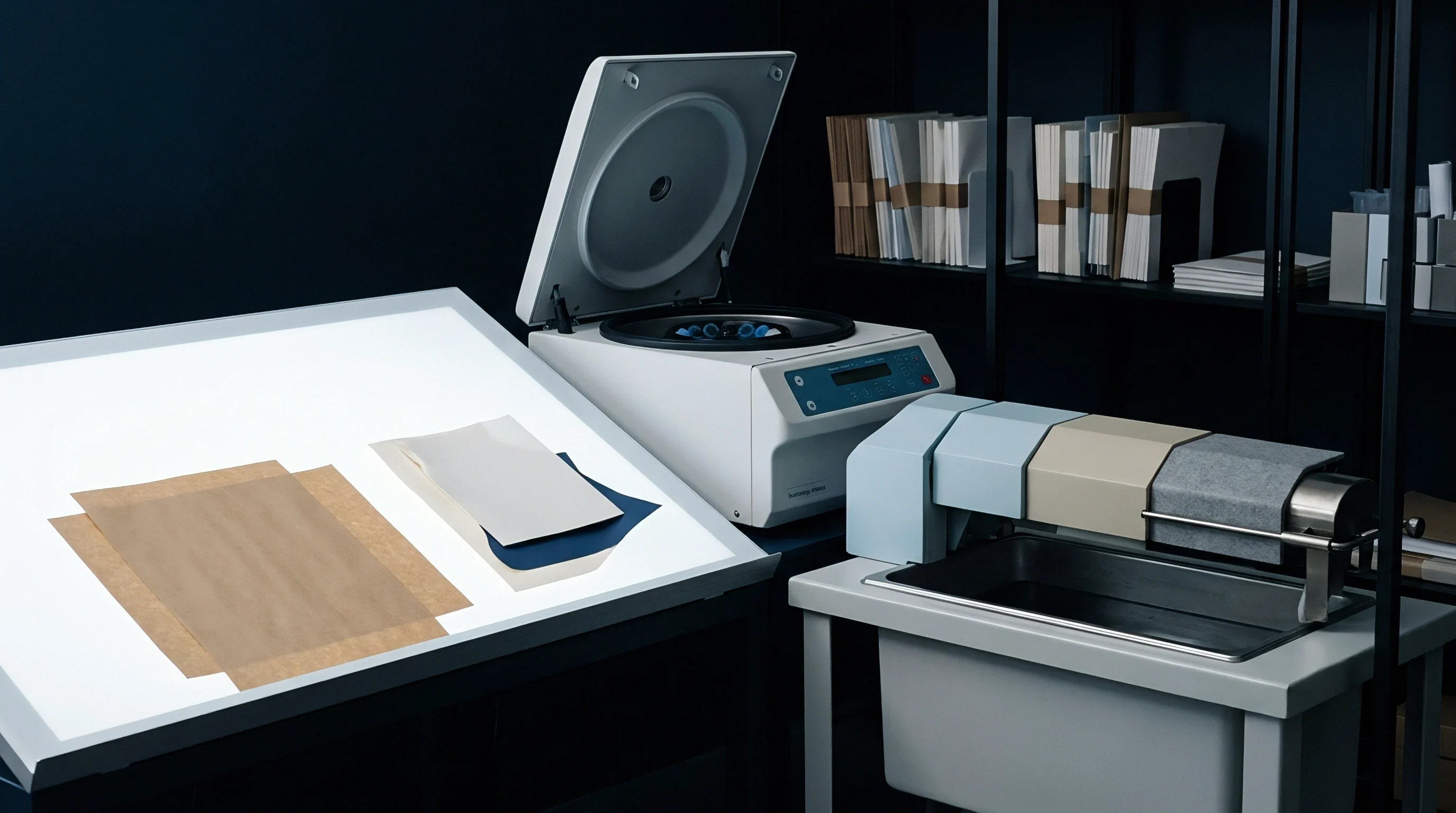
Laboratory confirmation of fiber furnish relies on optical microscopy combined with selective chemical staining to separate virgin softwoods, hardwoods, and recycled pulp streams. ISO 9184 procedures dictate pulping a board sample in boiling water, teasing apart individual fibers on a microscope slide, and applying Graff C stain or Herzberg reagent. Softwood fibers from pine or spruce exhibit distinct large bordered pits and wide lumens, staining blue-violet under Graff C when cooked via the kraft process.
Hardwood fibers from eucalyptus or birch present narrower diameters, prominent vessel elements, and stain deep reddish-orange due to higher hemicellulose and lower lignin distribution.
Recycled fiber content verification demands microscopic distinction between post-consumer waste and pre-consumer converting scrap. Post-consumer waste exhibits structural mechanical degradation, including frayed fibrillated edges, crushed cell walls, and residual ink particles adhering to fiber lumens. Pre-consumer scrap from boxboard converting plants retains clean cell morphology, crisp cut ends, and uniform dye uptake identical to virgin furnish.

Can Fiber Morphology Distinguish Post-Consumer Waste from Process Scrap?
Quantitative fiber analysis follows a structured four-stage laboratory process to establish species composition and mechanical history:
- Sample Disintegration involves soaking two grams of dry boxboard in 100 milliliters of deionized water at 90 degrees Celsius for twenty minutes, followed by high-shear agitation to isolate individual fibers without fracturing cell walls.
- Slide Preparation requires pipetting exactly 0.5 milliliters of dilute fiber suspension onto an optical glass slide, evaporating moisture at 60 degrees Celsius, and applying three drops of freshly prepared Graff C stain under a glass coverslip.
- Point Counting Verification utilizes a cross-hair eyepiece grid to count a minimum of 500 individual fibers across multiple transects, classifying each fiber by wood species, pulping process, and physical mechanical deformation.
- Mass Fraction Calculation applies standardized ISO weight factors to convert raw optical fiber counts into dry weight mass percentages for bleached softwood kraft, bleached hardwood kraft, and mechanical thermomechanical pulp.
Fibers do not lie. Stains reveal chemical structure.
Fourier-Transform Infrared Spectroscopy coupled with Attenuated Total Reflectance assists in identifying synthetic binder residues, poly-coating layers, and wet-strength additives in recycled fiber mixes. Polyethylene terephthalate fibers from recycled liquid packaging board show sharp ester carbonyl absorption bands at 1715 inverse centimeters, whereas polyamide-epichlorohydrin wet-strength resins generate distinct amide absorption peaks near 1640 and 1550 inverse centimeters.
Suppliers claiming 100% virgin hardwood composition frequently attribute trace softwood fibers found in microscopic audits to airborne contamination within shared mill piping systems during grade changeovers.

Extract
Food contact qualification for boxboard requires exhaustive chemical analysis of chemical migration into food simulants or dry food matrices. Paperboard substrates lack the absolute barrier properties of dense plastics, leaving migration pathways open for residual printing ink solvents, mineral oil hydrocarbons, photoinitiators, and plasticizers. Evaluation of overall migration and specific migration mandates standardized extraction protocols under controlled thermal exposure.
Mineral oil saturated hydrocarbons containing 10 to 35 carbon atoms and mineral oil aromatic hydrocarbons containing 10 to 35 carbon atoms represent the primary analytical challenge in recycled boxboard sourcing. GC-MS and GC-FID analysis following online coupled liquid chromatography isolates these fractions from food-contact board. Board produced from un-deinked recovered newsprint routinely yields MOSH levels exceeding 50 milligrams per kilogram and MOAH levels above 10 milligrams per kilogram.
Functional barrier coatings, such as extruded polyethylene furanoate, dispersion-coated acrylics, or aluminum foil laminates, must reduce MOAH migration below the analytical quantification limit of 0.1 milligrams per kilogram into food simulants.
| Chemical Analyte | Standard Test Method | Simulant / Exposure | Regulatory Target Limit |
|---|---|---|---|
| Overall Migration | EN 1186-13 | Modified Polyphenylene Oxide (Tenax), 10 days at 40°C | 10 mg/dm² surface area |
| Cold Water Extract | EN 645 | Deionized water, 24 hours at 23°C | Absence of odor, toxic metals |
| Hot Water Extract | EN 647 | Deionized water, 2 hours at 80°C | Formaldehyde < 1.0 mg/dm² |
| MOSH (C10 to C35) | EN 16995 / DIN 51659-2 | Solvents extract / HPLC-GC-FID | < 9.0 mg/kg food dry mass |
| MOAH (C10 to C35) | EN 16995 / DIN 51659-2 | Solvents extract / HPLC-GC-FID | < 0.1 mg/kg (detection limit) |
| Heavy Metals (Pb, Cd, Hg, Cr VI) | EN 12498 / EN 12497 | Acid digestion / ICP-OES | Sum total < 100 mg/kg dry board |
Evaluation of functional barrier efficiency against mineral oil migration requires a specific analytical sequence. Take three board samples measuring 100 square centimeters. Place the coated face in direct contact with five grams of poly(2,6-diphenyl-p-phenylene oxide) porous polymer beads, known commercially as Tenax.
Seal the testing cells and store them in a climate chamber at 40 degrees Celsius for exactly ten days. Extract the Tenax with hexane containing internal standards, including bicyclohexyl and cholestane. Inject the extract into an HPLC-GC-FID system to quantify total MOSH and MOAH mass transfer per unit area.
Mineral oil aromatic hydrocarbon migration into dry food matrices must stay below 0.1 milligrams per kilogram to pass compliance audits.
Consider a sourcing scenario evaluating three folding boxboard options for dry cereal packaging. Option A utilizes an uncoated recycled board with no barrier, returning a total MOSH migration of 34.2 milligrams per kilogram under Tenax testing. Option B employs a recycled board coated with a 12-gram-per-square-meter water-based dispersion barrier, yielding a MOSH migration of 4.1 milligrams per kilogram and MOAH below 0.1 milligrams per kilogram.
Option C uses a virgin SBS board with no barrier, exhibiting MOSH migration of 0.8 milligrams per kilogram originating solely from converting equipment lubricants. The mid-tier dispersion option delivers full regulatory compliance while cutting raw material costs by 14 percent compared to solid bleached sulfate.
Purity costs real money. Extraction requires clean solvents.
The standard laboratory protocol for aqueous extraction of volatile organic compounds follows a precise numbered sequence:
- Cut ten grams of dry boxboard into five-by-five millimeter squares using solvent-cleaned stainless steel shears.
- Place board pieces into a 250-milliliter glass digestion flask and add 100 milliliters of cold deionized water matching EN 645 specifications.
- Stopper the flask securely and incubate at 23 degrees Celsius for 24 hours under continuous gentle agitation at 120 revolutions per minute.
- Filter the aqueous extract through a 0.45-micrometer PTFE syringe filter directly into a clean autosampler vial.
- Quantify heavy metals including lead, cadmium, mercury, and hexavalent chromium using Inductively Coupled Plasma Optical Emission Spectrometry against certified calibration standards.
Failure to isolate mineral oil migration pathways exposes package buyers to product recall liability, retailer delisting, and customs border rejections across strict European import jurisdictions.

Disintegration
Recyclability and organic recovery testing measure how boxboard behaves under industrial repulping and composting operations. Standardized repulpability testing following PTS-RH 021/97 or CEPI laboratory testing protocols subjects board to mechanical shear forces in water to evaluate fiber yield and reject fractions. Coated boards, polyethylene-laminated cartons, and heavy barrier substrates generate varied non-fiber reject percentages that alter mill recycling economics.
Industrial compostability certification under EN 13432 or ASTM D6400 mandates four distinct testing phases: chemical characterization, ultimate aerobic biodegradability, physical disintegration, and ecotoxicity evaluation. Physical disintegration requires that at least 90 percent of the boxboard dry mass passes through a two-millimeter sieve after twelve weeks of exposure to controlled composting conditions at 58 degrees Celsius.
| Test Parameter | Method Reference | Acceptance Criterion | Commercial Relevance |
|---|---|---|---|
| Repulping Fiber Yield | PTS-RH 021/97 Category II | > 80% usable pulp fiber | Standard paper mill pulper recovery efficiency |
| Coarse Reject Fraction | CEPI Recyclability v2 | < 10% mass on 0.15 mm slot screen | Contaminant disposal cost at recycled mills |
| Aerobic Biodegradation | ISO 14855-1 | > 90% carbon conversion in 180 days | Prerequisite for industrial compostability mark |
| Sieve Disintegration | EN 13432 Clause 6.3 | > 90% mass pass through 2 mm sieve | Compost facility screening pass rate |
| Plant Ecotoxicity | OECD 208 Plant Growth | > 90% germination rate vs control | Ensures compost quality for agricultural soil |
Testing takes four weeks. Sludge retains trace metals.
Evaluation of heavy barrier boxboard under industrial pulping conditions reveals severe process limitations. A 350-gram-per-square-meter board carrying a 15-gram-per-square-meter extruded polyethylene film layer produces a coarse reject rate of 4.3 percent during standard disintegration testing. The plastic film fragments into large sheets that plug hydrapulper extraction plates, requiring mechanical downtime for clearing.
Replacing the extruded plastic layer with an aqueous dispersion coating reduces coarse rejects to 0.8 percent, allowing the broken coating particles to pass through screening slots for removal during flotation de-inking.
Disintegration testing measures physical breakdown, whereas biodegradation proves complete micro-organic conversion into carbon dioxide and water.
Selection between recyclability claims and industrial compostability credentials requires executing a structured decision workflow:
- Collection Infrastructure Availability establishes whether the target sales region maintains municipal curbside paper recycling networks or commercial industrial composting facilities.
- Barrier Layer Composition dictates whether polymer films require mechanical separation at the paper mill pulper or biological digestion inside municipal composting vessels.
- Chemical Additive Screening verifies that fluorinated substances, wet-strength resins, and heavy metal inks fall below mandatory regulatory thresholds before embarking on laboratory biodegradation trials.
- Package Residue Load determines if food contamination levels favor biological organic recovery over traditional paper re-pulping systems.
Questions linger regarding whether chemical fluorine testing thresholds will lower to zero under future European Union packaging regulations, potentially invalidating existing compostability certifications for grease-resistant boxboard grades.
Dock
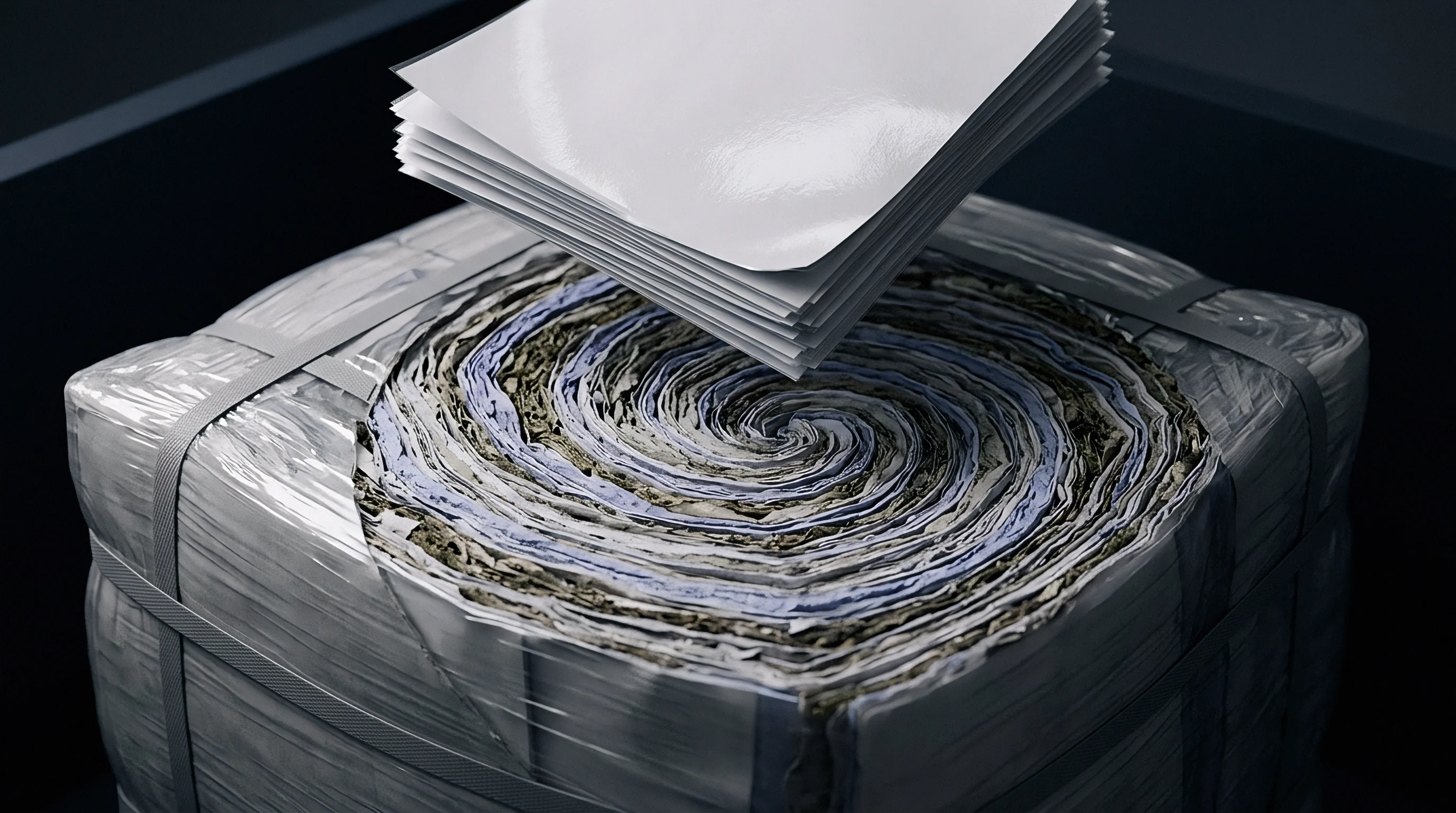
Receiving inspection at the converting plant or distribution center serves as the physical quality firewall before raw boxboard enters production lines. Goods receipt verification combines document cross-checking with physical bench testing under standardized atmospheric conditions. ISO 187 specifies that boxboard conditioning must occur at 23 degrees Celsius and 50 percent relative humidity for 24 hours prior to structural strength testing.
Acceptance Quality Limit sampling under ISO 2859-1 governs sample sizing for incoming board shipments. Inspection Level II normal single sampling dictates selecting specific roll or sheet counts based on total lot size. Defects split into critical items, such as gross moisture variance or incorrect certified claim labeling, major defects including grammage variance exceeding five percent, and minor defects such as minor edge damage or pallet wrap tearing.
| Physical Property | Standard Test Method | Target Tolerance | Operational Impact |
|---|---|---|---|
| Grammage (Basis Weight) | ISO 536 | ± 3% of nominal g/m² | Direct material yield and shipping weight variance |
| Board Caliper (Thickness) | ISO 534 | ± 5% of nominal micrometers | Carton feeding, folding crease setup on die-cutters |
| Bending Stiffness (Taber) | ISO 2493-1 | – 7% maximum drop from spec | High-speed packaging line carton bulge resistance |
| Cobb 60 Water Absorption | ISO 535 | Max 30 g/m² top face | Water-based ink drying, adhesive bonding speed |
| Bursting Strength | ISO 2759 | Minimum threshold per grade | Stacking strength in freight transit containers |
Data settles every dispute. Samples arrive at docks. Clean records clear customs.
Wet board lacks strength.
Physical verification at the receiving dock utilizes portable, calibrated measuring equipment. Grammage verification requires cutting exactly 100-square-centimeter samples using a precision circular punch, followed by weighing on a digital analytical balance accurate to 0.001 grams. Caliper determination utilizes a digital micrometer applying a constant pressure of 50 kilopascals over a presser foot area of two square centimeters.
Samples exhibiting thickness variations greater than five percent across the cross-machine direction trigger immediate lot isolation and secondary laboratory verification.
Testing Cobb water absorption measures the mass of water absorbed by one square meter of board surface over sixty seconds. A dry board sample weighing 12.45 grams gains 0.28 grams after sixty seconds of contact with 100 milliliters of distilled water inside a standard Cobb ring. Multiplying the weight gain by 100 converts the measurement to 28 grams per square meter.
A Cobb value exceeding 35 grams per square meter indicates inadequate surface sizing, leading to soft board feed jams and ink bleeding during high-speed offset printing.
Reject the whole pallet lot immediately when receiving dock moisture readings exceed eight percent across three consecutive roll cores.

Audit
Mass balance reconciliation forms the ultimate audit mechanism for chain of custody compliance and recycled content claims. Forensic auditors compare total physical pulp and board purchases against outgoing product sales over a specified reporting period, typically twelve months. Conversion loss factors must reflect real converting floor waste, including trim waste, make-ready sheets, and rejected cartons.
Fraud alters the balance.
Transaction Verification Systems developed by international certification schemes mandate cross-referencing buyer purchase orders against supplier sales declarations within a central digital ledger. When a converter claims 500 metric tonnes of FSC Mix Credit folding boxboard purchased from a mill, the auditor verifies that the mill’s transaction registry contains a matching sales claim of identical volume and date range. Mismatches trigger mandatory corrective action requests and potential suspension of the converter’s chain of custody certificate.
Assembling a defensible compliance dossier for the Packaging and Packaging Waste Regulation requires merging analytical test reports, chain of custody scope certificates, and receiving inspection records into a centralized digital repository. The regulatory dossier contains supplier food contact declarations of compliance, heavy metal ICP-OES test reports dated within twenty-four months, ISO 17025 accredited repulpability certificates, and invoice-level CoC claim verification logs. Importers of record presenting unverified paper packaging claims at European customs borders face immediate shipment holds, mandatory administrative fines, and destruction orders for non-compliant packaging inventories.
Contractual terms between brand owners and board suppliers specify that annual third-party compliance audits may occur with forty-eight hours notice. The auditor retains full access to inventory software, physical raw material warehouses, waste balance sheets, and historical customer invoices to ensure every claim printed on a folding carton matches verified material inputs.