Analytical Differentiation of Recycled Content in Paperboard Packaging
Analytical paperboard testing combines optical fiber morphology, MOSH MOAH chromatography, and ash calcination to verify chain of custody recycled content claims.
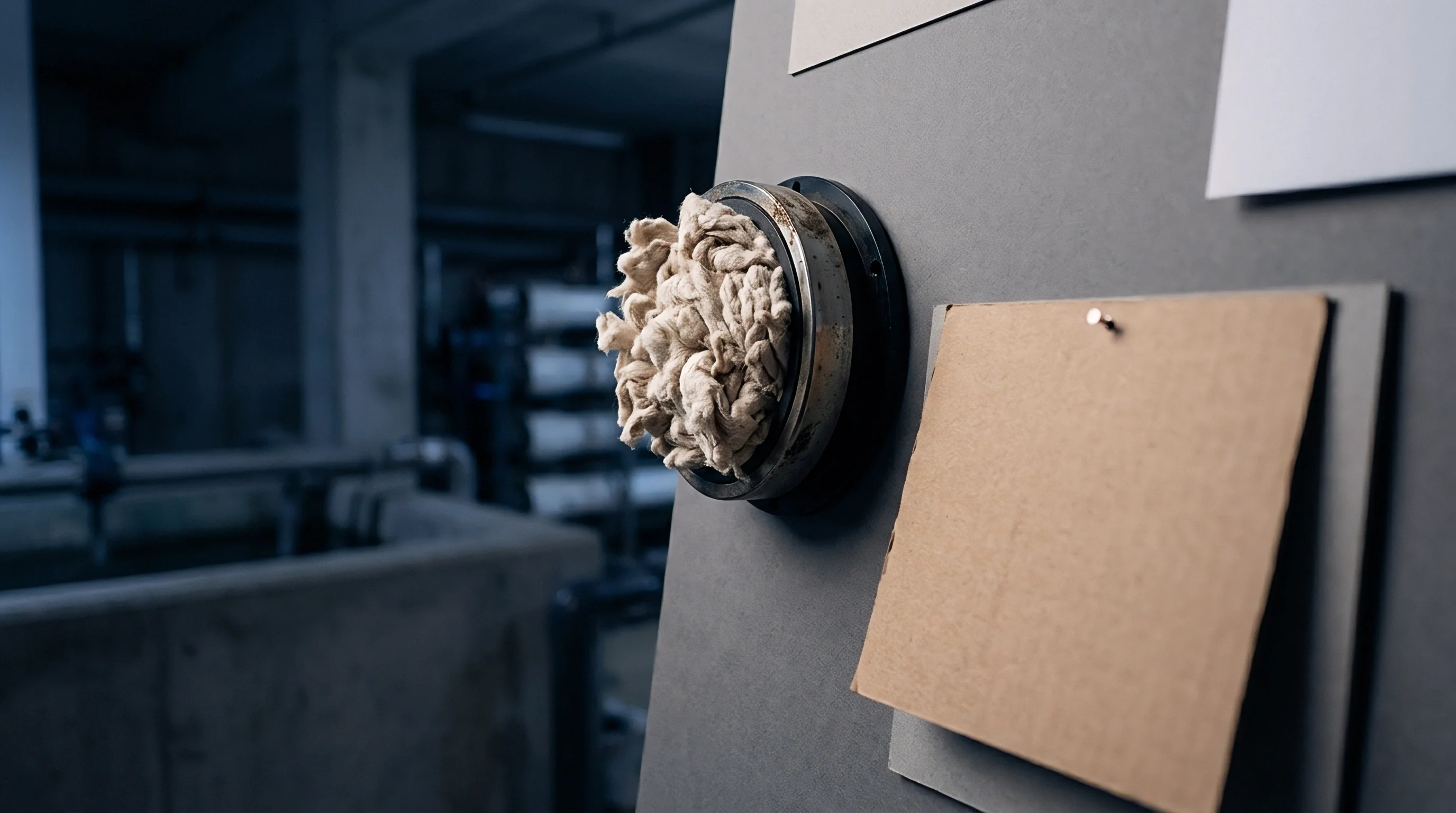
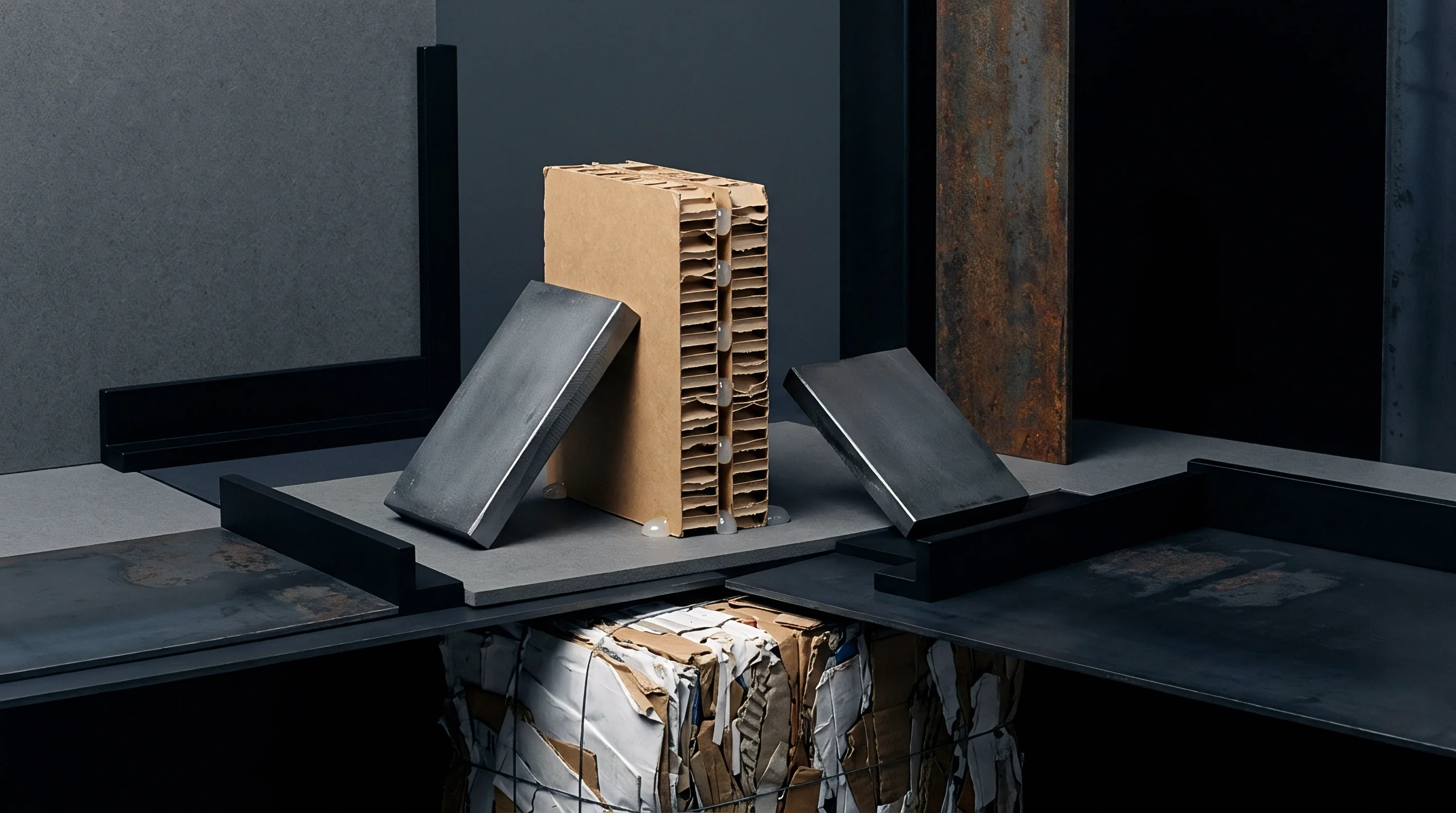
Fibre
Cellulosic structures undergo cumulative mechanical and physical alteration during repeated pulping, refining, and drying cycles. When paperboard mills process secondary furnish, recovered cell walls display distinct structural changes compared to virgin wood pulps. Analytical laboratories utilize these physical shifts to identify and quantify secondary furnish content within finished packaging substrates.

Optical Stain Responses and Morphological Indicators
Microscopic evaluation relies on chemical dye selectivity to differentiate cell wall chemical compositions. Under ISO 9184 optical microscopy testing, technicians apply specialized stains such as Graff C and Herzberg reagents to dispersed fiber preparations. Graff C reagent, composed of aluminum chloride, zinc chloride, iodine, and potassium iodide, reacts with residual lignin and structural carbohydrates to produce diagnostic color responses.
Virgin unbleached softwood kraft fibers stain dark blue to blue-violet due to high cellulose accessibility and uniform lignin distribution. Unbleached mechanical pulps turn yellow due to elevated lignin content. Recycled secondary furnish presents a heterogeneous mixture of stain responses within a single slide preparation.
Repulped fibers display patchy yellow-green staining adjacent to deeply stained violet segments, reflecting localized chemical bleaching, deinking, and mechanical damage from prior conversion cycles.
Automated optical fiber analyzers measure dimensional parameters across thousands of individual elements per sample run. Primary metrics include length-weighted mean length, fiber width, cell wall thickness, and microfibrillation index. Unbleached virgin softwood kraft typically exhibits a length-weighted fiber length ranging from 2.2 to 3.2 millimeters.
Secondary furnish recovered from mixed waste paper shows a significantly truncated distribution, with length-weighted mean values dropping between 1.1 and 1.8 millimeters. Mechanical action during repulping produces characteristic physical defects including fiber cutting, end-fraying, lumen collapse, and micro-compressions along the cell wall structure. The test holds.
Graff C staining under ISO 9184-4 differentiates unbleached softwood kraft from repulped secondary furnish through color intensity shifts at 23°C and 50 percent relative humidity.

Hornification and Water Retention Value Metrics
Drying paperboard sheets during manufacturing causes irreversible internal hydrogen bonding within secondary cell walls. This phenomenon, termed hornification, permanently reduces the swelling capacity of cellulose fibers upon rewetting. Laboratories quantify hornification using the Water Retention Value test specified in ISO 23714.
A standardized fiber suspension undergoes centrifugation at 3,000 times gravity for 30 minutes to remove inter-fiber water, followed by gravimetric oven drying at 105°C to determine absorbed intra-fiber water content.
Virgin bleached kraft pulps exhibit Water Retention Values between 1.40 and 1.80 grams of water per gram of dry fiber. Post-consumer recycled fibers, having passed through at least one commercial drying cycle, exhibit Water Retention Values ranging between 0.75 and 1.10 grams per gram. The degree of hornification correlates directly with the processing history of the furnish.
Fibre walls collapse. Values vary by mill.
| Furnish Type | Mean Length-Weighted Fiber Length (mm) | Water Retention Value (g/g under ISO 23714) | Graff C Stain Reaction Color Profile | Cell Wall Defect Frequency (Defects per 100 Fibers) |
|---|---|---|---|---|
| Virgin Softwood Kraft (Unbleached) | 2.40 to 3.20 | 1.45 to 1.75 | Uniform Blue-Violet | < 5 |
| Virgin Hardwood Kraft (Bleached) | 0.80 to 1.20 | 1.25 to 1.50 | Uniform Blue-Grey | < 8 |
| Pre-Consumer Recycled Cuttings (Unprinted) | 1.80 to 2.20 | 1.10 to 1.30 | Predominantly Blue with Minor Violet Variations | 15 to 25 |
| Post-Consumer Recovered Waste (Mixed Grades) | 1.10 to 1.65 | 0.75 to 1.05 | Heterogeneous Yellow, Green, Violet, and Magenta Mix | > 50 |
Mills frequently attribute shortened cell wall segments to aggressive stock preparation refining rather than recycled secondary furnish content.

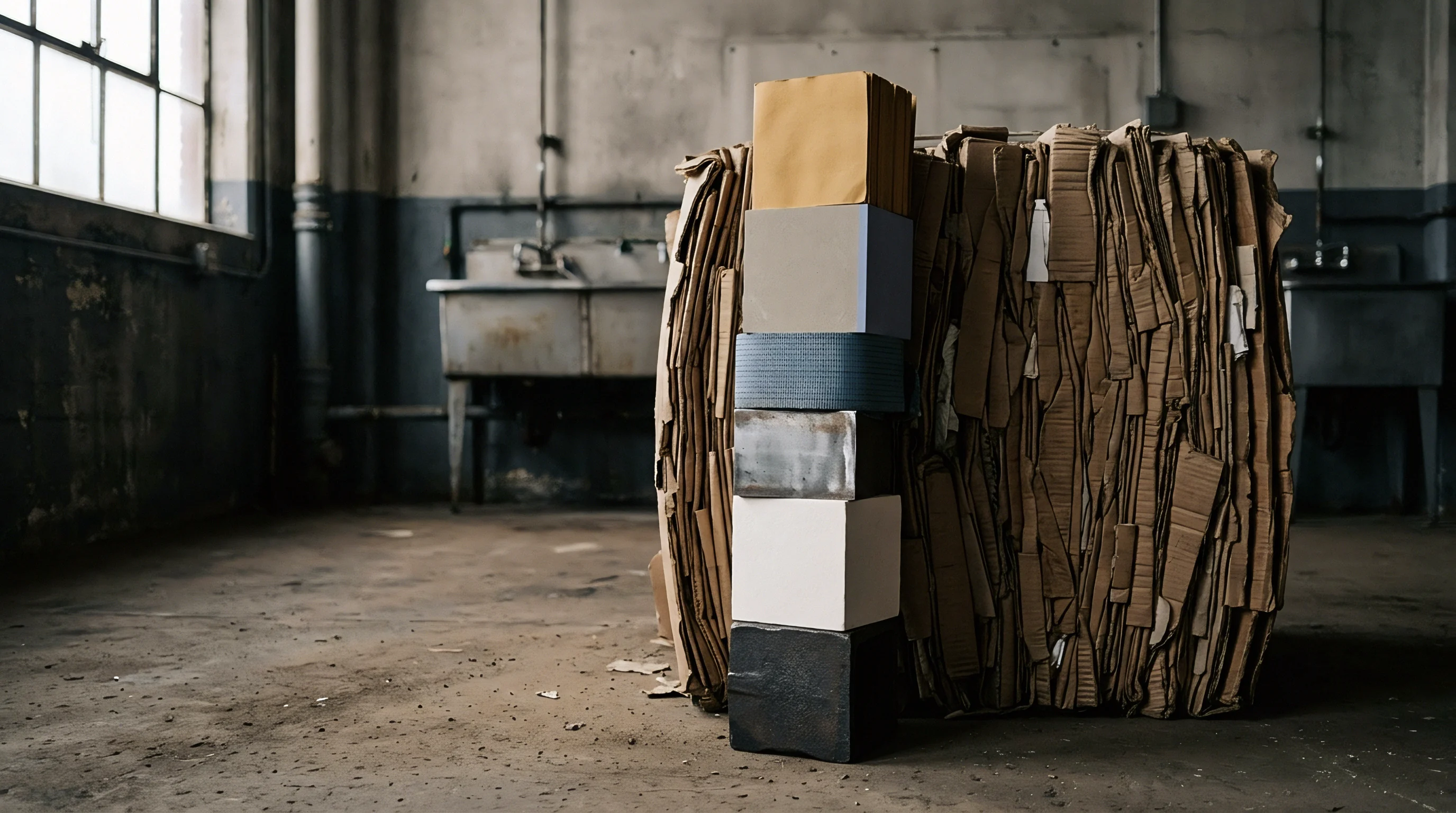
Contaminants
Chemical residual profiles in paperboard matrixes serve as distinct fingerprints of post-consumer recovery streams. Virgin mechanical and chemical pulps contain natural wood extractives such as resin acids, fatty acids, and sterols. Secondary furnish matrices accumulate synthetic chemical additives, printing ink components, adhesive residues, and industrial trace compounds introduced during prior converting, commercial usage, and collection operations.
Hydrocarbon Profile Distinctions via Chromatographic Analysis
Mineral oil fractions originating from offset printing inks and recycled newsprint concentrate within recovered paperboard stock. Laboratories quantify these fractions using online High-Performance Liquid Chromatography coupled with Gas Chromatography and Flame Ionization Detection under DIN 51635 and EN 16995. The analysis separates mineral oil hydrocarbons into two distinct fractions: Mineral Oil Saturated Hydrocarbons (MOSH) and Mineral Oil Aromatic Hydrocarbons (MOAH).
Virgin paperboard substrates demonstrate baseline MOSH concentrations below 2 milligrams per kilogram of dry board, with MOAH fractions remaining below analytical detection limits (0.5 milligrams per kilogram). Post-consumer recycled paperboard lacking functional barrier coatings displays MOSH concentrations ranging from 30 to 150 milligrams per kilogram across carbon ranges C10 to C35. MOAH concentrations in unbarrier recycled board frequently reach 5 to 25 milligrams per kilogram.
The presence of sharp, unresolved complex mixture humps in gas chromatograms within the C16 to C25 carbon range confirms the presence of mineral-oil-based offset printing ink residues inherent to post-consumer newsprint and commercial print stock. Extracts reveal the history.
Non-compliance with EN 645 cold water extraction thresholds voids the compliance declaration for primary food contact.
Synthetic Chemical Markers and Legacy Additive Profiles
Specific industrial compounds associated with specialty paper grades persist through repulping operations. Diisopropylnaphthalene (DIPN) functions as a solvent in carbonless copy papers. Bisphenol A (BPA) and Bisphenol S (BPS) serve as color developers in thermal paper receipts.
Photoinitiators including benzophenone, 4-methylbenzophenone, and 2-isopropylthioxanthone (ITX) originate from ultraviolet-cured inks applied to folding cartons. Gas chromatography-mass spectrometry (GC-MS) and liquid chromatography-tandem mass spectrometry (LC-MS/MS) isolate and quantify these trace compounds down to parts-per-billion levels.
Uncontaminated virgin pulps contain zero detectable DIPN, BPA, or photoinitiators. Secondary furnish derived from commercial post-consumer waste routinely exhibits DIPN levels between 0.5 and 10 milligrams per kilogram, and cumulative photoinitiator concentrations between 0.1 and 3 milligrams per kilogram. Data confirms the discrepancy.
Inks leave chemical footprints.
| Chemical Marker Compound | Primary Source in Furnish | Analytical Method Standard | Virgin Board Baseline (mg/kg) | Post-Consumer Recycled Baseline (mg/kg) |
|---|---|---|---|---|
| MOSH (C10 to C35) | Offset Inks, Lubricants | EN 16995 (HPLC-GC-FID) | < 2.0 | 30.0 to 150.0 |
| MOAH (C10 to C35) | Newsprint Inks, Solvents | EN 16995 (HPLC-GC-FID) | < 0.5 (ND) | 5.0 to 25.0 |
| DIPN (Diisopropylnaphthalene) | Carbonless Copy Stock | EN 14719 (GC-MS) | < 0.05 (ND) | 0.5 to 10.0 |
| Benzophenone / Photoinitiators | UV Packaging Inks | EN 15586 (GC-MS/LC-MS) | < 0.01 (ND) | 0.1 to 3.0 |
| Bisphenol A (BPA) | Thermal Receipts | EN 13130-13 (LC-MS/MS) | < 0.1 (ND) | 1.0 to 15.0 |
Verification workflows must evaluate contaminant pathways against specific end-use compliance criteria:
- MOSH/MOAH Migration Limits evaluate mineral oil migration rates into dry food simulants using Modified Polyphenylene Oxide (Tenax) under EN 14338 conditions at 40°C for 10 days to confirm functional barrier efficiency.
- DIPN Marker Quantification measures solvent extraction levels under EN 14719 to establish the mass fraction of secondary carbonless paper stock present in recycled pulps.
- Thermal Paper Contaminant Screening extracts bisphenols via solvent dissolution followed by LC-MS/MS analysis to identify post-consumer receipts within office waste paper furnish.
- Photoinitiator Residue Isolation determines UV ink chemical profiles through solvent extraction and gas chromatography to detect decorated folding boxboard in repulping streams.
Detection of unmitigated mineral oil aromatic hydrocarbons above target action limits forces product recalls and complete inventory destruction at retail distribution hubs.


Isotopes
Radiocarbon measurement through accelerator mass spectrometry isolates biogenic carbon fractions from fossil-derived petroleum polymers in coated packaging boards. Standardized procedures under ASTM D6866 and EN 16640 determine the ratio of carbon-14 to carbon-12 isotopes within a given matrix, providing an accurate quantification of bio-based material versus petroleum-based synthetic materials.
Accelerator Mass Spectrometry for Biogenic Carbon Fractions
Determining the ratio of carbon fourteen to carbon twelve identifies petroleum based additives in poly-coated paperboards. Atmospheric carbon dioxide contains a stabilized concentration of carbon-14 generated by cosmic radiation. Living plants absorb carbon-14 during photosynthesis, incorporating this isotope into wood structural cellulose at modern atmospheric equilibrium levels (100 percent modern carbon, or pMC).
Petroleum feedstocks, derived from organic matter buried millions of years ago, contain zero carbon-14 due to radioactive decay over its 5,730-year half-life.
Testing laboratories burn paperboard samples in specialized combustion tubes, converting all organic carbon to carbon dioxide gas. The gas is reduced to elemental graphite and loaded into an Accelerator Mass Spectrometer (AMS). The instrument quantifies absolute atom counts of carbon-14 relative to carbon-12 and carbon-13.
Uncoated paperboard manufactured strictly from plant fibers displays a biogenic carbon content of 100 percent. Paperboard extrusion-coated with low-density polyethylene (LDPE) or laminated with synthetic latices exhibits a decreased biogenic carbon value reflecting the mass ratio of the fossil-derived polymer layer. Carbon decay provides time.
A elevated concentration of diisopropylnaphthalene signals the presence of recycled carbonless copy stock in the repulping furnish.

Limitations in Distinguishing Virgin from Recycled Plant Material
Trees absorb atmospheric carbon dioxide continuously during growth across recent decades. Plant cellulose harvested today contains modern carbon-14 levels identical to plant cellulose harvested twenty years ago, within analytical precision margins (+/- 0.5 percent modern carbon). Consequently, radiocarbon measurement cannot distinguish virgin wood pulp from post-consumer recycled paper pulp.
Both materials yield a 100 percent biogenic carbon signature because both originate from modern biological carbon fixation.
Radiocarbon testing precisely quantifies the bio-based carbon fraction of poly-coated boards, bio-synthetic barrier coatings, aqueous dispersion barriers, and synthetic adhesive binders. A paperboard sample claiming 100 percent bio-based content that utilizes synthetic polyethylene terephthalate (PET) lamination will fail isotope validation, yielding a biogenic carbon result proportional to the weight of the cellulose matrix minus the fossil-based coating. The test isolates modern plant matter from ancient fossil deposits, leaving the differentiation of virgin versus secondary wood fiber to morphological and chemical chromatographic methods.
Whether future high-precision stable isotope ratio mass spectrometry measuring oxygen-18 and deuterium signatures can reliably map regional timber growth sites through repeated recycling cycles remains an open technical inquiry.


Ash
Inorganic non-combustible residue testing via dual-temperature calcination quantifies mineral filler loadings introduced during papermaking and board conversion. Papermill wet-end operations incorporate mineral fillers to enhance opacity, brightness, printability, and sheet stiffness. Secondary furnish collection streams accumulate diverse mineral loads from coated broke, commercial printing coatings, and deinking residues.
Dual Calcination Protocols and Inorganic Filler Quantification
Subjecting dry paperboard samples to controlled thermal oxidation removes all organic cellulose and polymeric binders. Standard test method ISO 1762 specifies calcination at 525°C (+/- 25°C). Heating to 525°C burns off organic matter while preserving volatile inorganic minerals such as calcium carbonate, preventing thermal decomposition into calcium oxide and carbon dioxide gas.
Standard test method ISO 2144 specifies calcination at 900°C (+/- 25°C), forcing complete decarbonation of calcium carbonate minerals into calcium oxide.
Comparing residue masses obtained at 525°C against residue masses obtained at 900°C permits exact calculation of calcium carbonate mass fractions versus inert mineral fillers such as kaolin clay, titanium dioxide, and talc. Solid Bleached Sulphate (SBS) virgin paperboard typically contains total ash content below 2.0 percent by dry weight at 525°C. Folding Boxboard (FBB) featuring virgin mechanical pulp middle plies exhibits total ash values between 3.0 and 8.0 percent, concentrated in the thin coated top plies. White Lined Chipboard (WLC or CRB) manufactured from post-consumer recycled waste exhibits total ash values ranging from 12.0 to 28.0 percent by dry weight due to heavy accumulation of coated paper residues, chalk fillers, and pigment coatings.
Fillers alter thermal mass.
| Paperboard Grade Code | Furnish Construction | Ash Content at 525°C (ISO 1762 Weight %) | Ash Content at 900°C (ISO 2144 Weight %) | Dominant Mineral Filler Components Identified |
|---|---|---|---|---|
| SBS (Solid Bleached Sulphate) | 100% Virgin Bleached Chemical Pulp | 0.5 to 2.5 | 0.4 to 2.0 | Kaolin Clay, Titanium Dioxide (Trace) |
| SUB (Solid Unbleached Sulphate) | 100% Virgin Unbleached Chemical Pulp | 0.2 to 1.5 | 0.2 to 1.2 | Inorganic Processing Salts (Trace) |
| FBB (Folding Boxboard) | Virgin Chemical Outer Plies / Mechanical Center | 4.0 to 10.0 | 2.5 to 6.5 | Ground Calcium Carbonate, Kaolin Clay |
| WLC / CRB (White Lined Chipboard) | 100% Recycled Waste Paper Plies | 14.0 to 28.0 | 8.0 to 18.0 | Precipitated Calcium Carbonate, Kaolin, Talc |

Mineral Composition Shifts across Repulping Generations
Papermaking additives including ground calcium carbonate, kaolin clay, and talc accumulate unevenly across recycled fiber plies. X-ray Fluorescence (XRF) spectrometry and Fourier Transform Infrared Spectroscopy (FTIR) analyze the calcined ash residue to determine elemental calcium, silicon, aluminum, and titanium ratios. High elemental calcium relative to silicon indicates heavy reliance on recycled chalk-coated print waste.
Laboratory quantification of mineral residue follows a rigid sequential workflow:
- Dry a 10-gram board specimen at 105°C for 2 hours to establish absolute bone-dry mass.
- Ignite the specimen in a platinum crucible inside a muffle furnace at 525°C for 4 hours.
- Desiccate the cool crucible and weigh the remaining residue to determine total ISO 1762 ash content.
- Transfer the residue to a second muffle furnace set to 900°C for 2 hours to induce calcium carbonate decarbonation.
- Calculate mass loss between 525°C and 900°C to isolate the exact mass fraction of carbonate minerals.
High concentrations of calcium carbonate combined with titanium dioxide traces in unprinted inner plies indicate secondary recovered paper stock rather than virgin mechanical pulp.


Ledger
Chain of custody documentation frameworks, including FSC-STD-40-004 and PEFC ST 2002, govern the formal allocation of recycled claims across manufacturing sites. Administrative accounting controls run parallel to physical material flows, establishing legal traceability from recovered paper collection facilities through pulp mills, paperboard mills, and packaging converting plants.

Mass Balance Verification and Chain of Custody System Mechanics
Administrative accounting systems trace total certified input volumes against physical output tonnages across defined manufacturing reconciliation periods. Certification schemes authorize three primary chain of custody accounting methodologies: the transfer system, the percentage system, and the credit system. Under the transfer system, physical input recycled percentage dictates the exact claim transferred to output products.
Under the percentage system, products carry a calculated percentage claim derived from rolling average input ratios over maximum 12-month balance periods.
Under the credit system, certified recycled inputs accumulate as claim credits inside a centralized accounting ledger. The mill converts these credits into certified output claims on specific production batches, regardless of whether secondary fibers were physically routed into those specific runs. A paperboard mill running a multi-ply board machine can feed 100 percent virgin pulp into a specific machine line while legally applying a Recycled Credit claim to that run, provided sufficient recycled fiber inputs were consumed elsewhere in the facility and recorded in the credit ledger.
Mass balance logs detail.
Analytical testing verifies physical material constituents while chain of custody accounting tracks paperboard volume transfers.

Reconciling Physical Laboratory Data with Credit Allocation Accounts
Auditors compare analytical test results from physical mill shipments against certified percentage calculations recorded in accounting systems. Discrepancies emerge when physical analytical testing (such as fiber morphology or MOSH/MOAH profiling) demonstrates zero secondary furnish content in a board lot supplied with a explicit 100 Percent Recycled Claim. This divergence routinely stems from legitimate credit system accounting rules rather than fraud.
To defend regulatory assertions under emerging greenwashing regulations, buyers maintain physical compliance files cross-referencing analytical laboratory findings with supplier credit ledger statements. Verification files ensure that mass balance allocations align with scheme scope boundaries and certified input accounting rules.
Checking compliance files requires systematic document verification:
- Scope Code Check verifies that the specific paperboard mill holds an active Chain of Custody registration covering the precise product group and material category specified on delivery notes.
- Transfer System Alignment checks whether claimed recycled percentages reflect physical fiber furnish inputs or administrative credit allocations.
- Accounting Period Reconciliation confirms that credit ledger entries were drawn down within the authorized 12-month claim validity window.
- Invoice Claim Audit traces certificate license numbers from purchase orders through bill of lading documentation to final delivery invoices.
FSC-STD-40-004 Clause 5.2 mandates that credit account balances for recycled material inputs expire if not claimed within twelve months of entry into the accounting ledger.


Penalty
Cross-border regulatory enforcement and tariff classification authorities scrutinize recycled content declarations under increasing legal rigor. Under the European Union Packaging and Packaging Waste Regulation (PPWR), mandatory minimum recycled content thresholds for plastic and paperboard packaging establish direct financial liability for brand owners and packaging importers. Non-compliant declarations incur substantial administrative fines, mandatory product withdrawals, and eco-modulation fee surcharges under national Extended Producer Responsibility (EPR) schemes.
Regulatory Compliance and Border Enforcement under European Union Directives
Importing packaging materials into EU jurisdictions subjects brand owners to strict verification standards under packaging waste regulations. Green claims enforcement directives require pre-market verification of environmental claims, including assertions regarding post-consumer recycled content percentages. Customs authorities utilize tariff codes (HS Code 4810 for coated virgin paperboard versus HS Code 4811 for specified recycled paperboard grades) to evaluate duty rates and check compliance declarations at customs control points.
Regulatory inspectors execute random border sampling on imported folding cartons, submitting samples for GC-MS chemical marker analysis and ISO 1762 ash calcination. If an importer declares 100 percent post-consumer recycled board to obtain favorable EPR fee eco-modulation rates, but laboratory testing demonstrates an absence of mineral oil markers, low ash content, and uniform long-fiber morphology indicative of virgin SBS, customs rejects the claim. Duty applies immediately.
Limits remain strict.
Contractual Allocation of Risk and Eco Modulation Tariffs
Commercial purchasing contracts pass financial liabilities for incorrect recycled claims downstream to suppliers through specific indemnification clauses. When customs holds a shipment due to fraudulent or unverified recycled content declarations, demurrage charges, re-testing fees, and potential tariff re-classifications accrue rapidly. Standardized packaging procurement clauses require mills to furnish both third-party accredited laboratory test reports (morphology, MOSH/MOAH, ash content) and certified chain of custody documents prior to order dispatch.
Commercial buyers mitigate financial exposure by inserting mandatory analytical verification rights into board supply contracts alongside clear liabilities for customs delays caused by unsupported claims.