Dynamic Z Direction Tensile Failures in High Speed Converting of Multiply Folding Boxboard
Dynamic Z-direction tensile failure in folding boxboard stems from high-strain-rate cleavage of mechanical core plies exceeding static bond test limits.
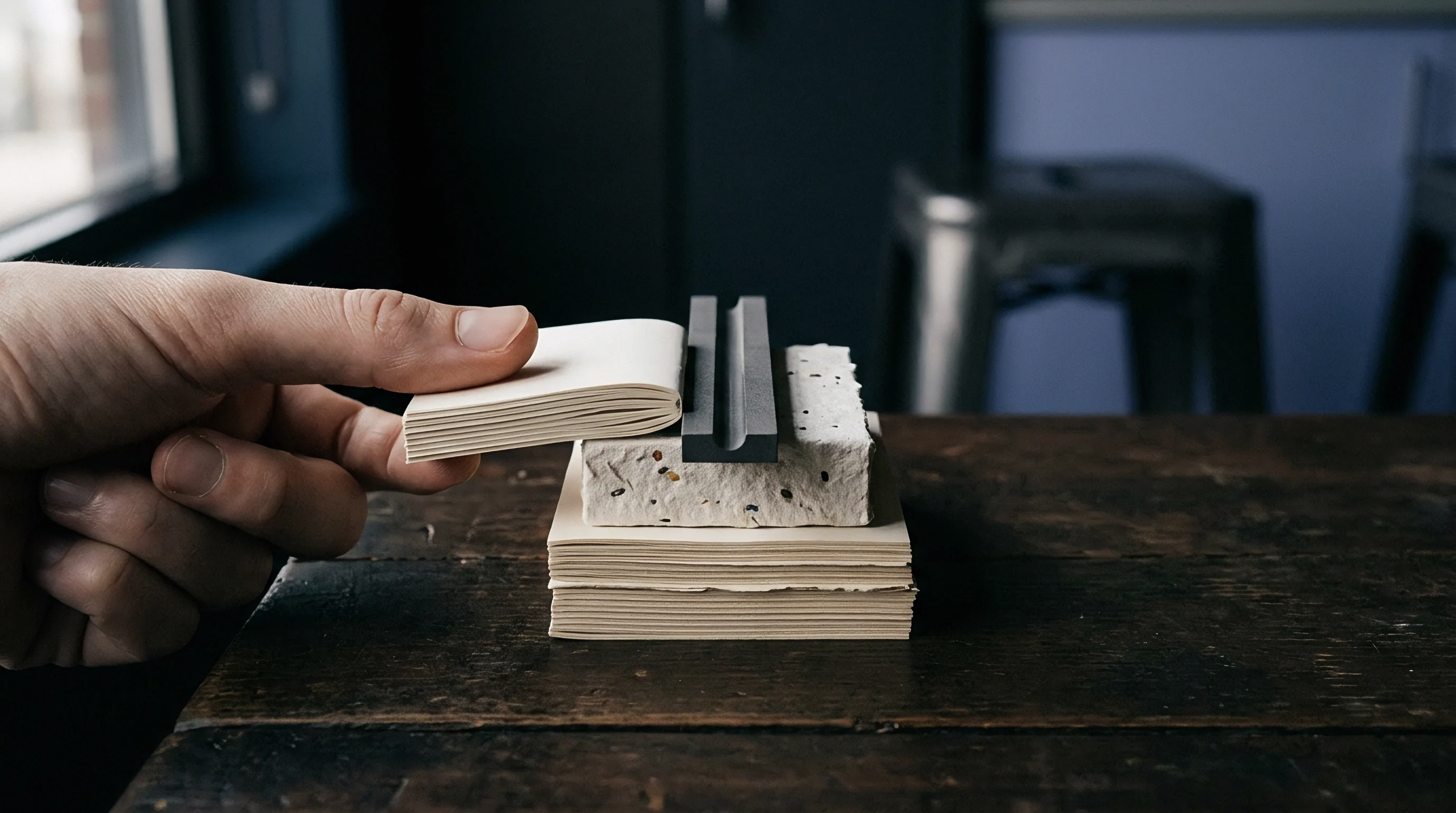

Rupture
Delamination during blanking and feeding occurs when local orthogonal stress outpaces the viscoelastic relaxation of the internal fibre network. Folding boxboard, designated FBB or GC grades under DIN 6730, combines bleached chemical pulp surface plies with a bulky middle ply composed of mechanical pulp, stone groundwood, or chemi-thermomechanical pulp (CTMP). Standard mill test certificates report internal bond strength using static or pendulum-based methods: Z-direction tensile strength under ISO 15754 and Scott internal bond strength under TAPPI T 569 or ISO 16260.
These standard metrics fail to predict converting behaviour when lines exceed 350 metres per minute or blanking presses cycle above 8,000 sheets per hour.
Converting machinery applies strain rates four to six orders of magnitude higher than laboratory bench equipment. Static Z-direction tensile instruments pull the board plane apart at crosshead speeds between 0.5 and 2.5 millimetres per minute, establishing an effective strain rate near 0.05 per second. Scott bond pendulums strike a metal angle at approximately 2 to 3 metres per second, distributing kinetic energy across an adhesive-mounted specimen.
Modern rotary die-cutters, high-speed folder-gluers, and automated packaging lines exert localized peel, out-of-plane snatch, and stripping impact at strain rates exceeding 500 per second. The structural response of lignin and hemicellulose transitions from ductile plastic deformation to brittle fracture as strain rate climbs.
Mechanical pulps contain high concentrations of native lignin, a crosslinked amorphous polymer with a glass transition temperature sensitive to moisture and deformation frequency. At high converting velocities, the loading period drops below the molecular relaxation time of the lignin matrix. The internal structure cannot redistribute stress across adjacent fibre crossings.
Rupture initiates at the boundary between the stiff, densified chemical pulp liners and the porous, high-bulk mechanical core. The sheet exhibits an abrupt cleavage plane rather than gradual fibre pull-out.
High-speed video captures this event at the blanking station where lower pins drive the waste matrix downward while upper extraction fingers secure the carton blank. If the stripping pins exert excessive localized vertical displacement, tensile peel stresses propagate into the perimeter of the carton flap. The outer plies maintain tensile integrity under machine direction stress, while the middle ply splits horizontally along the z-axis.
The carton arrives at the folder-gluer pre-delaminated, collapsing under the vacuum belts or separating during final square-up.
A laboratory Z-direction tensile value of 320 kilopascals measured under ISO 15754 at 23 degrees Celsius and 50 percent relative humidity provides no guarantee against internal cleavage at converting rates above 7,000 sheets per hour.
A mismatch between testing velocity and production velocity creates a hidden failure envelope. Converters frequently accept board lots based on compliant mill documentation, only to experience complete web separation or edge blister formation during high-tack lithographic printing or stripping. Running a press with stock that separates internally produces catastrophic jam-ups in the blanking section, damaging cutting rule assemblies, contaminating downstream gluer pockets with loose mechanical pulp debris, and idling multi-million-dollar finishing lines.
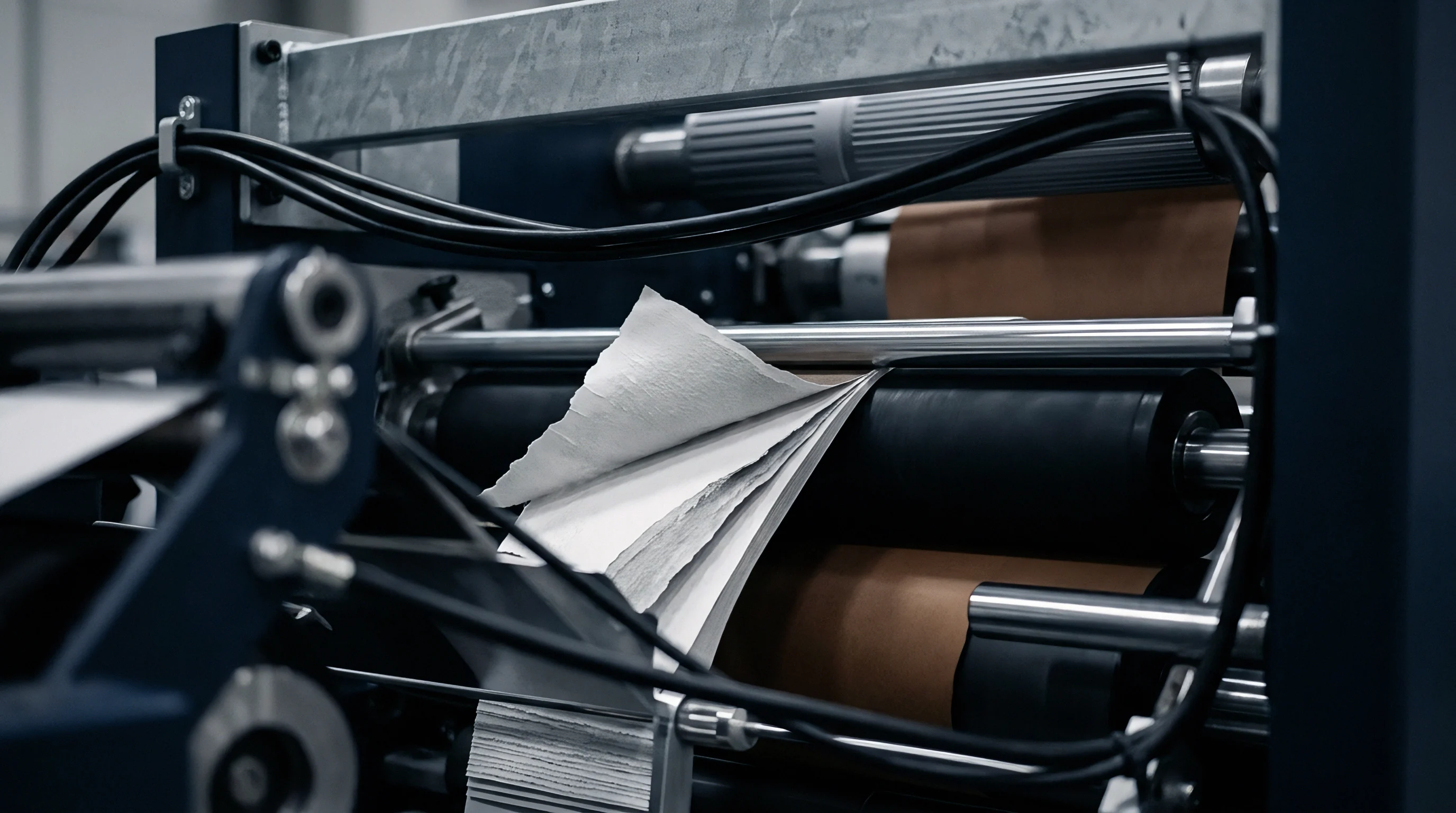

Starch
Inter-ply adhesion depends directly on wet-end consolidation, couch roll nip loads, and chemical binder deposition across the forming section. Three to five separate plies unite on a multi-wire Fourdrinier or hybrid former while moisture levels remain between 82 and 86 percent. Papermakers spray cationic or amphoteric potato and maize starches between the converging webs to compensate for the lower specific bonding surface of stiff, unrefined CTMP fibres.
Native corn starch requires complete thermal gelatinization in the dryer cylinders to form cohesive hydrogen-bonded polymer bridges across the ply interfaces.

Which Furnish Variable Governs Dynamic Ply Cleavage?
Fibre stiffness and lignin preservation govern the network response under sudden shock. Chemical pulp top plies, refined to a drainage resistance between 22 and 26 Schopper-Riegler under ISO 5267-1, exhibit high conformability and abundant hydroxyl groups for inter-fibre bonding. The middle plies incorporate mechanical pulp with low refining levels, retaining bulky, tubular structures that resist consolidation under press felts.
Starch solution applied at rates between 1.5 and 4.0 grams per square metre dry solids acts as the primary shear and tensile bridge across this interface.
Moisture distribution through the multi-ply structure controls how that starch film behaves during press consolidation. When dry-line positioning wanders along the forming wires, or dryer hood temperatures ramp aggressively, moisture gradients develop between the outer plies and the core. The external liners dry rapidly, shrinking and densifying, while the wet core retains latent moisture.
Differential shrinkage creates residual internal shear stresses along the z-axis. Starch films dried under steep moisture gradients develop micro-voids and uneven crosslinking density.
| Grade Structure | Grammage ISO 536 (g/m²) | Caliper ISO 534 (µm) | Scott Bond ISO 16260 (J/m²) | ZD Tensile ISO 15754 (kPa) | Dynamic Peel Failure Energy (J/m²) |
|---|---|---|---|---|---|
| GC1 Bleached CTMP Core | 250 | 375 | 145 | 310 | 68 |
| GC1 Bleached CTMP Core | 300 | 465 | 135 | 295 | 54 |
| GC2 Groundwood Core | 280 | 450 | 115 | 240 | 42 |
| GC2 Groundwood Core | 350 | 580 | 105 | 215 | 36 |
| Solid Bleached Board (SBS) | 270 | 365 | 210 | 460 | 128 |
| Recycled Folding Boxboard (WLC) | 320 | 470 | 95 | 185 | 31 |
The tabulated figures reveal an inverse relationship between middle ply bulk and dynamic fracture energy. While Solid Bleached Board composed entirely of refined chemical pulp retains high peel resistance, GC1 and GC2 grades sacrifice inter-ply cohesion to achieve bending stiffness per unit of grammage. When mechanical middle plies are bulked to maximize yield, the contact area between individual fibres declines.
Starch cannot bridge voids exceeding 15 micrometres, concentrating applied converting stresses entirely on isolated fibre necks.
Deficiencies on the paper machine compound these structural deficits. Uneven spray nozzle distribution creates longitudinal bands of starved starch across the reel width. Wet pressing stages running with hardened felt tracks or contaminated suction press rolls fail to force surface fibres into intimate contact before water evacuation finishes.
The mill claims the reel falls completely inside historical specification limits because standard batch testing blends fifteen-minute laboratory conditioning with low-velocity pendulum testing.

Tack
Printing and converting steps introduce intense, transient out-of-plane tensile vectors. High-viscosity lithographic printing inks, UV-curable coatings, high-tack cold emulsions, and fast-acting hot-melt adhesives exert normal pull forces perpendicular to the board surface. The interaction between ink film splitting at the blanket nip and out-of-plane fibre stability defines the operational runnability threshold.
In high-speed sheet-fed offset presses running at 15,000 to 18,000 impressions per hour, ink film splitting occurs within an interval under 2 milliseconds. Inks formulate with tack ratings between 12 and 18 Inkometer units at 32 degrees Celsius under ASTM D4361. As the printing plate transfers ink to the compressible rubber blanket, and the blanket transfers ink to the double- or triple-coated FBB surface, the ink film resists division.
The splitting ink generates localized negative hydraulic pressure, pulling the top ply away from the sheet core. If ink tack exceeds the dynamic Z-direction cohesive strength of the ply interface, the sheet splits internally, creating hollow blisters beneath heavy solid print layouts.
A press running heavy solid coverage at 16,000 sheets per hour exerts a dynamic pull force exceeding 450 kilopascals across the exit boundary of the impression nip.
Converting adhesives generate comparable failure modes in automated folder-gluers running straight-line and crash-lock cartons at linear speeds up to 600 metres per minute. The process follows a strict mechanical sequence:
- Adhesive extrusion applies high-viscosity vinyl acetate-ethylene emulsion or fast-setting hot melt onto the designated glue tab at precise volumetric dosages.
- Compression belts press the carton tab against the fifth panel under mechanical nip pressures between 0.2 and 0.5 megapascals for dwell times under 150 milliseconds.
- Elastic springback of the creased fold lines immediately attempts to reopen the blank as the carton exits the compression apron.
- Tack development within the cooling adhesive film transfers high dynamic peel forces directly into the Z-direction axis of the joining substrate plies.
- Substrate fiber tearing occurs cleanly across chemical pulp plies, whereas weak middle plies suffer deep internal cleaving that leaves the outer coating adhered to the glue bead while the box opens.
Belt feeders and vacuum extraction heads exacerbate this dynamic vulnerability. Suction cups on automated feeder bars cycle within 30 milliseconds, generating instantaneous vacuum pressures between minus 60 and minus 85 kilopascals. The suction pad applies pure vertical pull to the coated surface.
When the internal plies lack sufficient dynamic cohesion, the vacuum cup pulls the top bleached ply upward, delaminating the internal mechanical core before the sheet even reaches the feed table.
Placing dense ink films over uncreased fold areas guarantees delamination when running high-tack inks on bulky stock.
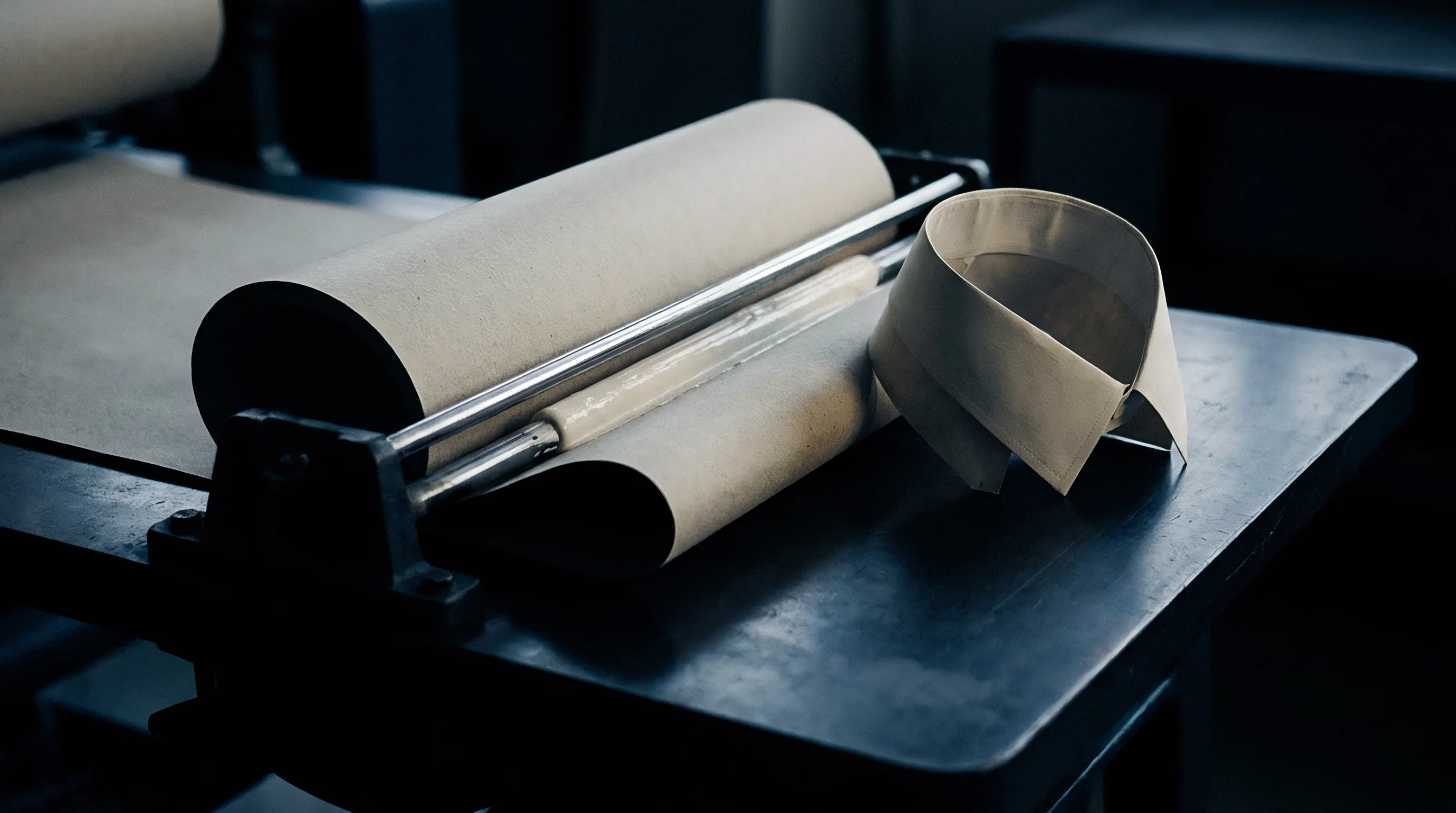
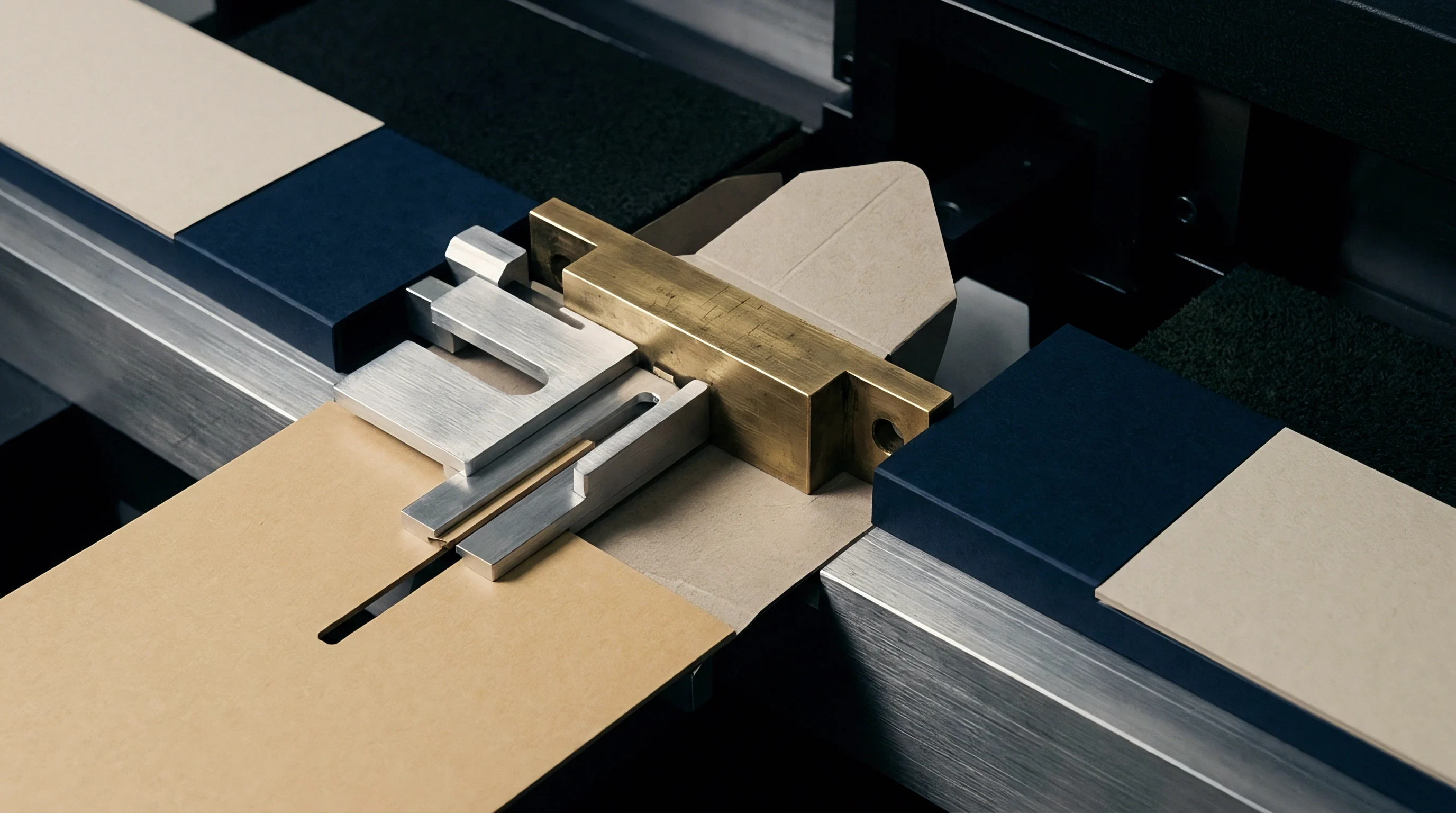
Crease
Creasing operations intentionally induce controlled delamination within the multi-ply board core while preserving outer surface plies intact. The steel creasing rule strikes the board web, forcing it down into a calibrated matrix channel. This deformation breaks the internal shear bonds between plies, allowing the board to form an internal hinge.
The carton fold then acts as an engineered delamination zone that flexes without surface cracking or carton burst.
Will Increased Ejection Rubber Hardness Prevent Flap Delamination?
Converters adjust ejection rubber properties around the cutting and creasing rules to prevent the sheet from sticking to the die. Ejection rubbers come in distinct durometer ratings, profiles, and cellular formulations, ranging from 25 Shore A open-cell polyurethane to 70 Shore A closed-cell profiles. Hard rubbers push the cut carton blanks out of the die cavity with high kinetic force.
This abrupt mechanical ejection applies a dynamic reverse bending moment and localized tension perpendicular to the cut edge.
| Rule Thickness (pt) | Matrix Width (mm) | Matrix Depth (mm) | Board Caliper (µm) | Crease Penetration (mm) | Observed Failure Mode |
|---|---|---|---|---|---|
| 2.0 | 1.20 | 0.40 | 400 | 1.05 | Clean internal shear, zero surface burst |
| 2.0 | 1.00 | 0.40 | 400 | 1.15 | Top liner rupture, ply tear along fold |
| 2.0 | 1.50 | 0.40 | 400 | 0.95 | Insufficient shear, rolling bead failure |
| 3.0 | 1.80 | 0.50 | 550 | 1.30 | Controlled multi-ply delamination |
| 3.0 | 1.40 | 0.50 | 550 | 1.45 | Deep internal cleavage, flap separation |
| 3.0 | 2.10 | 0.50 | 550 | 1.15 | Incomplete ply break, erratic fold torque |
Calculations for matrix sizing use established geometric ratios. Matrix channel width equals rule thickness plus 1.5 to 1.7 times board caliper. Matrix depth corresponds to board caliper multiplied by a factor between 0.65 and 0.75.
When die-setters reduce matrix width to sharpen carton fold definition, the rule pinches the board against the metal counterplate edges. This pinching action exerts extreme dynamic shear, tearing the starch layer between the middle mechanical core and the inner liner.
Rotary die-cutting units on high-speed web presses intensify this problem. The rotary nip applies shear and normal tensile components simultaneously during the continuous roll-through. Because the cylinder contact zone is narrow, peak strain occurs within a fraction of a millisecond.
Stripping fingers on rotary units snatch the trim matrix away at web speeds up to 400 metres per minute. If the ejection rubber compresses excessively, the energy released upon clearance yanks the cut blanks vertically, generating delamination lines parallel to the cutting knife.
Creasing tools that compress the board thickness beyond seventy percent of original caliper initiate unrecoverable cleavage planes throughout adjacent mechanical pulp layers.
Substrate moisture content governs the brittle-to-ductile transition during this impact. Board conditioned below 45 percent relative humidity exhibits dry, stiff fibres with diminished elongation potential. Low moisture prevents the fibres from sliding past one another under the creasing rule.
Fractures propagate outward from the creasing groove, splitting the core plies across wide horizontal swathes. The board acts like a dry biscuit rather than an elastic composite.
Purchase contracts incorporate standard industry specifications stipulating that board delivered below five percent absolute moisture content releases the converter from runnability and scoring warranties.

Audit
Commercial resolution of converting failures depends on establishing verifiable testing protocols that correlate laboratory metrics with dynamic machine stresses. The standard Scott bond test, developed decades ago for paperboard handling at modest press speeds, does not provide adequate quality assurance for modern high-speed converting. A comprehensive goods-in testing protocol requires advanced instrumentation to identify low-cohesion lots before printing and cutting.
Procurement teams and packaging engineers implement specific analytical testing methods across incoming substrate inventory:
- Dynamic tensile testing utilizing high-speed hydraulic or piezoelectric load frames evaluates out-of-plane tensile resistance at crosshead speeds reaching 10 metres per second.
- Internal bond strength verification under ISO 16260 isolates variations across the reel profile, requiring a minimum of twenty individual test repetitions per master roll position.
- Ultrasonic z-axis stiffness measurement measures out-of-plane sound wave propagation velocity to evaluate elastic moduli without destroying the specimen.
- High-speed peel calorimetry measures heat generation and total mechanical energy absorption during fast adhesive joint cleavage under controlled room temperatures.
Consider a standard commercial carton conversion run. Assume a 40-tonne order of 300 g/m² GC1 folding boxboard, priced at 1,450 euros per delivered tonne, yielding approximately 266,000 sheets in a standard 720 by 1,020 millimetre layout. Converting takes place on a high-speed die-cutter operating at 8,500 sheets per hour with an hourly machine operating cost of 420 euros.
A two percent downtime rate from web jams or blank separation represents minor nuisance. A catastrophic delamination rate of twelve percent, driven by sub-surface ply cleavage at the stripping station, alters the commercial ledger completely.
Waste from defective, split cartons accounts for 32,000 ruined blanks, forfeiting 6,960 euros in unrecoverable substrate value. Clearing repeated jams in the dynamic blanking unit adds 4.5 hours of machine stoppage, costing 1,890 euros in idle line time. Resetting stripping pins and replacing blistered matrix tooling adds an additional 850 euros in mechanical consumables and setup labour.
The converter absorbs a total unbudgeted loss of 9,700 euros on a single production lot, erasing the gross manufacturing margin of the packaging contract.
A supplier certificate stating static Scott bond compliance above 130 Joules per square metre provides zero commercial protection when dynamic strain rate failures shut down a line. Sourcing engineers eliminate this financial exposure by writing explicit dynamic bond criteria directly into primary supply agreements. Resolving whether international standards committees will formally ratify a standardized high-strain-rate ZD tensile method remains the critical task for paperboard converting physics.