Secondary Fiber Board Failure Mechanics during High Speed Converting
High strain rates during converting rupture hornified secondary fibers, requiring wider matrix channels and strict Z-direction bond limits to prevent cracking.
Pulp
Secondary fiber board performance during high-speed converting originates in the morphological changes induced by repeated repulping cycles. Recycled cellulose fibers undergo irreversible cell wall pore collapse during web drying, a mechanism known as hornification. This lumen collapse reduces the swollen fiber wall volume, dropping the water retention value measured under ISO 23714 from 1.6 grams per gram in prime unbleached softwood kraft down to 0.85 grams per gram in multiply secondary furnish.
Fiber length drops continuously. Hornification reduces swelling capacity. The structural consequence is a reduced surface area available for hydrogen bonding across the inter-fiber matrix.
Recycled containerboard and folding boxboard furnishes incorporate elevated mineral filler loads to restore sheet smoothness and opacity lost through fiber degradation. Calcium carbonate and kaolin clay particles occupy spaces between shortened fibers, increasing total ash content to levels between 8 percent and 14 percent by weight. Filler particles buy surface uniformity while interrupting the continuity of fiber-to-fiber bonds.
Fines migrate to surface zones. This structural trade-off concentrates weak shear planes within the inner plies of multi-ply secondary fiberboard constructions.
| Fiber Condition Stage | ISO 23714 Water Retention (g/g) | Length Weighted Average Length (mm) | ISO 15754 Z-Tensile Strength (kPa) | ISO 1924-3 Tensile Strain at Break (%) |
|---|---|---|---|---|
| Prime Unbleached Kraft | 1.62 | 2.45 | 410 | 2.85 |
| First Recycled Loop | 1.28 | 1.92 | 325 | 2.10 |
| Third Recycled Loop | 0.98 | 1.41 | 220 | 1.55 |
| Fifth Recycled Loop | 0.85 | 1.12 | 155 | 1.20 |
Z-direction tensile strength evaluation under ISO 15754 quantifies the internal cohesive force holding multi-ply structures together. Secondary fiber boards demonstrate a pronounced decline in internal bond strength as recycled content increases. When Z-direction tensile values fall below 200 kilopascals, internal plies fail to distribute mechanical loads during rapid bending.
High strain breaks weak bonds. The sheet experiences localized delamination long before reaching nominal tensile limits in the machine direction.
At 50 percent relative humidity and 23 degrees Celsius, thrice-recycled softwood fibers exhibit a 38 percent decrease in Z-direction tensile strength compared to prime unbleached kraft.
Chemical additives attempt to compensate for loss of natural bonding sites. Cationic starch and polyacrylamide dry-strength resins bridge gaps between shortened fibers, raising static tensile measurements on paper mill certificates. These synthetic bonds exhibit higher strain-rate sensitivity than native hydrogen bonds.
Under rapid impact loading, resinous bonds fracture cleanly without elastic elongation, yielding sudden structural fractures along score lines.
- Fibrillar Collapse lowers the flexibility of individual fiber walls, restricting plastic deformation within score channels during high-speed female matrix penetration.
- Internal Ply Starvation occurs when short fibers and mineral fillers concentrate in central plies, lowering internal shear resistance below threshold limits.
- Surface Dusting releases loose fiber fragments and mineral particles during die-cutting, contaminating folder-gluer belts and optical inspection sensors.
Mill technical representatives routinely explain score rupture by pointing to seasonal humidity shifts in the buyer’s converting hall rather than acknowledging elevated ash fraction in the inner ply.
Score
High-speed converting lines operating at speeds above 400 meters per minute impose rapid mechanical deformation on structural packaging board. Die-cutting stations utilize male creasing rules pressing the board into female matrix channels at dwell times under three milliseconds. Creasing mechanics require the board to undergo controlled internal structural failure while maintaining top and bottom liner integrity.
Compression forces generate structural creases.
Female matrix channel width calculation follows established geometric ratios based on board caliper. For secondary fiber boards, the traditional channel width formula of 1.5 times board caliper plus rule thickness proves insufficient. Recycled fibers possess lower strain capacity at break, demanding wider channel clearances to prevent outer liner tensile fracture.
Matrix depth determines channel clearance. Setting channel depth to 1.0 times board caliper forces internal plies to shear horizontally, forming the internal bead required for clean 180-degree folding.
| Board Caliper (mm) | Male Rule Thickness (pt) | Target Channel Width (mm) | Matrix Channel Depth (mm) | Female Liner Tension Limit (N) |
|---|---|---|---|---|
| 0.35 | 2.0 (0.71 mm) | 1.35 | 0.40 | 42 |
| 0.45 | 2.0 (0.71 mm) | 1.60 | 0.50 | 58 |
| 0.55 | 3.0 (1.07 mm) | 2.10 | 0.60 | 74 |
| 0.65 | 3.0 (1.07 mm) | 2.35 | 0.70 | 91 |
Machine-direction stiffness anisotropy complicates the scoring window on secondary fiber grades. Continuous cylinder board machines align shortened fibers predominantly in the machine direction, creating stiffness ratios between machine direction and cross direction exceeding 2.5 under ISO 2493. Cross-direction score lines bend across stiff, aligned fibers that resist internal shearing.
The outer coated liner experiences severe tensile stress, leading to hairline cracking along printed carton edges.
Deep creasing channels protect outer liner integrity when secondary fibers lack the strain capacity to yield elastically.
Converter setup procedures must account for high strain-rate behavior when setting die impression depth on high-speed platen presses.
- Mount precision ground steel rules into backer plates, verifying rule height uniformity across the die within a tolerance of 0.015 millimeters.
- Install phenolic or steel creasing matrix channels aligned strictly parallel to rule centers using laser positioning systems.
- Increase press impression tonnage systematically until the creasing force profile generates internal ply separation without fracturing the female surface liner.
- Measure folded crease stiffness using a 90-degree dynamic crease tester operating at target production speeds.
Adjusting matrix width wider than recommended parameters preserves outer print surfaces at the expense of folder-gluer squareness.

Splitting
High-speed folder-gluers fold pre-creased carton blanks at production rates reaching 100,000 units per hour. During rapid folding, internal plies must separate into controlled delamination planes. Secondary fiber boards often exhibit uneven internal bond strength, causing failure planes to migrate from internal plies outward toward the surface liner.
Internal shear forces split plies.
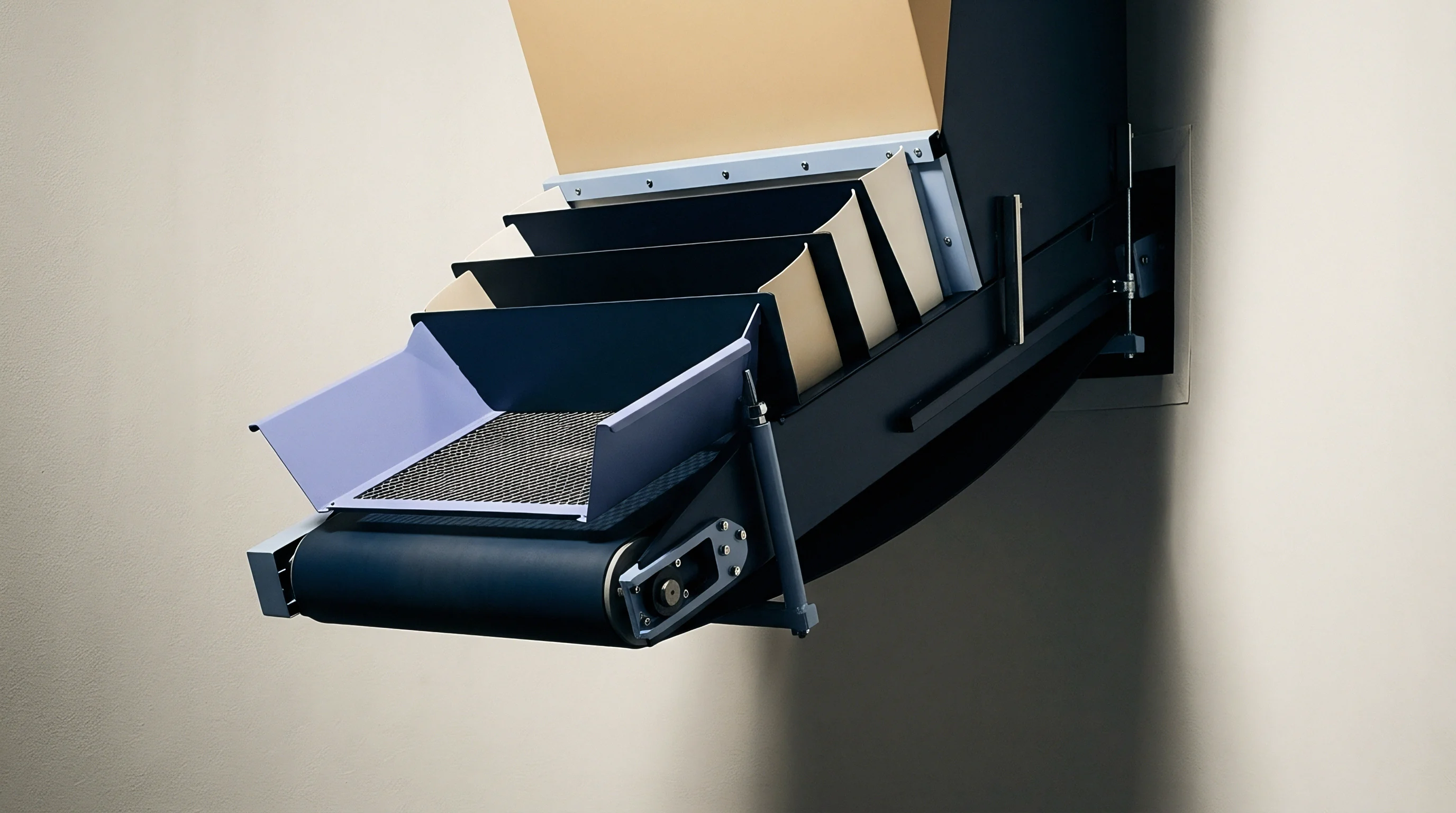
When Does Interlayer Shear Overcome Virgin Liner Adhesion?
Interlayer shear failure occurs when dynamic bending stresses exceed the Z-direction cohesive strength of the furnish interface. Coated recycled board formulations often apply a thin top layer of virgin bleached hardwood kraft over secondary fiber inner plies to secure print quality. When the elastic modulus of the virgin top ply exceeds that of the underlying recycled core by more than 40 percent, bending forces create a severe stress concentration at the ply interface.
The lower layer gives way first, forcing the top liner to shear away from the core entirely.
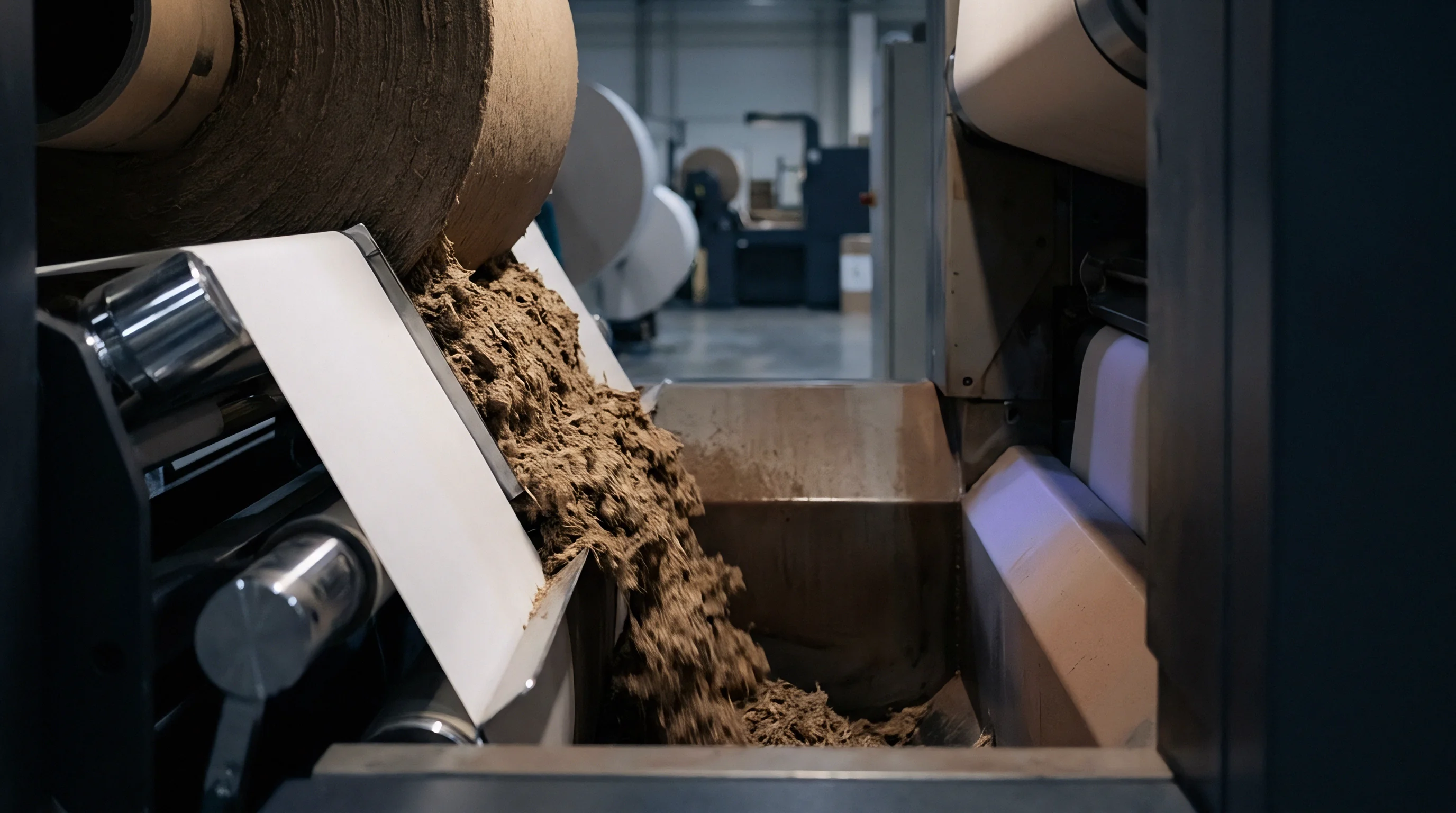
Particulate dusting increases dramatically during interfacial splitting. Hornified fibers snaps cleanly under shear stress, releasing fine debris into the glue application zone. Dust buildup stops glue lines.
Cold-water vinyl acetate adhesive bonds fail when paper dust contaminates the open glue flap within the two-millisecond open time allotted on high-speed lines.
Standard ISO 15754 specifications reject board lots exhibiting internal bond strength below 100 Joules per square meter for high-speed automated packaging lines.
Coating integrity suffers equally during severe interlayer splitting. Mineral coatings applied at coat weights above 20 grams per square meter lack the flexibility to span delaminated base board zones. The coating layer micro-fractures, exposing white mineral pigment flakes along colored score lines.
This failure invalidates aesthetic requirements for prime commercial packaging.
- Z-Direction Tensile Floor defines the minimum internal bond rating of 180 kilopascals needed to sustain continuous folding folder-gluer operations.
- Surface Sizing Cohesive Threshold establishes wax pick resistance levels above clear pick rating 12 under TAPPI T 459 to prevent surface fiber lifting.
- Bending Resistance Index Ratio dictates that cross-direction Taber stiffness divided by machine-direction stiffness must stay between 0.40 and 0.55.
- Particulate Dust Emission Boundary restricts total loose fiber mass collected during dry blank vibration to less than 0.05 grams per thousand die-cut blanks.
Selecting secondary board with marginal internal bond strength forces converting lines to operate at half rated velocity, doubling machine-hour overhead across the production contract.
Disparity
Standard laboratory testing protocols evaluate packaging board under static or low-speed deformation regimes. The standard conditioning atmosphere specified in ISO 187 maintains 23 degrees Celsius and 50 percent relative humidity, granting fibers 24 hours to reach moisture equilibrium. High-speed converting lines operate in unconditioned plant environments where relative humidity fluctuates between 20 percent and 80 percent depending on season.
Static tests mask dynamic stress.
Scott Internal Bond testing under TAPPI T 569 utilizes a pendulum impact mechanism delivering low-velocity energy to split paperboard samples. While standard for mill quality control, this test operates at a strain rate orders of magnitude slower than high-speed die-cutting impressions. Secondary fiber boards containing high synthetic resin concentrations display high resistance under slow pendulum tests but fracture under fast impact loading due to polymer viscoelastic stiffening.
| Evaluation Parameter | Laboratory Test Method | Bench Velocity / Rate | Converting Line Rate | Correlation Metric Ratio |
|---|---|---|---|---|
| Bending Resistance | ISO 2493 Taber 15° | 0.5 degrees/sec | 36,000 degrees/sec | 0.62 |
| Internal Bond | TAPPI T 569 Scott Bond | 2.5 meters/sec | 12.0 meters/sec | 0.54 |
| Tensile Strain | ISO 1924-2 Tensile | 20 mm/minute | 500 meters/minute | 0.48 |
| Crease Resistance | DIN 55437-1 Crease Tester | 2.0 degrees/sec | 18,000 degrees/sec | 0.71 |
Moisture hysteresis accelerates discrepancies between bench metrics and converting reality. Hornified secondary fibers absorb and release ambient moisture faster than virgin fibers, undergoing dimensional shifts across the mill reel width. Moisture loss accelerates edge cracking.
Web edges exposed to ambient plant air dry out to moisture levels below four percent within hours, shifting the board into a brittle regime where strain at break falls below one percent.
Static laboratory stiffness values fail to predict dynamic crease failure when board moisture drops below six percent during winter transport.
Dynamic stiffness instruments measuring response at frequencies above 100 Hertz reveal structural degradation undetectable by Taber testers. Board lots demonstrating identical ISO 2493 stiffness scores routinely exhibit up to a 35 percent variation in dynamic elastic modulus when subjected to rapid deformation cycles.
Incorporating DIN 55437-1 creasing quality criteria into raw material supply contracts establishes binding rejection limits for board that cracks during automated folding trials.

Outlay
Financial performance in automated folding carton operations depends directly on the ratio of saleable cartons generated per hour. Substrate selection determines line productivity. While secondary fiber boards carry lower purchase prices per tonne than virgin sulfate boards, converted packaging economics must account for net yield, machine downtime, and waste disposal fees.
Line speed drives net profitability. Consider a manufacturing run of 500,000 folding cartons produced on high-speed equipment. Prime Solid Bleached Sulfate board running at a caliper of 0.450 millimeters converts cleanly at full line speed of 600 meters per minute with a spoilage rate of 1.0 percent.
Recycled Coated Board with an equivalent bending stiffness requires a caliper of 0.500 millimeters due to lower intrinsic elastic modulus. Board cost per sheet drops. However, converted throughput drops to 400 meters per minute to avoid corner cracking, while line spoilage rises to 4.5 percent from score splitting and glue line dusting.
Calculated commercial metrics demonstrate the financial impact of material mechanics on converting efficiency:
Assuming a raw material cost of 1,400 Euros per tonne for prime virgin board against 950 Euros per tonne for coated recycled board, initial raw sheet savings favor recycled furnish by 32 percent per sheet after adjusting for grammage increases. Operating a high-speed converting line at an hourly run rate of 280 Euros changes the ledger balance. Running 500,000 cartons on virgin stock requires 14.5 operating hours with 5,000 spoiled units.
Running the identical carton footprint on secondary board extends operating time to 21.8 hours while generating 22,500 spoiled units. Spoilage converts savings into losses.
Net landed costs shift when machine time overhead and material waste are summed. The additional 7.3 machine hours add 2,044 Euros in line costs. The extra 17,500 spoiled cartons consume 3.8 tonnes of additional substrate, adding 3,610 Euros in wasted board purchase cost.
Off-site recycling fees for contaminated die-cut waste add 180 Euros per tonne. Total economic loss incurred by selecting secondary fiber for this high-speed run reaches 6,334 Euros, wiping out the initial sheet purchase price advantage entirely.
How mill papermaking chemistry will alter dry-strength resin retention to allow 100 percent secondary fiber boards to match virgin strain limits at speeds above 600 meters per minute remains open across European board mills.