Laboratory Physical Property Testing Methods for Packaging Paperboard Standard Compliance
Laboratory physical testing of paperboard proves packaging structural compliance, verifies technical specifications, and prevents import liabilities.

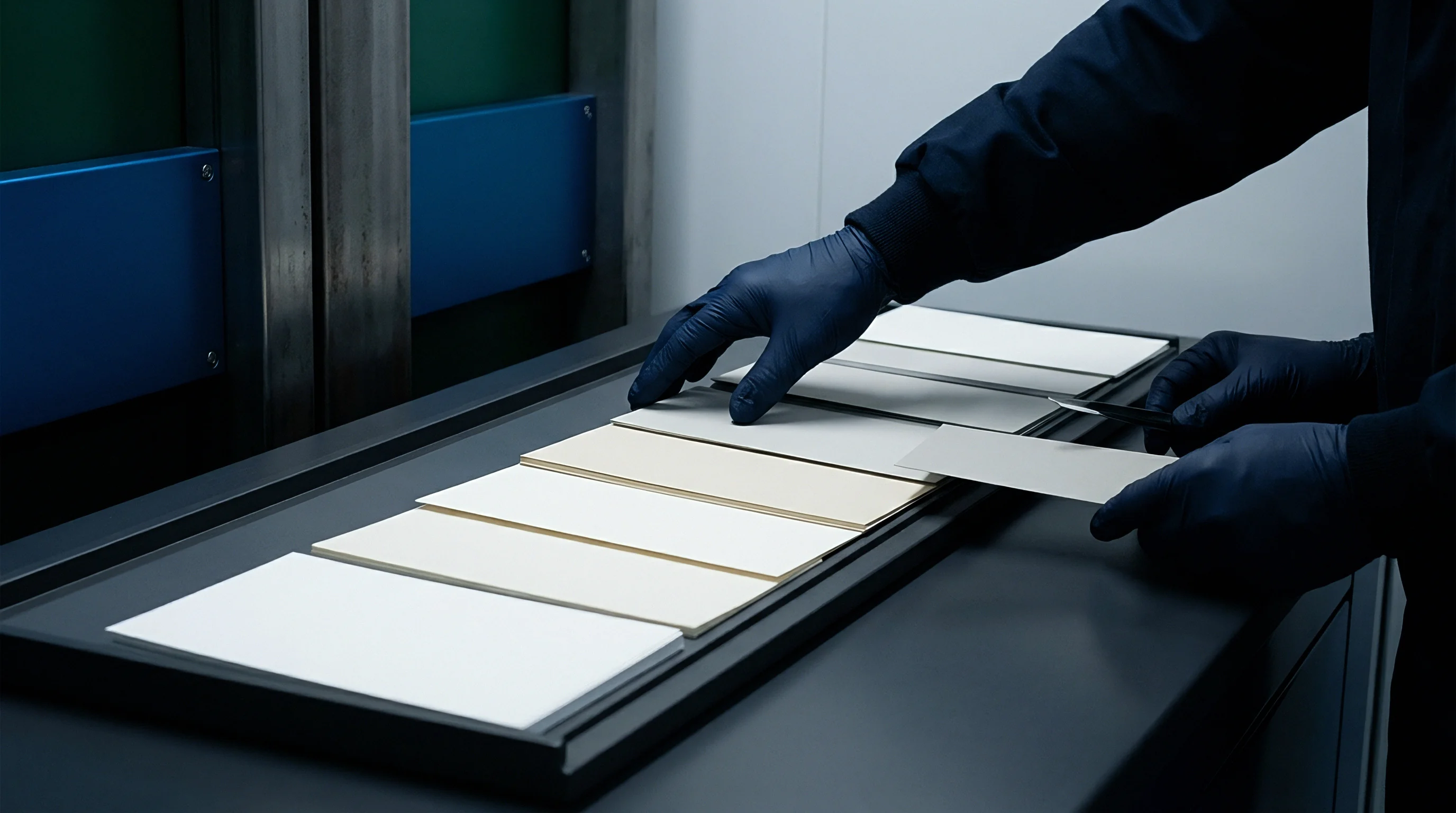
Specimen

Atmospheric Equilibration Requirements
Laboratories run paperboard physical property testing under strict atmospheric control because cellulose fibers change physical dimensions and mechanical strength as they absorb or desorb water vapor. Standard atmospheres govern this process. ISO 187 specifies 23 degrees Celsius at 50 percent relative humidity for general physical testing, while TAPPI T 402 specifies 23 degrees Celsius at 50 percent relative humidity for North American practice, with a secondary standard of 27 degrees Celsius at 65 percent relative humidity applied in tropical zones.
Preconditioning below 35 percent relative humidity at 22 to 40 degrees Celsius for at least two hours prevents moisture hysteresis from skewing test results. Board approaching equilibrium from a wet state holds roughly 0.5 to 1.5 percent more moisture by weight than board approaching equilibrium from an oven-dry state under the exact same ambient conditions.
Equilibration takes time. Heavy solid bleached sulfate board and multi-ply coated recycled board require four to twenty-four hours of free air circulation to reach moisture equilibrium. Equilibrium exists when successive weighings of the specimen, taken at intervals of not less than one hour, show less than 0.1 percent variation in total mass.
A test completed on board pulled directly from an ambient shipping container yields invalid data. The laboratory logs relative humidity and temperature continuously throughout conditioning cycles.
TAPPI T 402 conditioning at 23 degrees Celsius and 50 percent relative humidity fixes the baseline moisture content that dictates all downstream mechanical properties.
Specimen geometry introduces another non-negotiable parameter. Machine direction fibers align parallel to the reel flow on the forming wire, whereas cross direction fibers lie perpendicular to this axis. Cross direction bending stiffness is universally lower than machine direction stiffness, frequently demonstrating a ratio between 1:2 and 1:3.
Edge preparation requires clean, perpendicular cuts free from delamination, crimping, or fiber pulling. Dull guillotine blades crush the board matrix, pre-fracturing fiber-to-fiber hydrogen bonds and depressing compression and burst figures before physical loads are applied.
The relationship between laboratory data and physical delivery rests entirely on chain of custody sampling. ISO 186 outlines the selection of gross samples to represent a commercial lot. A laboratory report based on sheets clipped arbitrarily from the outer wraps of two finished rolls cannot defend a quality dispute.
An accredited technical dossier identifies the reel number, roll position across the machine deckle, sampling date, preconditioning atmosphere, and elapsed conditioning time. The laboratory confirms these parameters prior to applying mechanical loads.
Stiffness
Two Point and Three Point Protocols
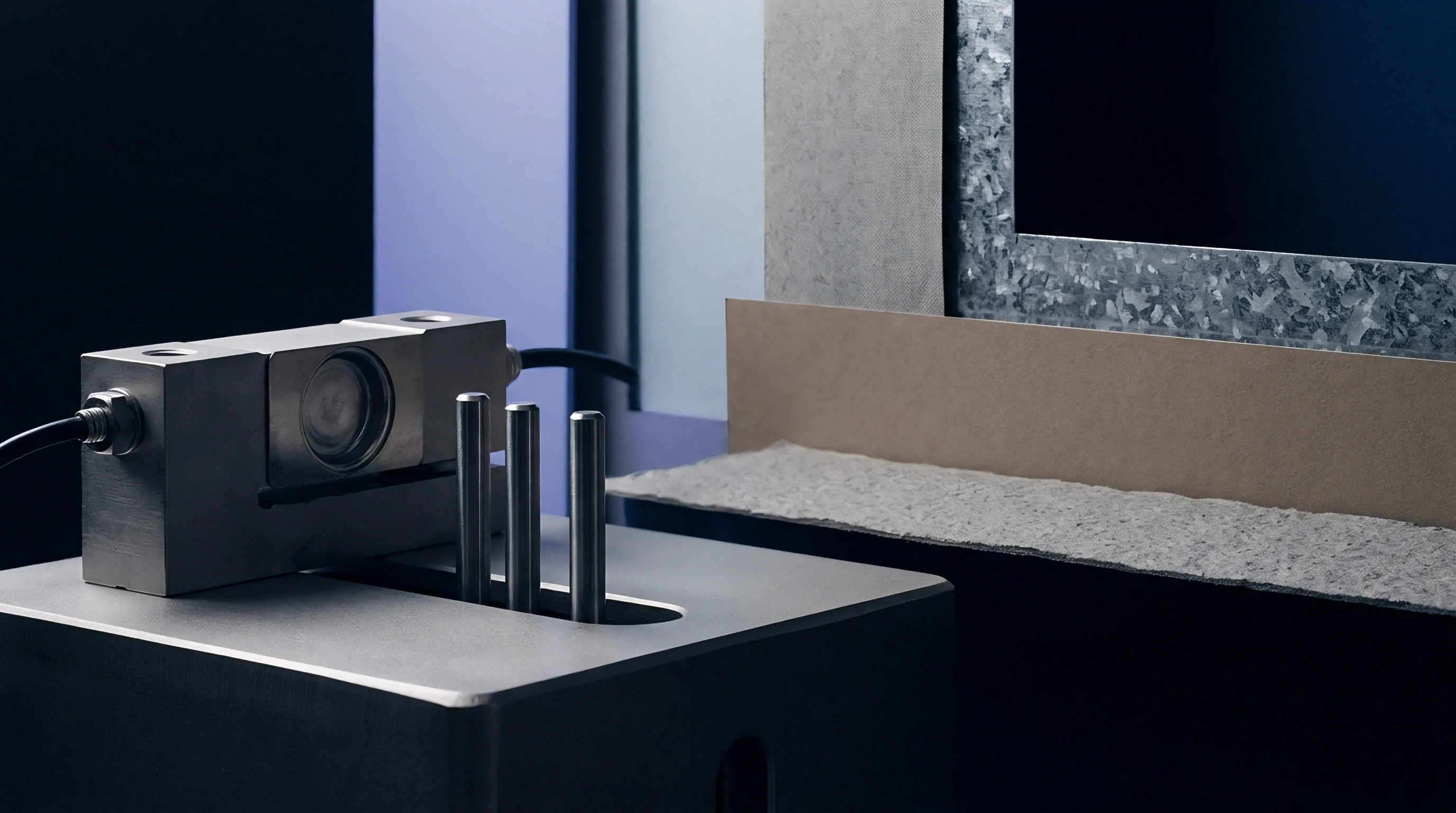
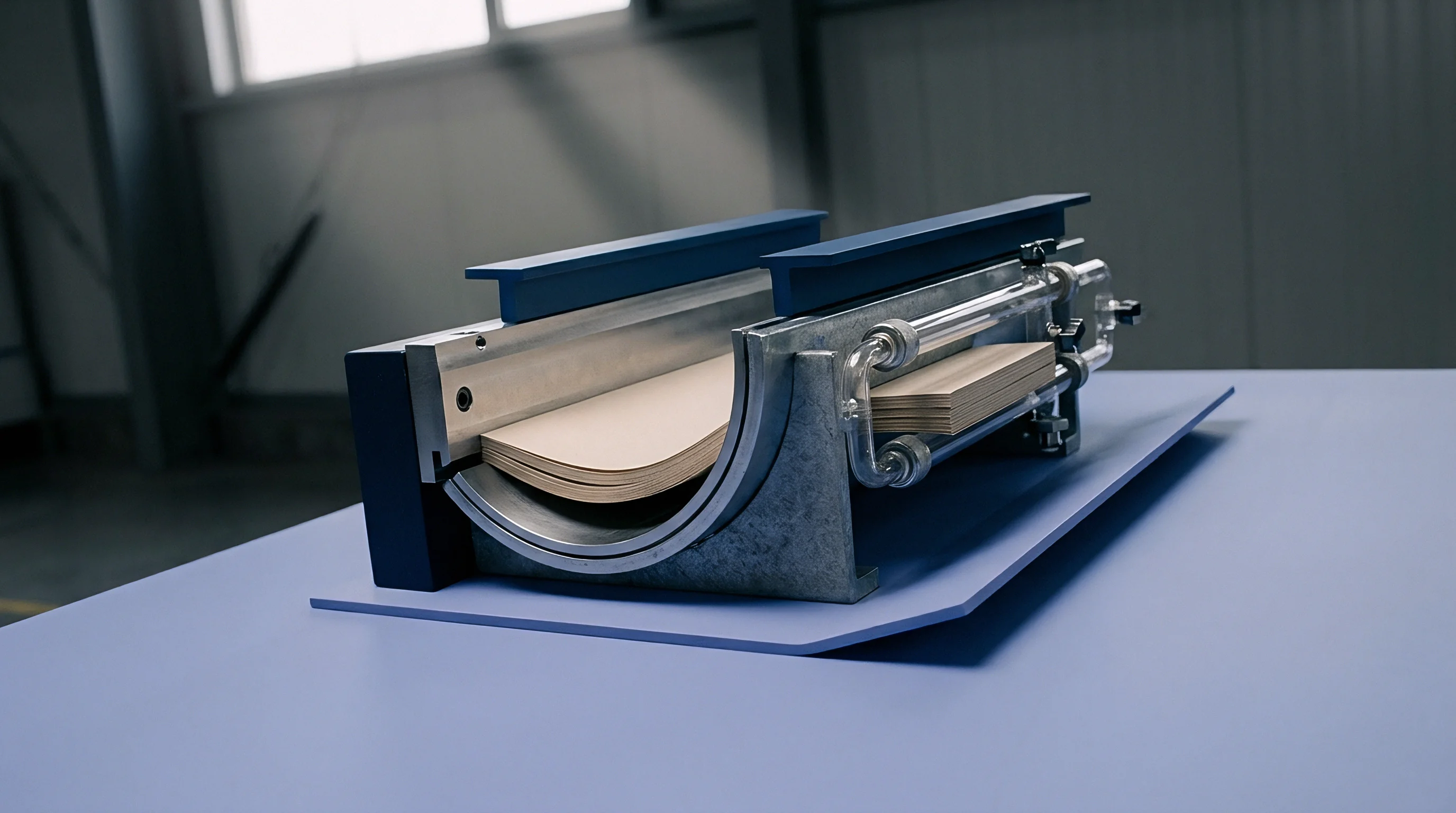
Bending resistance determines whether a carton maintains its structural integrity through automated cartoning lines and retail stacking. ISO 2493 and TAPPI T 556 provide the framework for evaluating bending resistance using two-point loading methods, such as the L&W or Taber apparatus. In a two-point test, a clamp secures one end of the specimen while a loading nose deflects the free end through a specified bending angle, conventionally 15 degrees, across a designated test length of 10 or 50 millimeters.
Specimen width sits at 38 millimeters for standard Taber systems and 38.1 millimeters for specific L&W configurations. For heavier boards, a 7.5-degree angle replaces 15 degrees to prevent premature creasing and permanent plastic deformation across the clamped axis.
Three-point bending mechanics run according to ISO 5628, suspending the specimen across two parallel supports while a central knife edge applies force midway between them. This orientation balances tensile stress along the bottom outer plies and compressive stress across the top face. Four-point methods apply uniform bending moment between two inner loading points, isolating pure bending without shear interference.
A converter selecting between two-point and three-point test data matches the instrument kinematics to the active stress state of the target package. Top-to-bottom carton loading exhibits mixed-mode failure where two-point stiffness predicts panel bulging, but three-point values predict corner post deflection under combined loads.
| Physical Property | Standard Designation | Instrument Configuration | Primary Unit of Measure | Commercial Specification Boundary |
|---|---|---|---|---|
| Bending Resistance | ISO 2493 / TAPPI T 556 | Two-point clamp, 15 degree deflection, 50 mm span | Millinewtons (mN) or Taber Units | Machine direction 150 to 1200 mN; cross direction 70 to 550 mN |
| Short-Span Compression | ISO 9895 / TAPPI T 826 | Pneumatic friction clamps, 0.70 mm free span | Kilonewtons per meter (kN/m) | Virgin kraft 2.8 to 4.5 kN/m; recycled board 1.8 to 3.2 kN/m |
| Internal Bond Strength | TAPPI T 569 / ISO 16260 | Pendulum impact, double-sided adhesive tape | Joules per square meter (J/m²) | Solid bleached sulfate 180 to 300 J/m²; recycled 100 to 190 J/m² |
| Water Absorptiveness | ISO 535 / TAPPI T 441 | Cobb metal cylinder, 100 cm² exposure area | Grams per square meter (g/m²) | Sized top liner 25 to 45 g/m²; unsized back ply 60 to 120 g/m² |
| Bursting Strength | ISO 2759 / TAPPI T 807 | Hydraulic rubber diaphragm, annular clamp | Kilopascals (kPa) | Light folding boxboard 300 to 600 kPa; carrier board 900 to 1800 kPa |

Elastic Modulus and Caliper Interaction
Bending stiffness correlates directly with the third power of paperboard thickness. The governing engineering equation states that bending stiffness equals the elastic modulus multiplied by the moment of inertia per unit width, expressed as thickness cubed divided by twelve. A five percent reduction in sheet caliper causes a fourteen percent loss in total bending resistance if elastic modulus remains unchanged.
Papermakers exploit this cubic relationship in multi-ply folding boxboard by placing high-modulus virgin chemical pulp in the outer plies and high-bulk mechanical or thermo-mechanical pulp in the center core. The core acts as the web of an I-beam, separating the tension and compression layers to maximize mechanical stiffness at minimal areal weight.
Surface sizing, calendering, and moisture uptake modify this dynamic. Calendering densifies the sheet, improving smoothness and print receptivity while depressing caliper, yielding a net reduction in bending stiffness despite a slight elevation in surface elastic modulus. Humidity swings above 65 percent plasticize the amorphous regions of cellulose fibers, precipitating a steep drop in elastic modulus that impairs carton stacking performance.
The laboratory confirms both micrometer caliper under ISO 534 and bending resistance under ISO 2493 on matched specimens to distinguish fiber quality degradation from gauge reduction.
The buyer writes tolerance limits around bending stiffness rather than basis weight alone.

Crush
Short-Span Compression Mechanics
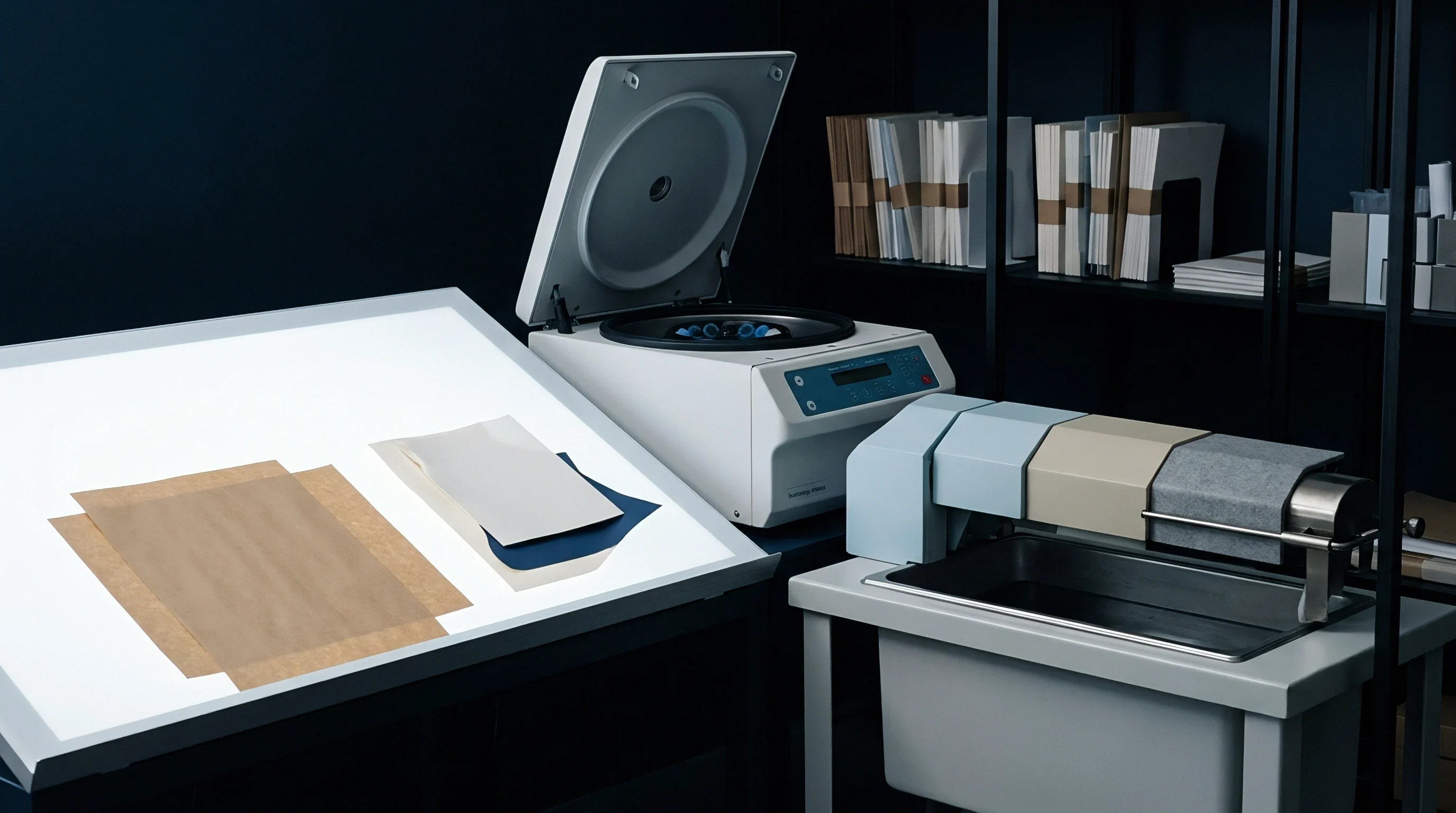
Short-Span Compression Testing, commonly designated SCT, measures the compressive force sustained by a paperboard specimen clamped between two pneumatic jaws separated by a gap of exactly 0.70 millimeters. Standardized under ISO 9895 and TAPPI T 826, this test confines the gauge length so tightly that pure compressive failure occurs before structural buckling can initiate. The clamping pressure sits between 2.0 and 2.5 megapascals to prevent specimen slippage within the serrated or tungsten-carbide coated metal jaws.
If clamping force drops, specimen slip produces an artificially low compressive index. High clamping force crushes the fiber wall, creating premature shear failure along the clamp edge.
SCT has widely replaced the traditional Ring Crush Test governed by ISO 12192 and TAPPI T 822. The Ring Crush Test inserts a 12.7-millimeter-wide paperboard strip into an annular groove, exposing it to axial loading. Specimens exceeding 200 micrometers in thickness experience edge distortion, while thinner specimens buckle elastically, distorting the intrinsic compressive strength metric.
SCT eliminates geometry-induced instability, directly isolating the ultimate compressive strength of the fiber network.
Consider a containerboard conversion evaluation comparing two fluting materials destined for high-humidity cold-storage transport. The engineering calculation targets McKee formula inputs for box compression test predictions.
Assume a corrugated box with length of 0.40 meters, width of 0.30 meters, and depth of 0.30 meters. Total box perimeter equals 1.40 meters. The board combination utilizes a B-flute structure with a caliper of 3.0 millimeters.
Option 1 utilizes virgin semi-chemical fluting delivering an SCT cross-direction value of 2.60 kilonewtons per meter.
Option 2 utilizes recycled fluting delivering an SCT cross-direction value of 1.85 kilonewtons per meter.
The simplified McKee formula estimates box compression strength:
Box Compression Strength equals 5.87 multiplied by Edge Crush Resistance multiplied by the square root of board caliper multiplied by the square root of box perimeter.
Edge Crush Resistance scales directly with combined component SCT values. Assuming fixed liner contributions totaling 4.50 kilonewtons per meter and a B-flute take-up factor of 1.32:
Option 1 combined compressive strength equals 4.50 plus (2.60 multiplied by 1.32), yielding 7.93 kilonewtons per meter.
Option 2 combined compressive strength equals 4.50 plus (1.85 multiplied by 1.32), yielding 6.94 kilonewtons per meter.
Applying the McKee calculation with a fixed geometric factor: the 12.5 percent reduction in combined compressive strength from the recycled fluting translates directly to an 850-newton deficit in top-to-bottom pallet capacity under identical atmospheric conditions.
Edge Crush Evaluation on Combined Board
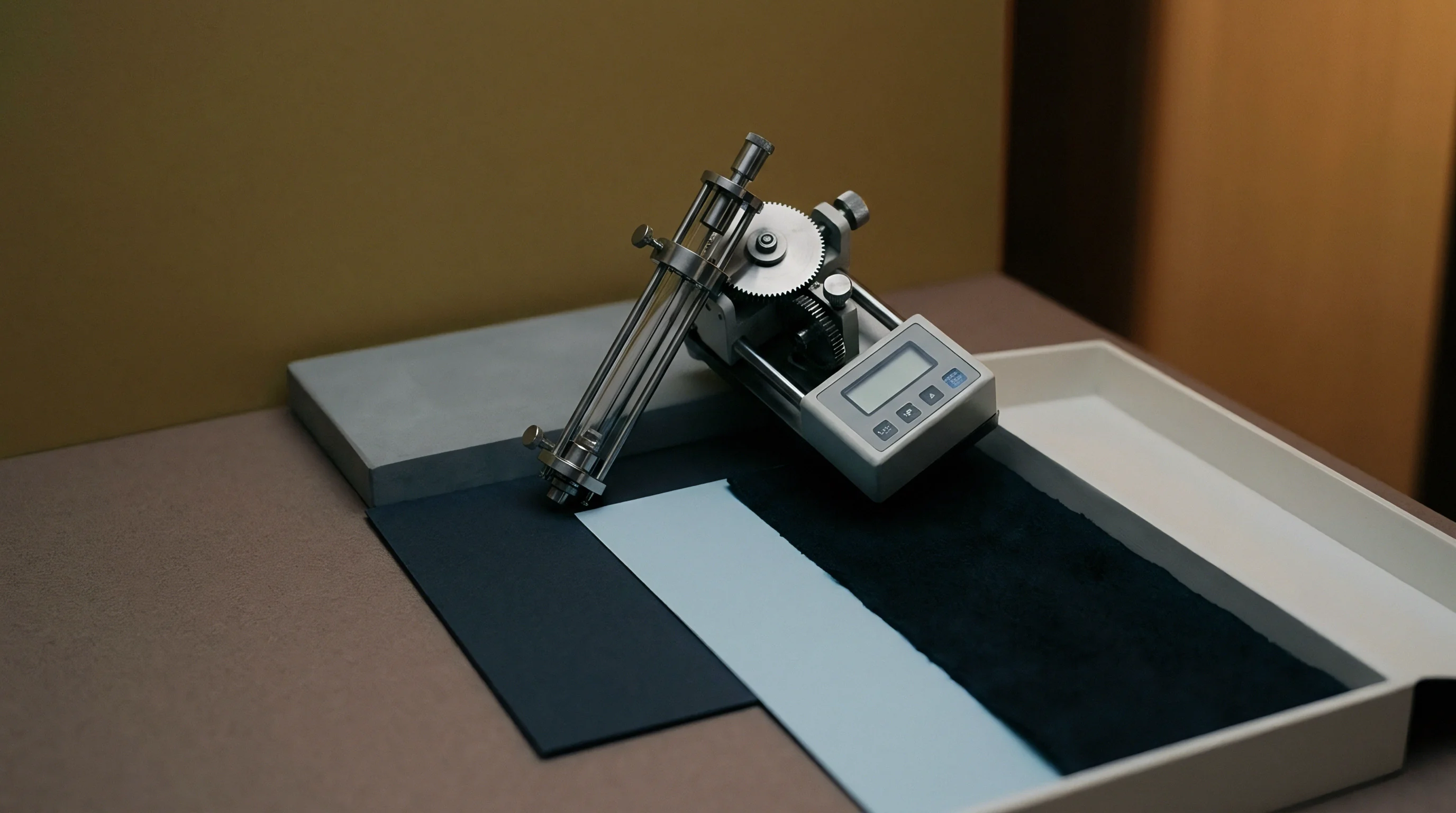
Edge Crush Testing on corrugated board, governed by ISO 3037 and TAPPI T 811, determines the cross-direction crushing resistance of a standing fluted structure. Specimen preparation dictates the variance of the outcome. ISO 3037 mandates a rectangular cut with clean, parallel faces and no crushed flutes.
TAPPI T 811 historically specifies waxed edges to prevent localized end-crushing failures from initiating premature collapse along the loading platens, whereas ISO 3037 disallows wax reinforcement, demanding high-precision specimen cutting via twin-blade saws or specialized pneumatic cutters.
A three-millimeter variance in sample cutting squareness invalidates edge crush test outcomes under ISO 3037 by concentrating stress on outer liner tips.
Specimens exhibiting damaged flutes, delamination along the glue lines, or non-parallel cut faces must be discarded. Platens advance at a constant speed of 12.5 millimeters per minute until structural collapse occurs. The load cell records the peak force sustained prior to wall failure.
Compressive force is expressed in kilonewtons per meter of sample length.
A shipping line or warehouse operator encountering box collapse traces the defect back to the mill certificate. When the declared edge crush values fail to reproduce on a calibrated laboratory press, the importer faces full liability for transit damage claims under typical carriage contracts.


Integrity
Internal Bond and Z-Direction Tensile
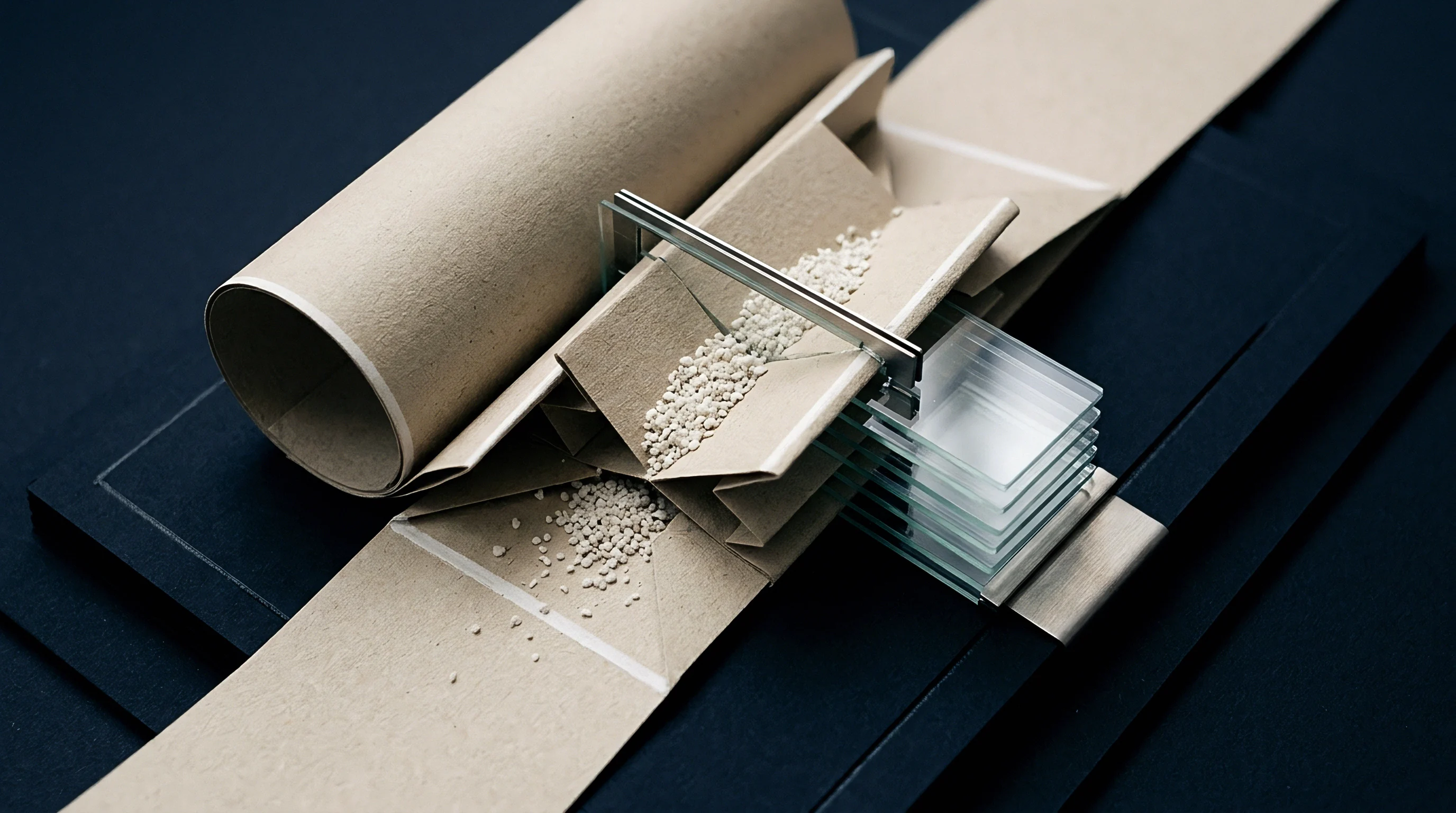
Delamination failure during high-speed printing, die-cutting, or crease folding indicates inadequate internal bond strength. Multi-ply boards, comprising three to eight individual fiber layers formed on multi-wire or cylinder machines, rely on fiber interweaving and hydrogen bonding at the wet ply interface to resist splitting. TAPPI T 569 and ISO 16260 standardize the Scott Internal Bond Test.
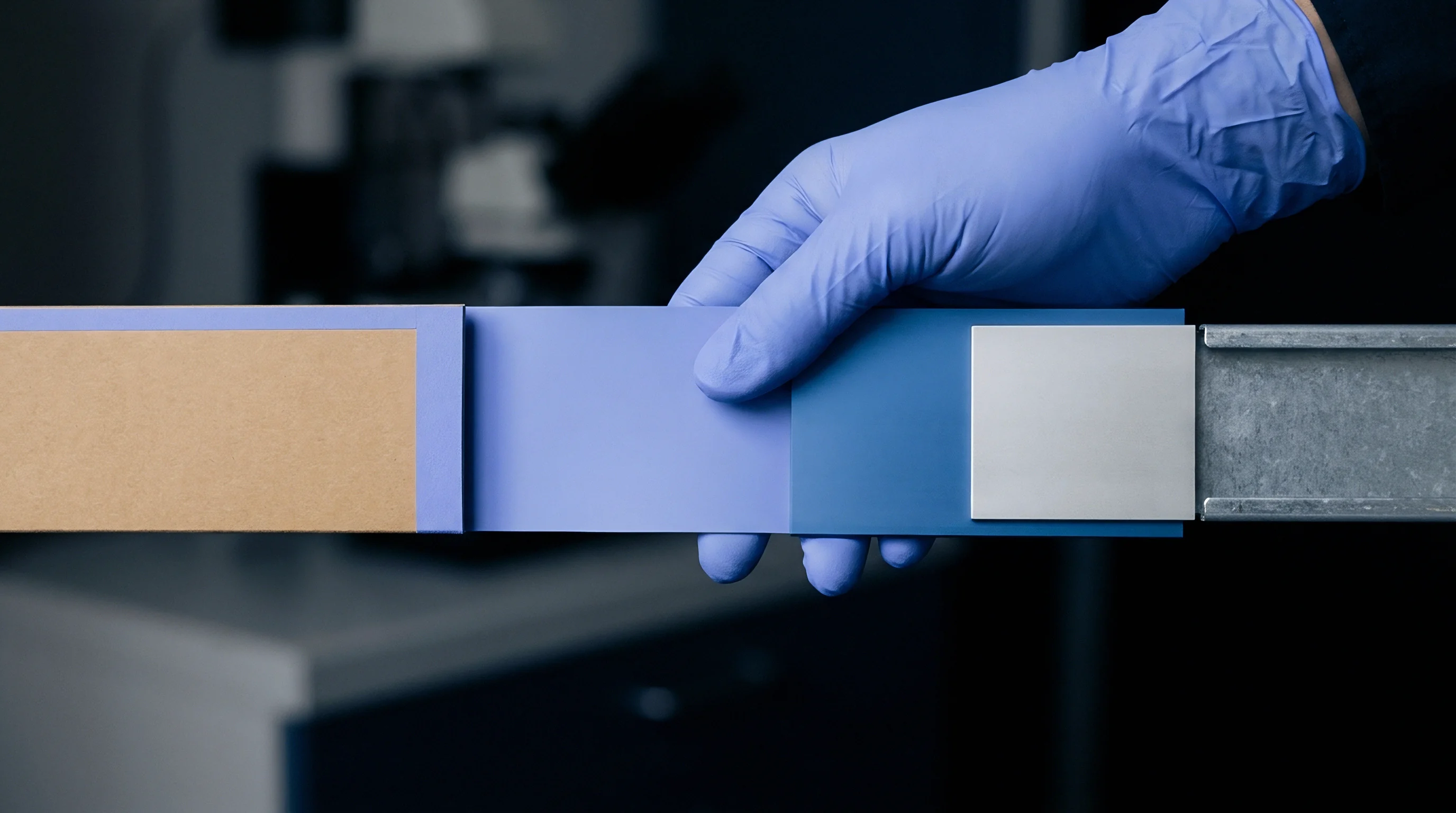
This method adheres a 25.4 by 25.4 millimeter paperboard specimen between an aluminum angle bracket and a stationary base anvil using high-tack double-sided pressure-sensitive tape. A calibrated pendulum swings from a fixed height, striking the bracket and cleaving the board along its weakest z-directional plane. The energy absorbed during rupture is measured in joules per square meter.
Scott Bond testing presents testing artifacts when evaluating coated or high-density grades. If the adhesive tape exhibits rheological flow or partial peel under impact, the measured energy includes tape deformation artifacts. In contrast, Z-direction Tensile testing, governed by ISO 15754 and TAPPI T 541, applies pure perpendicular tensile load without dynamic impact.
Metal platens adhere to the specimen faces via structural epoxy or specialized double-sided tape, and a universal testing machine pulls the platens apart at a constant rate of elongation. The peak force divided by specimen surface area yields the ultimate z-directional tensile strength in kilopascals.

Can Creasing Performance Predict Delamination?
Creasing paperboard prepares the substrate for sharp, damage-free ninety-degree and one-hundred-and-eighty-degree folds. During the creasing strike, a male rule depresses the board into a female matrix groove, deliberately inducing controlled shear delamination across the inner plies. This controlled delamination forms a hinge.
If internal bond strength is excessively high, the plies cannot shear internally, forcing tensile failure across the outer coated linerboard and causing unsightly surface cracking along the folded carton corner. Conversely, an internal bond strength below commercial thresholds causes wide, uncontrolled splitting that extends into panel faces, destroying the crease recovery force and creating carton jamming on filling lines.
Crease evaluation instruments, such as the Marbach or Pira crease testers, evaluate this mechanism by measuring the bending moment of an uncreased specimen alongside that of a creased specimen folded to ninety degrees. The crease recovery ratio, or folding resistance ratio, expressed as creased force divided by uncreased force multiplied by one hundred, serves as the operational threshold. Values between 40 and 60 percent deliver proper runnability on modern automated packaging lines operating above four hundred cartons per minute.
- Crease line check ~ The physical crease must show complete ply shearing without coating micro-fractures under 20x optical magnification.
- Adhesive bond verification ~ Pressure-sensitive acrylic tape used for Scott Bond must demonstrate zero peel failure along the platen boundaries.
- Burst pressure limits ~ Diaphragm hydraulic rates must remain within standard tolerances to prevent premature bursting during Mullen testing.
- Tensile energy absorption ~ Universal testing machines must integrate the area under the stress-strain curve to evaluate package drop resistance.
The standard supply agreement excludes warranty claims where carton cracking arises from improper rule-to-matrix clearance rather than sub-specification internal bond metrics.

Barrier
Surface Sizing and Water Penetration
Packaging paperboard intended for chilled, frozen, or liquid containment requires barrier sizing to restrict fluid penetration into the hydrophilic cellulose network. ISO 535 and TAPPI T 441 standardize the Cobb test, which quantifies the mass of water absorbed by one square meter of paperboard over a fixed time duration, conventionally 60 seconds for folding boxboard and 1800 seconds for heavy gypsum or carrier boards. A metal cylinder with an internal cross-sectional area of 100 square centimeters clamps onto the specimen face with a neoprene gasket, preventing lateral leakage.
Exactly 100 milliliters of distilled or deionized water enters the cylinder.
At the expiration of the test window, the operator pours off the water, unclamps the specimen, places it between standard blotting papers, and passes a standardized ten-kilogram metal roller across the blotter sandwich twice. Immediate reweighing on an analytical balance with 0.001-gram precision determines the water uptake. A high Cobb value signifies inadequate internal or surface sizing, warning of potential structural softening in high-humidity cold chains.
The Edge Wick test, governed by TAPPI T 487, modifies this investigation by submerging wax-sealed board edges into a water bath containing water-soluble dye, measuring liquid migration through cut edges over twenty-four hours in kilograms per square meter.
Contact Angle and Surface Energy Dynamics
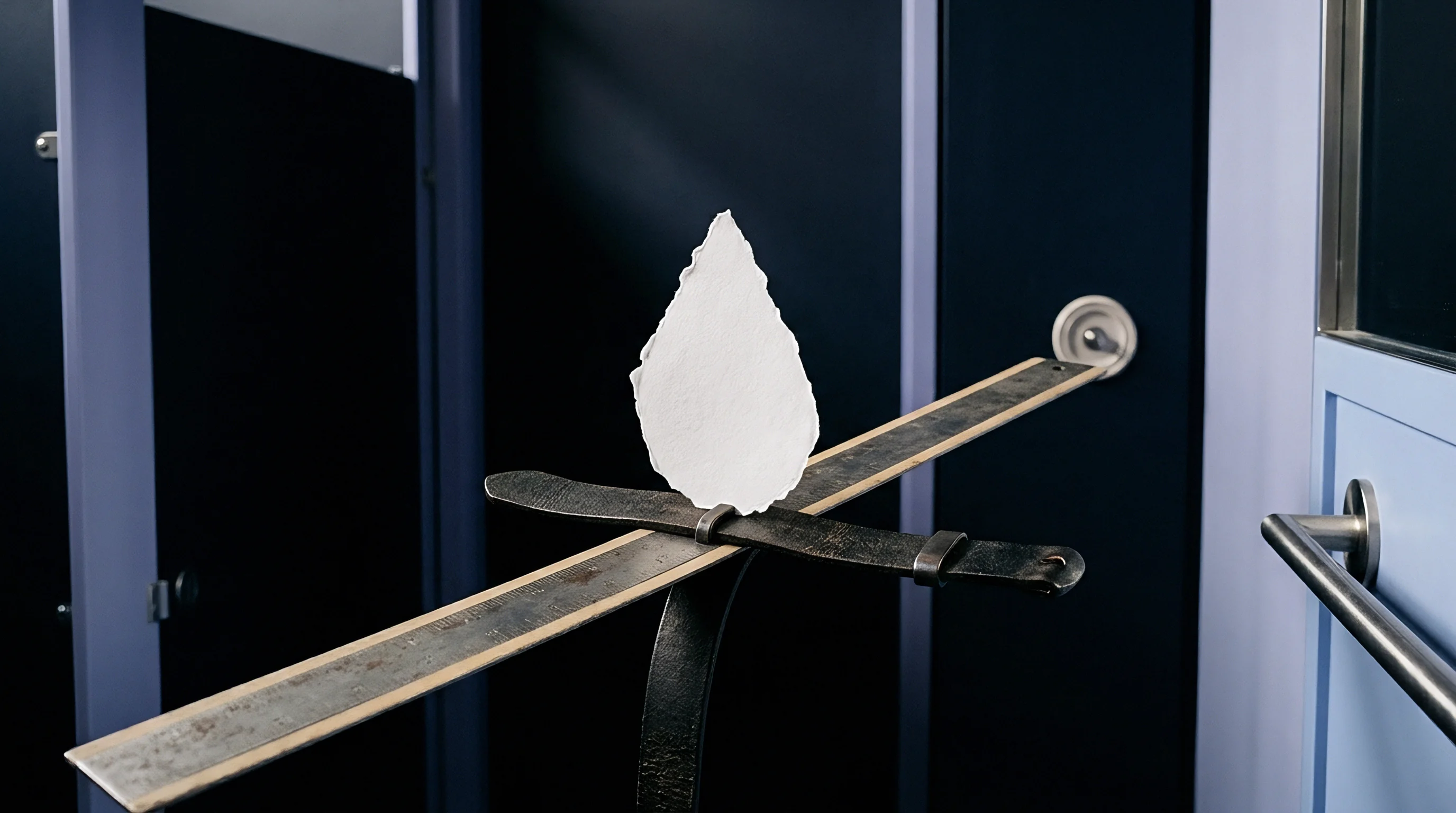
Water-based barrier coatings and functional aqueous dispersions demand exact surface energy control to ensure uniform wetting and pinhole-free barrier performance. TAPPI T 458 and ASTM D 7334 apply sessile drop contact angle analysis to quantify surface wettability. A goniometer deposits a standardized droplet of probe liquid, typically pure deionized water, formamide, or diiodomethane, onto the board surface.
High-speed digital imaging captures the angle formed between the liquid-solid baseline and the droplet tangent line at specified time intervals, such as 0.1, 1.0, and 5.0 seconds.
A contact angle falling below 90 degrees indicates spontaneous surface wetting, while angles above 100 degrees indicate hydrophobic properties. Observing contact angle decay over a sixty-second window captures fluid penetration kinetics through functional dispersion layers. Surface energy calculation utilizes the Owens-Wendt-Rabel-Kaelble method, dividing total surface energy into polar and dispersive components.
Functional barrier compliance fails when polar component shifts impede adhesive anchorage during side-seam carton gluing operations.
| Test Parameter | Primary Standard | Measurement Target | Detection Boundary | Operational Risk Factor |
|---|---|---|---|---|
| Water Absorptiveness | ISO 535 | Surface liquid weight uptake | 0.1 g/m² precision | Moisture softening and panel collapse |
| Water Vapor Transmission | ISO 2528 / ASTM E 96 | Gravimetric moisture flux | 0.01 g/(m²·day) | Product caking or premature shelf-life loss |
| Air Permeance | ISO 5636-3 (Sheffield) | Air volume flux through porosity | 0.1 to 100 µm/(Pa·s) | Coating pinholing, suction cup feeding failure |
| Grease Resistance | ISO 16532-1 | Oil strike-through duration | Pass/Fail over 24 hours | Visual staining, lipid oxidation of contents |
Disputes frequently center on the excuse that high Cobb values resulted from surface roughness variations rather than inadequate chemical sizing chemistry.
Governance

Regulatory Frameworks and PPWR Mandates
Physical paperboard testing no longer functions merely as a private operational quality check between a paper mill and a converting plant. Packaging legislation, notably the European Union Packaging and Packaging Waste Regulation, introduces mandatory packaging minimization criteria, recyclability performance grades, and structural fitness verifications. Packaging must demonstrate structural optimization to eliminate excessive weight and empty volume space ratios under documented protocols.
Physical properties, specifically bending stiffness under ISO 2493 and short-span compression under ISO 9895, serve as the technical basis proving that a specified board basis weight represents the minimum gauge capable of maintaining product safety during transit.
Failure to substantiate physical property choices with accredited laboratory dossiers exposes importers and brand owners to civil penalties, mandatory corrective actions, and extended customs detentions. When border control authorities or environmental compliance bodies request the packaging technical documentation, the importer presents test reports from laboratories accredited under ISO/IEC 17025. Unaccredited factory certificates lack evidentiary weight during formal regulatory challenges.
- Accreditation verification ~ The testing laboratory must hold active ISO/IEC 17025 accreditation encompassing the exact paperboard test methods cited.
- Standard conditioning audit ~ Test documentation must verify conditioning compliance with ISO 187 or TAPPI T 402 with environmental chamber logs attached.
- Batch traceability correlation ~ The certificate of analysis must tie directly to the distinct mill reel and pallet serial numbers listed on customs manifests.
- Failure mode reporting ~ Reports must document the specific rupture mode during tensile, burst, and internal bond tests rather than listing bare mathematical averages.
Laboratory Evidence and Commercial Exposure
A paperboard claim unsupported by accredited physical testing data shifts product liability directly down the commercial chain. When a shipment of imported food folding cartons collapses in transit due to board delamination or moisture absorption, the commercial contract arbitrates liability based on specified testing parameters. If the purchase specification merely notes paperboard basis weight and caliper, the supplier demonstrates compliance by proving the sheet matches those dimensions, leaving the buyer to absorb the costs of collapsed product, sorting fees, and retail non-conformance fines.
Sophisticated procurement organizations incorporate complete physical parameter limits directly into supply agreements, requiring minimum Scott Bond thresholds, cross-direction SCT values, and maximum Cobb limits. When delivered pallets fail to match accredited laboratory metrics, the buyer holds grounds to reject the inventory at the port of entry before paying duties, freight charges, and non-refundable handling costs. The presence of an unbroken chain of testing custody establishes commercial enforceability.
A contract specification lacking verifiable test standards leaves the buyer bearing full financial liability for transit box failures.
The standard commercial warranty clause provides that failure of physical properties to meet cited ISO or TAPPI thresholds upon arrival constitutes material breach, entitling the buyer to full inventory rejection and recovery of cross-border freight costs.