Paperboard Crease Testing and Folding Resistance Fundamentals
Paperboard crease testing establishes correct score geometry and ply delamination to prevent carton line jams and surface cracking.
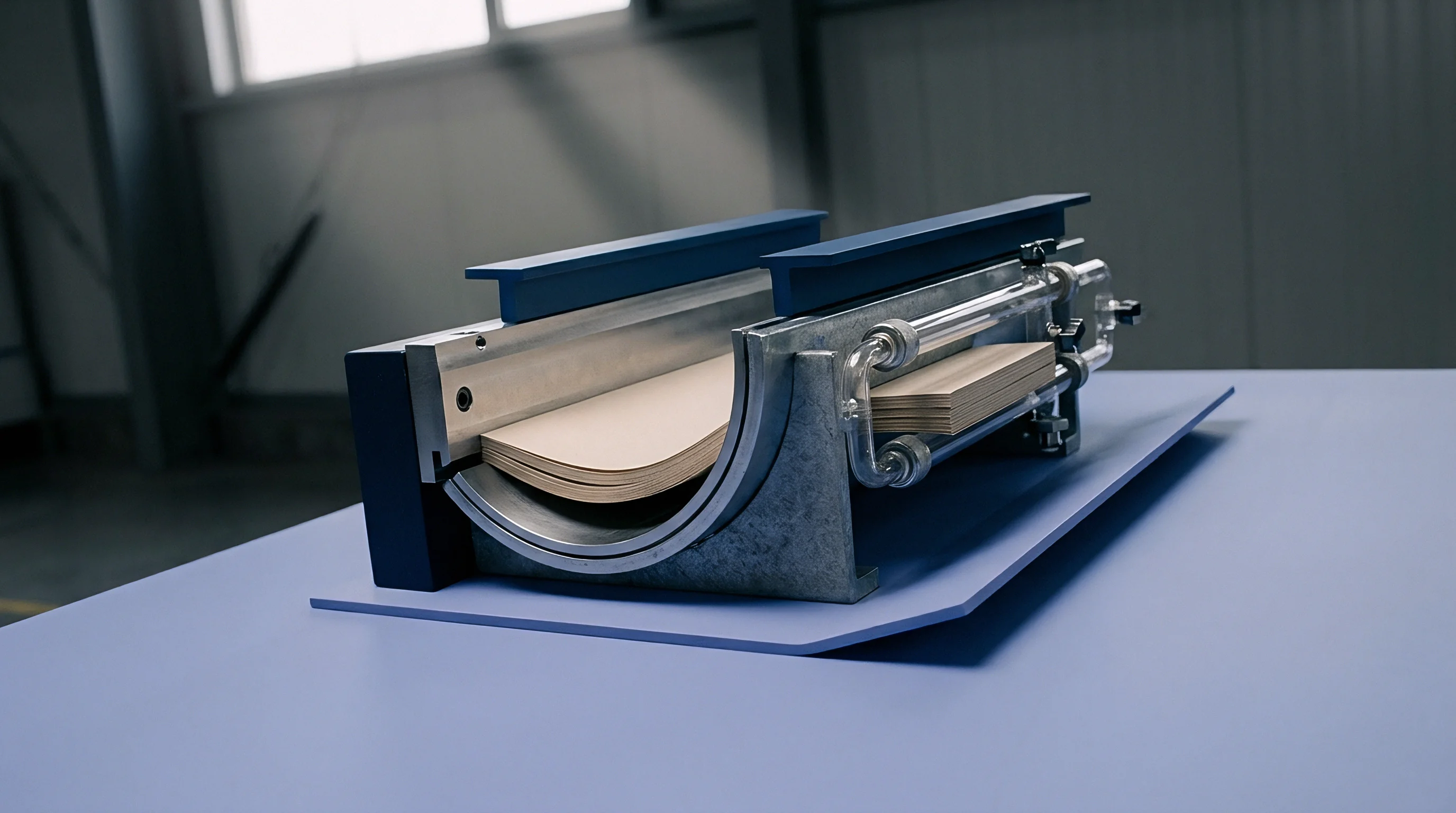

Geometry
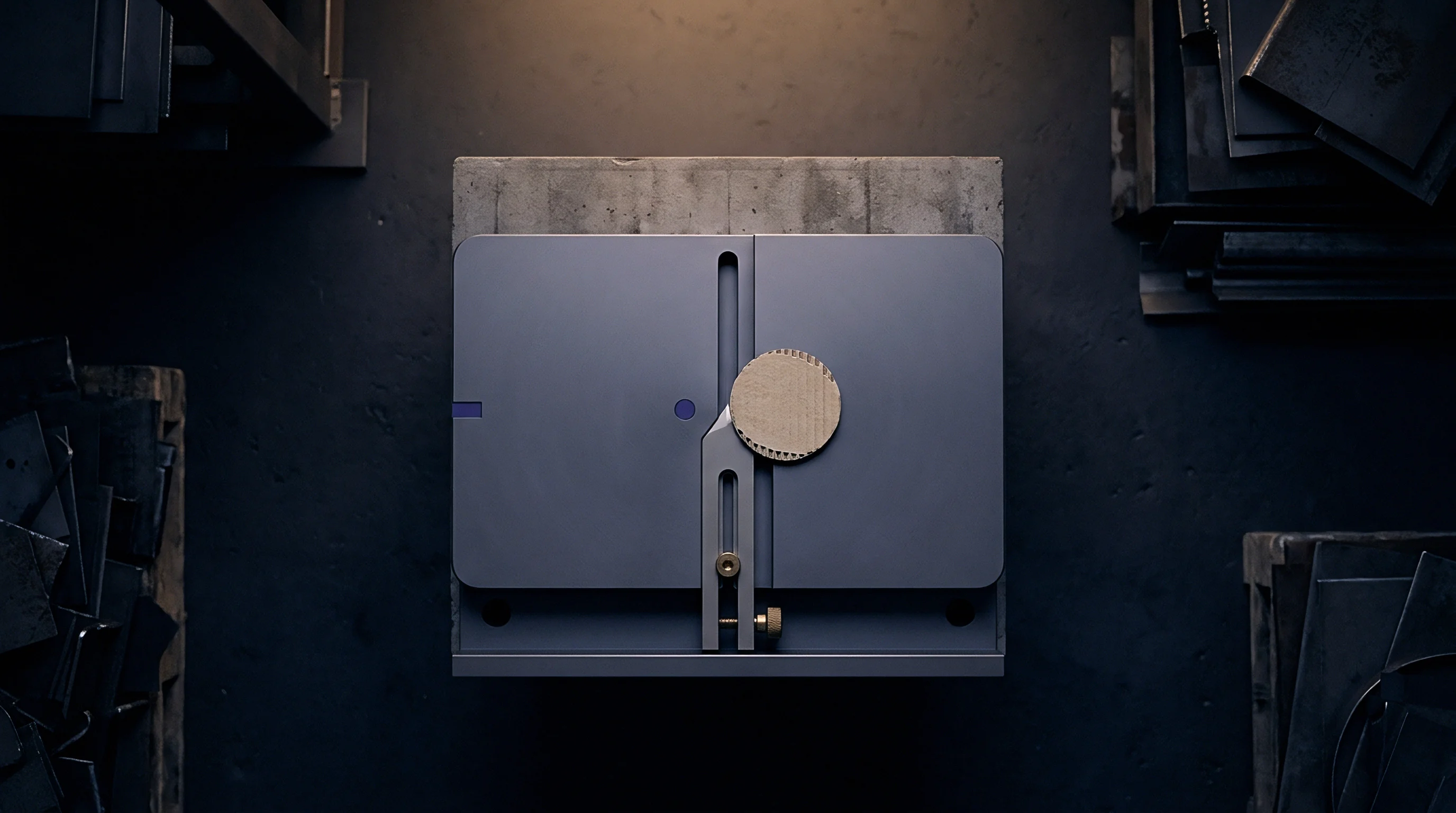
The permanent mechanical deformation of a solid bleached sulfate or folding boxboard sheet during converting relies upon deliberate internal shear failure. Scoring tool sets consist of a steel male blade, known as a creasing rule, and a female matrix channel mounted on the counter-plate. When the die-cutting platen closes, the rule forces paperboard fibers down into the female groove.
This action stretches the outer plies while compressing the inner plies, forcing structural layers to separate along natural fiber planes. Proper score formation creates an internal micro-hinge that reduces the force needed to fold the board by seventy to eighty percent compared to an uncreased sheet.

Score Rule and Matrix Dimension Ratios
Male creasing blades pressed into female channels establish a localized double-hinge along the board axis. Board caliper governs crease depth. Correct groove sizing depends directly on sheet thickness (t) and creasing rule thickness (T).
The standard mathematical formula for determining female channel width (W) in folding boxboard grades is W = 2t + T. For solid bleached sulfate grades, which exhibit higher tensile stretch and longer virgin kraft fibers, the formula adjusts to W = 1.5t + T. Channel depth (D) typically matches or slightly exceeds single sheet caliper, calculated as D = 1.0t to 1.2t. Incorrect channel sizing destroys the fold axis. Excessively narrow channels shear through the top liner, while overly wide channels create soft, sloppy folds that misalign carton panels during high-speed packaging assembly.
Matrix width determines fold accuracy. Standard creasing rules utilize 2-point (0.71 mm) thickness for paperboard calipers between 0.30 mm and 0.55 mm. Heavier board calipers from 0.55 mm to 0.80 mm demand 3-point (1.05 mm) rules to prevent excessive tension on the outer ply.
Machine direction orientation alters tool sizing. Cross-direction creases cut across aligned fibers, generating higher mechanical resistance that mandates a channel width five to ten percent wider than machine-direction creases.

Internal Ply Delamination versus Tensile Failure
Microstructural shearing across the z-direction divides the solid paperboard thickness into independent, flexible lamellae. Shear strength controls ply separation. When the creasing rule enters the female channel, the board experiences severe internal shear stresses.
Virgin fiber plies delaminate cleanly along their interfiber bond lines, creating multiple thin layers that slide past one another during folding. This internal delamination relieves tensile strain on the outer coated surface. If internal plies fail to delaminate, outer liner plies absorb the full bending strain.
Tensile strain limits top ply elongation. Surface coatings rupture when tensile strain exceeds two percent, producing visible fractures along the outer corner of the folded carton.
| Board Grade | Caliper Range (mm) | Creasing Rule Thickness (pt) | Channel Width Formula (mm) | Target Channel Depth (mm) |
|---|---|---|---|---|
| Solid Bleached Sulfate (SBS) | 0.35 to 0.50 | 2.0 pt (0.71 mm) | 1.5t + 0.71 | 1.0t |
| Folding Boxboard (FBB) | 0.40 to 0.65 | 2.0 pt (0.71 mm) | 2.0t + 0.71 | 1.1t |
| Coated Recycled Board (CRB) | 0.45 to 0.70 | 3.0 pt (1.05 mm) | 2.0t + 1.05 | 1.2t |
| Uncoated Kraft Back (SUB) | 0.50 to 0.80 | 3.0 pt (1.05 mm) | 1.8t + 1.05 | 1.1t |
Narrow female channels force tension into the top coated liner while excessively wide channels yield undefined fold axes and poor carton squareness.
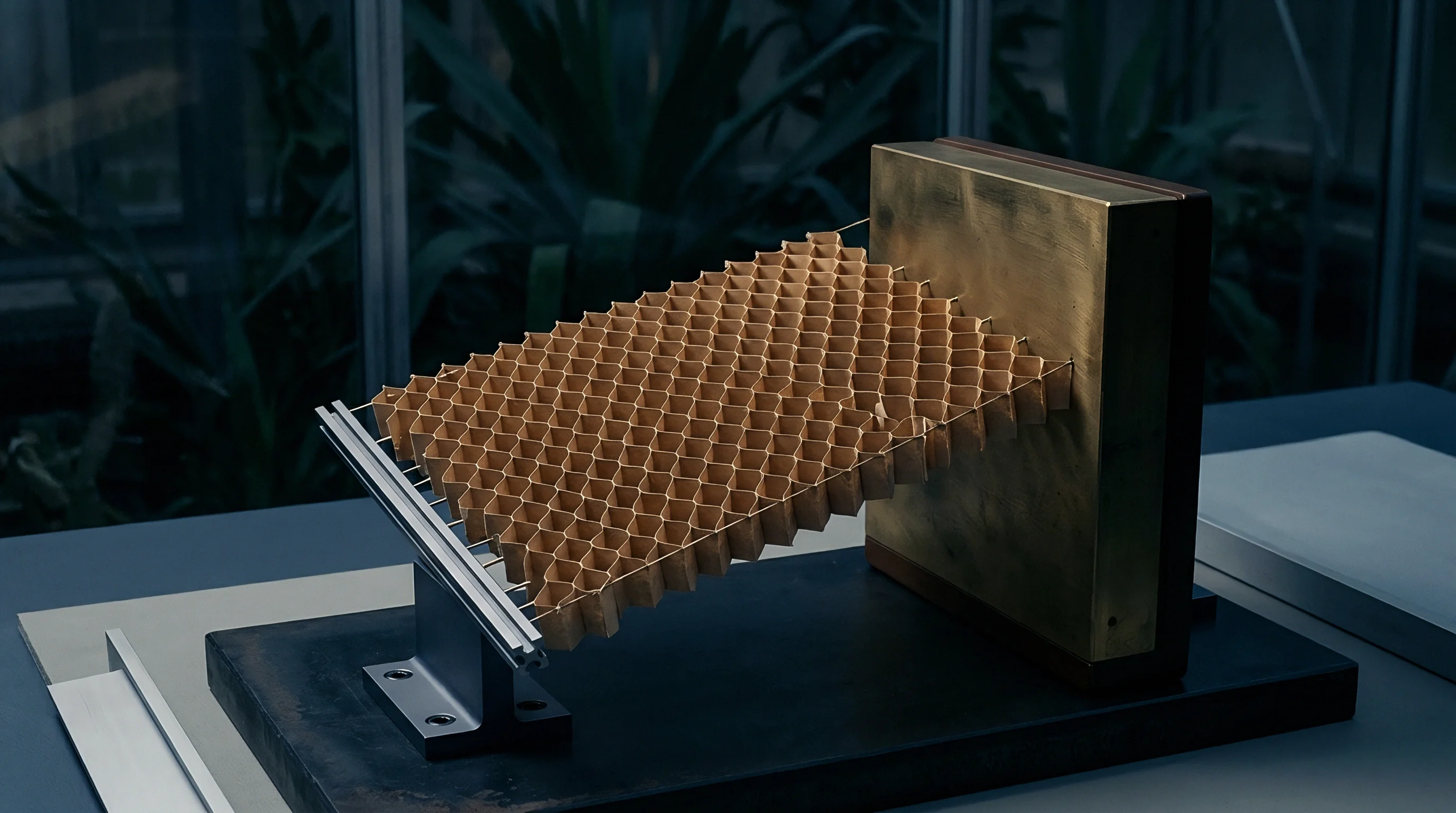

Kinematics
Measuring the rotational force demanded to form a carton corner isolates the mechanical work performed by the pre-formed crease hinge. Bending resistance testing evaluates both the raw board stiffness and the reduced torque of the scored line. Laboratory instruments apply a controlled angular deflection, typically rotating a creased specimen through ninety degrees.
The load cell records continuous resistance torque throughout the fold arc. Analyzing the torque-angle curve reveals the initial resistance peak, the yield point of internal fiber plies, and the residual spring-back moment. High spring-back moments force carton panels outward, causing glued flaps to pop open on packing lines.
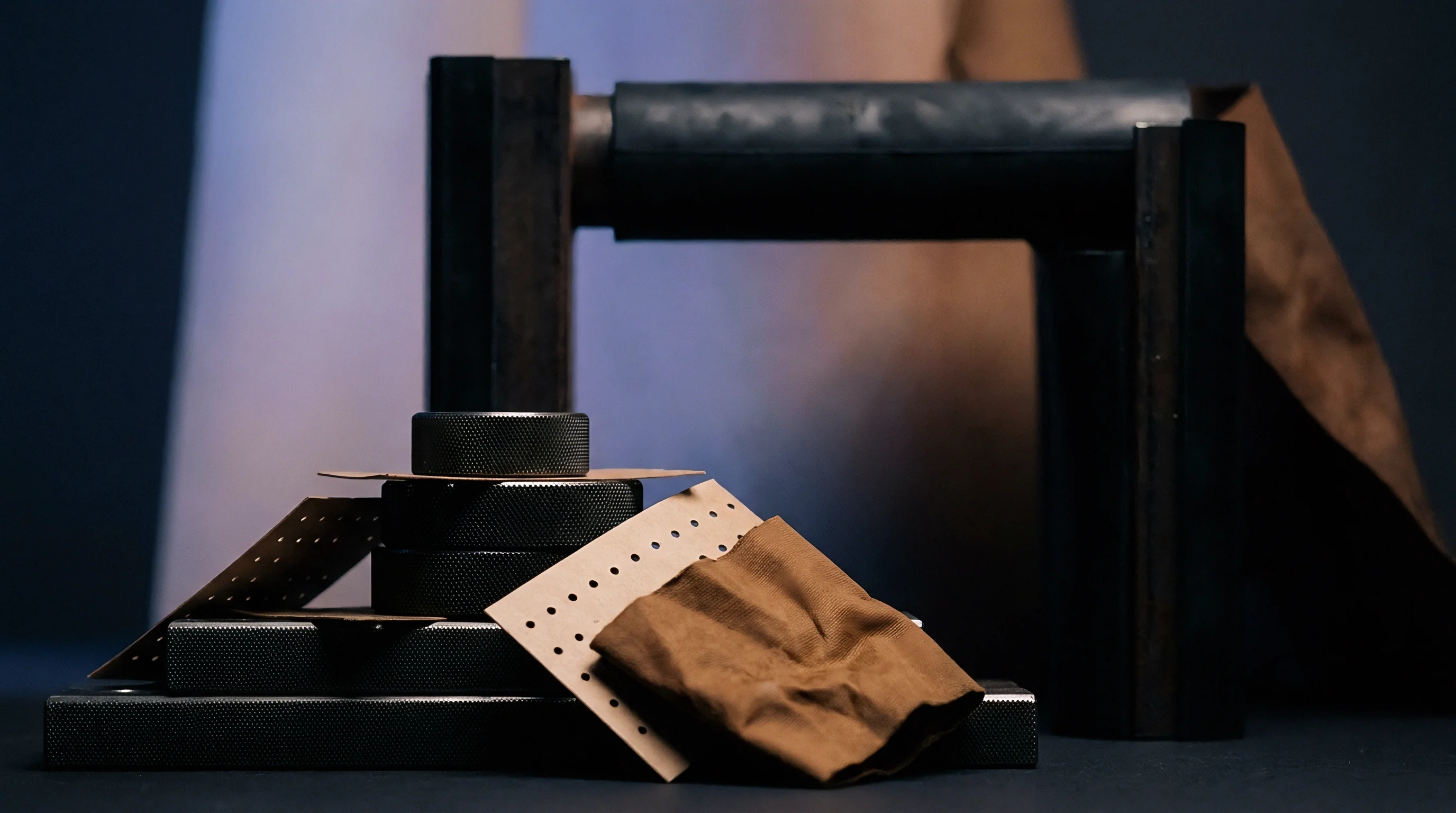
Distinguishing Bending Stiffness from Crease Resistance
Elastic deflection of an ungrooved sheet follows classic beam theory under low displacement angles. Bending stiffness (Sb), measured according to ISO 2493, quantifies the sheet strength resisting force at a five or fifteen-degree deflection angle. High stiffness increases erecting torque.
In contrast, crease resistance (Mb), evaluated under ISO 5628 or TAPPI T 829, measures the maximum torque encountered when folding a scored specimen to ninety degrees. The relationship between these two values establishes the Crease Stiffness Ratio (Cr), expressed as Cr = (Mb / Sb) × 100%. Score geometry dictates carton squareness.
Target crease stiffness ratios fall between thirty and fifty percent. Ratios above sixty percent indicate an under-scored sheet that causes carton bulging and line jams. Ratios below twenty-five percent signify an over-scored sheet where inner plies have fractured completely, causing weak corners and panel sagging.

The Rotational Torque Profile at Ninety Degrees
High-speed packaging lines encounter peak mechanical force within the initial thirty degrees of panel displacement. As the panel moves from zero to ninety degrees, resistance builds rapidly to an initial peak force. This peak represents the static friction and remaining structural bond strength of the internal plies.
Once plies yield along the delaminated score bead, resistance drops into a lower, steady-state plastic deformation regime. Dynamic crease instruments record these forces at high angular velocities up to ninety degrees per second to mirror physical press conditions.
At 23 C and 50 percent relative humidity, a folding boxboard with a crease stiffness ratio below 30 percent exhibits panel bulging during high-speed erected cartoning.
Board mills routinely maintain that carton edge split occurrences result from improper print-shop relative humidity rather than baseline pulp weakness.


Anvil
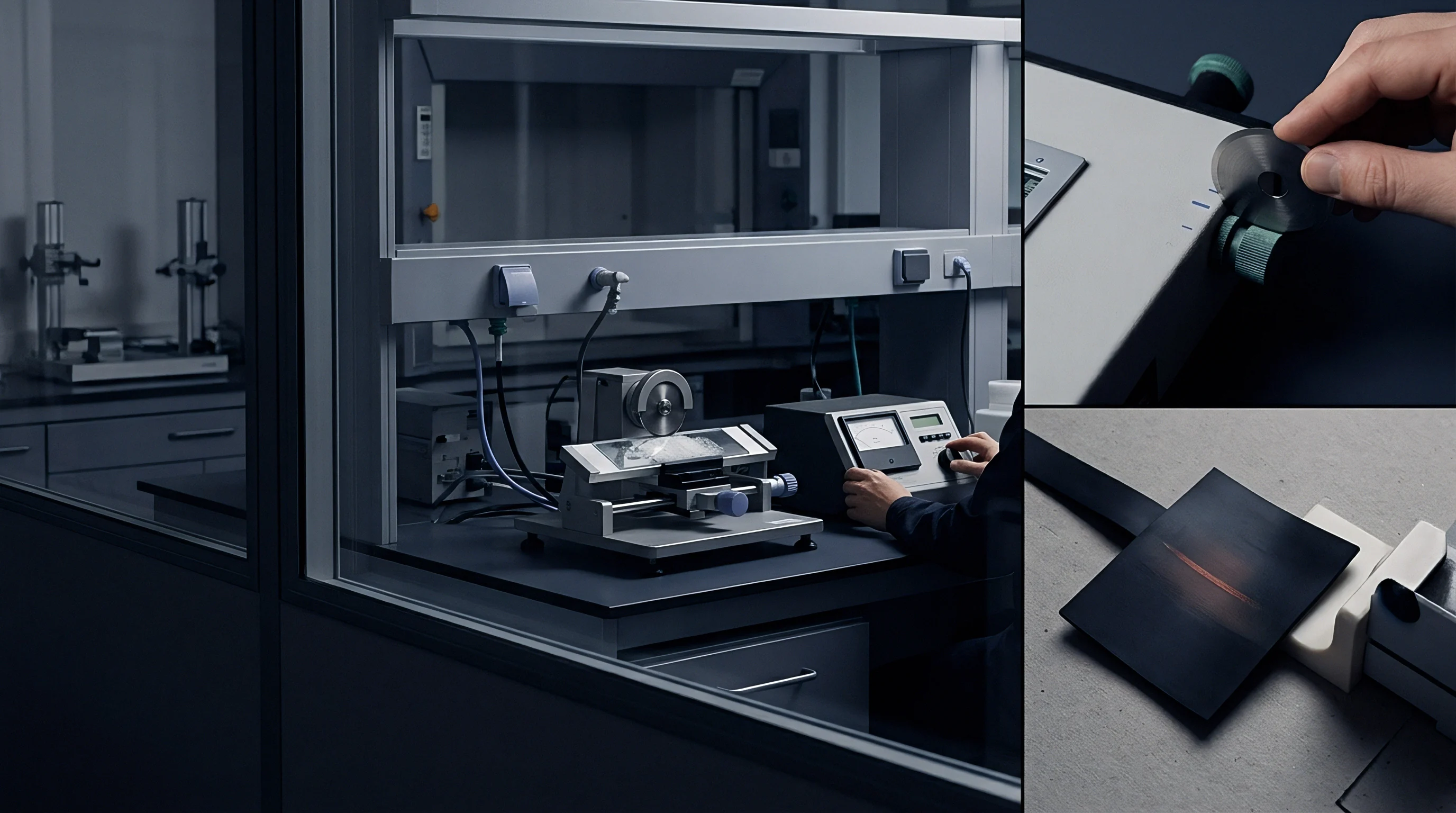
Precision benchtop instruments isolate the forces exerted by die-cutter counter-plates through standardized mechanical clamps and force transducers. Laboratory devices such as the L&W Crease Tester and the PCA Score Bend Tester evaluate board behavior under controlled deflection speeds. The specimen clamps tightly on one side of the crease line while a motorized bending arm contacts the opposing panel at a fixed distance, typically ten or fifteen millimetres from the score axis.
Load cell transducers capture continuous force measurements, converting raw torque into millinewtons or gram-force values.
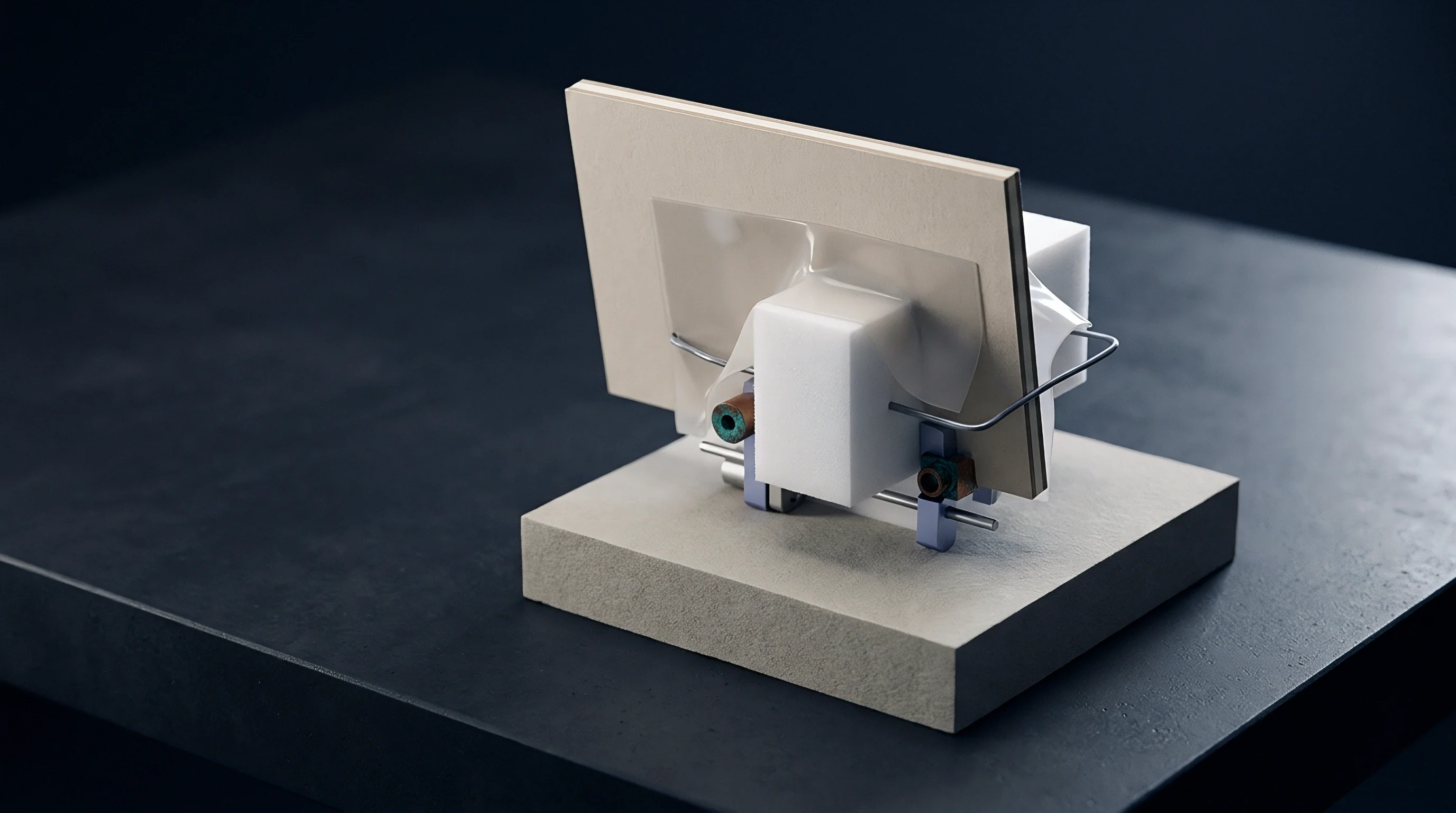
Benchtop Instrument Mechanics and Load Cell Alignment
The L&W Crease Tester employs a motorized bending jaw rotating around a fixed pivot point at controlled angular velocity. Knife sharpness affects crease depth. Benchtop instruments demand precise calibration of clamp pneumatic pressure.
Excessive clamping pressure crushes the uncreased board sample, artificial lowering baseline bending stiffness measurements. Insufficient clamping pressure allows specimen slippage, distorting the recorded rotational angle and producing false peak torque readings. Load cell alignment must align perfectly parallel with the score line to prevent torsional bias.
Standardized Laboratory Score Testing Sequence
Testing procedure follows rigorous specimen preparation protocols to yield reproducible moment curves.
- Condition all test specimens at 23 C and 50 percent relative humidity for 24 hours per ISO 187 before die-cutting.
- Cut test strips to exactly 38 millimetres width with the crease line centered perpendicular to the specimen axis.
- Clamp the uncreased end into the instrument jaw with the score groove facing away from the bending pin.
- Rotate the bending arm through a 90-degree arc at a constant rate of 1.5 degrees per second while recording peak resistance torque.
- Calculate the crease resistance percentage by dividing the creased torque value by the uncreased board bending moment.
Standard purchasing specifications referencing ISO 5628 enforce a maximum tolerance of plus or minus five percent on reported crease moment values, allowing buyers to reject out-of-spec batches.

Rupture
Structural breakdown along the outer bend radius originates when surface tensile stress exceeds the ultimate elongation limit of the outer pigment layer. High-speed video analysis demonstrates that surface cracking initiates at microscopic voids within the coating matrix. Mineral pigments such as calcium carbonate and clay exhibit low elongation capability compared to cellulose fibers.
When a creased board folds to ninety or one hundred thirty-five degrees, the outer surface stretches significantly. If internal ply delamination is insufficient, tension concentrates entirely in the outer liner, causing the coating to crack and peel away from the raw board surface.

Why Do Coated Recycled Boards Crack during Folding?
Shortened cellulose fibres in recycled furnishes possess reduced Z-direction shear strength and lower strain-to-break capacity compared to virgin kraft pulps. Recycled fibers shorten during repulping. Coated Recycled Board (CRB) contains multiple plies of mixed waste fiber bound together with starch and synthetic retention aids.
These short, stiff fibers resist uniform shear delamination during scoring. Instead of splitting into smooth internal lamellae, recycled plies fracture abruptly under the creasing rule. Moisture alters fiber wall flexibility.
Low moisture content below five percent renders recycled fibers brittle, accelerating liner cracking along cross-direction score lines during winter converting operations.

Cross Direction versus Machine Direction Anisotropy
Fibre orientation produced on the wet end creates distinct mechanical properties along orthogonal sheet axes. Machine direction (MD) fibers align parallel to the paper machine web, yielding higher tensile strength and bending stiffness. Cross-direction (CD) fibers lie perpendicular to the web, displaying higher elongation but lower stiffness.
Cross-direction scores demand wider channels. Scoring across the machine direction forces the rule to bend aligned longitudinal fibers, generating thirty to fifty percent higher crease resistance moments than machine-direction scores.
- Liner Splitting occurs when top ply elongation exceeds maximum strain limits under high tension.
- Coating Flaking arises from weak binder adhesion between mineral pigment and underlying cellulose plies.
- Shear Collapse happens when internal ply shear failure spreads laterally instead of forming a clean bead.
- Back Delamination results from excessive anvil penetration depth cutting bottom liner fibres.
| Failure Mode | Primary Mechanical Cause | Critical Moisture Threshold | Affected Substrates | Corrective Tooling Action |
|---|---|---|---|---|
| Top Coat Cracking | Insufficient ply delamination; high surface tension | Below 5.0% RH equivalent | CRB, FBB, Triple-Coated SBS | Widen channel width by 0.05 mm; increase rule radius |
| Flaking at Score Axis | Weak binder ratio in pigment coating layer | Below 4.5% RH equivalent | Recycled White Lined Chipboard | Reduce creasing rule height; soft rubber counter-matrix |
| Bottom Liner Bursting | Excessive penetration of creasing rule into matrix | Above 8.0% RH equivalent | Uncoated Recycled Chipboard | Reduce creasing rule depth; lower platen pressure |
| Uneven Score Bead | Asymmetric tool wear; platen parallel mis alignment | Independent of moisture | All Board Grades | Replace worn matrix channels; calibrate platen leveling |
According to ISO 2493 guidelines, failing to specify machine-direction score orientation in supply contracts allows mills to deliver stock that splits during rapid panel folding.
Using mismatched scoring geometries on heavy-coated recycled stock generates surface fractures that ruin printed branding and cause costly carton rejections at retail distribution centers.

Audit
Quality assurance procedures on delivered paperboard reels demand rapid physical testing before release to high-speed die-cutting platens. Goods-in inspection teams verify that mill-certified stiffness figures match physical reel behavior. Paperboard absorbs and desorbs ambient moisture continuously.
Moisture shifts alter board caliper, internal bond strength, and crease performance within hours of unwrapping protective mill packaging. Comprehensive receiving audits cross-check basis weight, sheet caliper, Z-direction tensile strength, and three-point crease bending resistance across sample sets drawn from multiple pallets.
Statistical Acceptance Sampling for Goods in Inspection
Sampling plans governed by AQL 1.0 parameters establish the required specimen count based on total lot tonnage and pallet count. Laboratory conditioning requires twenty-four hours. Acceptance sampling according to ISO 2859-1 demands representative specimen extraction from top, middle, and bottom reams across randomly selected pallets.
Test specimens undergo immediate crease stiffness testing to catch batch-to-batch fiber variance. Flatbed platens require uniform impression depth. If sample crease stiffness ratios exceed forty-five percent on 350 gsm Folding Boxboard, receiving engineers flag the shipment for potential score line cracking.

Moisture Hysteresis and Warehouse Storage Dynamics
Water content fluctuations between mill wrapping and print-shop converting alter ply adhesion and score stiffness dramatically. Paperboard equilibrium moisture follows a hysteresis loop. A sheet drying down to five percent moisture exhibits higher crease resistance and brittleness than a sheet re-wetting to five percent moisture from a dry state.
Unconditioned warehouse storage creates steep moisture gradients within single pallets. Outer sheet edges lose moisture quickly during dry winter months, causing score cracking along panel edges while inner sheets maintain proper flexibility.
- Grammage Verification cross-checks delivered sheet basis weight against ISO 536 laboratory measurements.
- Caliper Audit confirms board thickness across the web using ISO 534 micrometer protocols.
- Stiffness Ratio Check validates that cross-direction crease stiffness matches specified packaging line tolerances.
- Moisture Balance Test measures specimen moisture content immediately upon pallet unwrapping using ISO 287 methods.
Pallets stored near unheated loading docks undergo rapid edge moisture loss that makes outer score lines brittle while inner reams retain mill-gate flexibility.
How dynamic crease depth variations across high-speed web platens interact with regional humidity shifts during transit remains an active subject of study among converting engineers.

Trade
Commercial paperboard selections balance substrate grammage and fiber furnish costs against converting reliability and box line throughput. Purchasing lower-grammage paperboard reduces raw material tonnage expenditure but narrows the mechanical operating window for clean scoring. Downgauging caliper without adjusting creasing rule geometry increases press spoilage and carton erecting failures.
High press speeds amplify stiffness resistance. Converting downtime on high-speed folder-gluers running at 400 metres per minute costs hundreds of dollars per hour, far exceeding minor material savings achieved through cheap substrate substitution.
Downgauging Economics and Score Integrity
Reducing sheet caliper by twenty micrometres lowers landed material expenditure while narrowing the permissible score matrix tolerance window. Counter-dies improve crease bead uniformity. Consider a packaging line converting 500,000 folding cartons from a 350 gsm Folding Boxboard (0.50 mm caliper) priced at 1,200 dollars per metric tonne.
Downgauging to a 320 gsm grade (0.45 mm caliper) priced at 1,220 dollars per metric tonne promises a net material cost reduction of 5.8 percent due to higher sheet yield per tonne. However, reducing board caliper alters the required matrix channel width from 1.71 mm down to 1.61 mm.
If press operators fail to install tighter matrix channels, the wider matrix yields under-scored creases with stiffness ratios jumping from 38 percent to 54 percent. Erecting machines encounter frequent misfeeds, causing press stoppages and a 3.5 percent increase in make-ready waste. The resulting downtime and lost carton yield completely eliminate the initial material cost savings.
Converting Yield and Tooling Investment Analysis
Precision die-cutting counter-plates require higher upfront investment but deliver significant operational savings through reduced waste and higher press speeds. Standard phenolic matrix strips cost approximately 150 dollars per die set but suffer from height degradation after 50,000 impressions. Milled steel counter-plates cost 1,200 dollars per set but maintain precise channel dimensions across two million impressions.
Precision elastomeric matrix channels reduce make-ready spoilage on solid bleached sulphate runs by maintaining uniform rib formation across thickness variations.
| Board Grade | Furnish Type | Creasing Operating Headroom | Relative Landed Cost / 1,000 Sheets | Packaging Waste Fee Band |
|---|---|---|---|---|
| Solid Bleached Sulfate (SBS) | 100% Virgin Bleached Kraft | Wide (High strain capability) | Base (1.00) | Standard Monomaterial Rate |
| Folding Boxboard (FBB) | Virgin Mechanical + Chemical | Moderate (Good delamination) | 0.88 | Standard Monomaterial Rate |
| Coated Recycled Board (CRB) | 100% Recycled Fiber | Narrow (Brittle short fibers) | 0.72 | Modulated Recycled Discount |
| Uncoated Kraft Back (SUB) | Virgin Unbleached Kraft | Very Wide (High tear resistance) | 0.91 | Standard Monomaterial Rate |
Evaluating total landed cost requires factoring Extended Producer Responsibility (EPR) fee modulations alongside matrix consumable wear and converting scrap rates. Recycled board grades enjoy lower packaging waste fees in major European jurisdictions, but demand rigid matrix precision and tight warehouse humidity controls to prevent score rupture at converter plants.