Interlaminar Delamination Kinetics in Moisture Barrier Coated Recycled Packaging Board
Barrier coating moisture ingress causes internal fiber swelling, creating shear strain that delaminates weak recycled board plies along the coating interface.

Interface
Cellulose fiber structures derived from post-consumer waste exhibit reduced mean fiber length and diminished hydrogen bond density relative to virgin kraft stock. Recycled containerboard and folding boxboard grades, such as coated recycled board (CRB) and white lined chipboard (WLC), rely on multi-ply web architectures to build caliper and bending stiffness. A moisture barrier layer—whether an extruded polyolefin film or an aqueous dispersion coating—is applied directly to the top liner ply.
Moisture ingress disrupts the structural integrity of this layered assembly through distinct physical mechanisms operating at the boundary where synthetic resin meets recycled fiber.
Recycled Ply Mechanics and Surface Wetting
Fibers sourced from repeated repulping cycles contain high proportions of fines, filler minerals, and residual starches. These short fibers yield low Z-directional tensile strength within internal plies. Clean pulp yields stronger plies.
When aqueous dispersion coatings are applied to the top liner, surfactant formulations control dynamic contact angles to ensure complete film formation. High surface energy promotes mechanical interlocking between the liquid polymer and surface fibers. However, excessive liquid penetration weakens hydrogen bonds in the immediate subsurface layer.
Cellulose fibers absorb water rapidly. Hydrophilic fibers swell laterally, changing local dimensions while the hydrophobic synthetic layer resists dimensional change. This dimensional mismatch induces localized shear strain along the coating boundary during drying and subsequent environmental exposure.

Polymer Adhesion Failure Modes
Extruded polyethylene films form mechanical bonds with top-liner fibers through pressure and thermal consolidation at the nip roll. Liquid water or vapor entering unsealed package edges migrates laterally through porous recycled plies. Pinhole defects accelerate lateral diffusion.
Absorbed moisture hydrates cellulose hydroxyl groups, causing fiber swelling and reducing internal friction within the fiber matrix. Delamination proceeds along weak plies. Mechanical forces acting on the package, such as carton erection stresses or stacking loads, translate into peel and shear forces across the boundary.
Internal fiber failure occurs when these hygro-mechanical stresses exceed the local cohesion of the recycled fiber network.
- Blister Formation Interfacial vapor accumulation generates localized expansion bubbles beneath extruded polyethylene films during high-humidity storage.
- Edge Delamination Creep Unsealed tray boundaries absorb liquid moisture, propagating peel stress inward along the weak recycled under-liner plies.
- Ply Separation Shear Differential swelling between saturated recycled plies and dry internal layers generates shear stresses exceeding the local fiber bonding threshold.
- Film Peeling at Fold Lines Mechanical creasing disrupts coating continuity, creating micro-cracks where absorbed water breaks resin-to-fiber bonds.
Moisture accumulation at the fiber-coating boundary reduces internal cohesion before external film blistering becomes visible.
Whether modified acrylic dispersions can achieve equivalent interfacial shear stability without sacrificing repulpability metrics remains open to long-term mill trial data.

Diffusion
Water vapor migration through barrier-coated recycled board operates across two distinct structural domains: the synthetic coating layer and the porous fiber web. Extruded polyolefin layers display Fickian transport behavior, where mass flux correlates directly with ambient vapor pressure gradients and film thickness. Aqueous dispersion coatings, containing latex particles and hydrophilic emulsifiers, frequently demonstrate non-Fickian diffusion behavior.
Surfactant channels and incomplete latex particle coalescence form preferential moisture pathways through the coating, accelerating water transmission into underlying recycled plies under warm, humid conditions.
Fickian Transport in Barrier Films
Permeation rates across homogeneous polymer films follow steady-state Fickian laws under fixed temperature and vapor pressure differentials. Moisture Vapor Transmission Rate (MVTR) values for extruded low-density polyethylene (LDPE) coatings on boxboard typically range between five and twelve grams per square meter per day under tropical conditions (thirty-eight degrees Celsius and ninety percent relative humidity). Equivalent thicknesses of dispersion-cast acrylic or styrene-butadiene coatings exhibit higher flux rates, ranging between fifteen and forty grams per square meter per day under identical conditioning.
Absorbed vapor reaching the top liner ply condenses inside capillary spaces within the recycled fiber network, lowering matrix cohesion.
Hygro Mechanical Stress Accumulation
Water molecules entering the fibrous matrix bind immediately to unlinked hydroxyl sites within the recycled cellulose plies. Fiber swelling increases sheet caliper while causing planar expansion. Polymer films resist water penetration.
Because the hydrophobic surface coating maintains fixed dimensions while the underlying recycled sheet expands, severe shear strain develops along the interface. Moisture triggers mechanical expanding forces. Over time, continuous moisture diffusion lowers the internal bond strength of the recycled board, reducing Z-directional tensile capacity to a fraction of its dry baseline value.
| Substrate Grade | Barrier Coating Type | MVTR at 38°C 90% RH (g/m²·day) | Initial Scott Bond (J/m²) | Scott Bond after 72h Wet Dwell (J/m²) | Delamination Rate Constant (1/h) |
|---|---|---|---|---|---|
| CRB 350 gsm | Extruded LDPE (18 g/m²) | 8.5 | 145 | 98 | 0.0054 |
| CRB 350 gsm | Acrylic Dispersion (12 g/m²) | 22.0 | 140 | 62 | 0.0112 |
| WLC 380 gsm | Bio-based Dispersion (15 g/m²) | 18.5 | 160 | 75 | 0.0091 |
| WLC 380 gsm | Extruded Polypropylene (15 g/m²) | 4.2 | 155 | 120 | 0.0031 |
| Conditioning performed per ISO 187; MVTR measured according to ISO 2528; Scott Bond measured per TAPPI T 541 / ISO 15754. | |||||
Coated board stored at thirty-eight degrees Celsius and ninety percent relative humidity loses forty percent of its Z-directional bond strength within seventy-two hours.
Substrates with high ash content promote rapid lateral vapor transport, requiring thicker barrier application to avoid edge lifting.
Split
Mechanical converting lines subject coated recycled boards to severe Z-directional shear and compression stress cycles. Flatbed platen die-cutters, rotary cutters, and high-speed folder-gluers deform the board structure along designated score lines. Scoring rules crush internal plies while stretching outer plies over female matrix channels.
Die tools crush weak fibers. If internal ply cohesion drops due to elevated moisture content or excessive short-fiber recycled furnish, the board splits uncontrollably along weak internal interfaces rather than forming a clean, localized hinge fold.
Shear Force Distribution across Board Layers
Rotational die cutters and flatbed platen presses concentrate energy directly along the creasing axis during stroke engagement. The male scoring rule exerts downward compressive forces while forcing outer plies sideways into the matrix channel. Top liner plies carrying non-extensible moisture barrier coatings resist elongation.
When tensile strain in the top liner exceeds coating elongation limits, micro-fractures develop across the barrier surface. Simultaneously, internal plies experience acute shear forces parallel to the sheet plane. Weak internal bonding causes premature shear failure, creating internal voids that propagate delamination along the carton flap.
High Speed Converting Line Stresses
Rapid folder-gluer operations bend pre-scored carton flaps at rates exceeding four hundred meters per minute. Mechanical belt guides apply dynamic torsional loads to pre-damaged score lines. If delamination initiates during die-cutting, high-speed folding forces the moisture barrier coating to peel away from the top liner.
Fiber pull damages structural integrity. The resulting separation undermines carton squareness, reduces top-to-bottom compression resistance, and exposes unprotected inner plies to external atmospheric moisture during transport and distribution.
- Tooling Engagement Phase Scoring rules enter the sheet surface, compressing top liner fibers and driving shear strain toward intermediate recycled plies.
- Crease Channel Penetration Male creasing rules force the sheet into female channel dies, stretching outer plies while forcing internal plies to delaminate cleanly.
- Elastic Strain Energy Release Compressed fibers expand upon tool withdrawal, pushing internal ply boundaries outward against the rigid moisture barrier.
- Interlaminar Crack Propagation Micro-fractures along short recycled fibers join together under humidity exposure, causing complete separation of the barrier film during carton erection.
Selecting incorrect scoring die dimensions causes uncontrolled internal fiber fracturing, leading to catastrophic packaging line carton jams and rejected retail deliveries.
Gauge
Laboratory testing protocols verify whether coated board shipments comply with contractual bond strength and barrier durability metrics. Standard physical bench methods evaluate both dry baseline cohesion and wet environmental durability. Converter qualification dossier requirements demand clear separation between external coating adhesion and internal substrate ply strength.
Measuring these properties under standardized atmospheric conditions identifies potential converting failures before committing commercial die tooling money.
Is Z Directional Tensile Testing Sufficient for Barrier Packaging?
Standard Scott Bond measurements apply rapid impact force in the out-of-plane axis, recording total energy absorption during ply failure. While Scott Bond testing characterizes dry sheet integrity, it fails to capture dynamic delamination kinetics occurring under moisture gradients. Z-directional tensile testing (ISO 15754 / TAPPI T 541) applies uniform perpendicular tension to double-sided tape mounted specimens, measuring true internal rupture force.
Evaluating specimens after controlled moisture exposure reveals the degradation rate of internal hydrogen bonding within recycled plies, giving buyers clear metrics for predicting shelf-life performance.
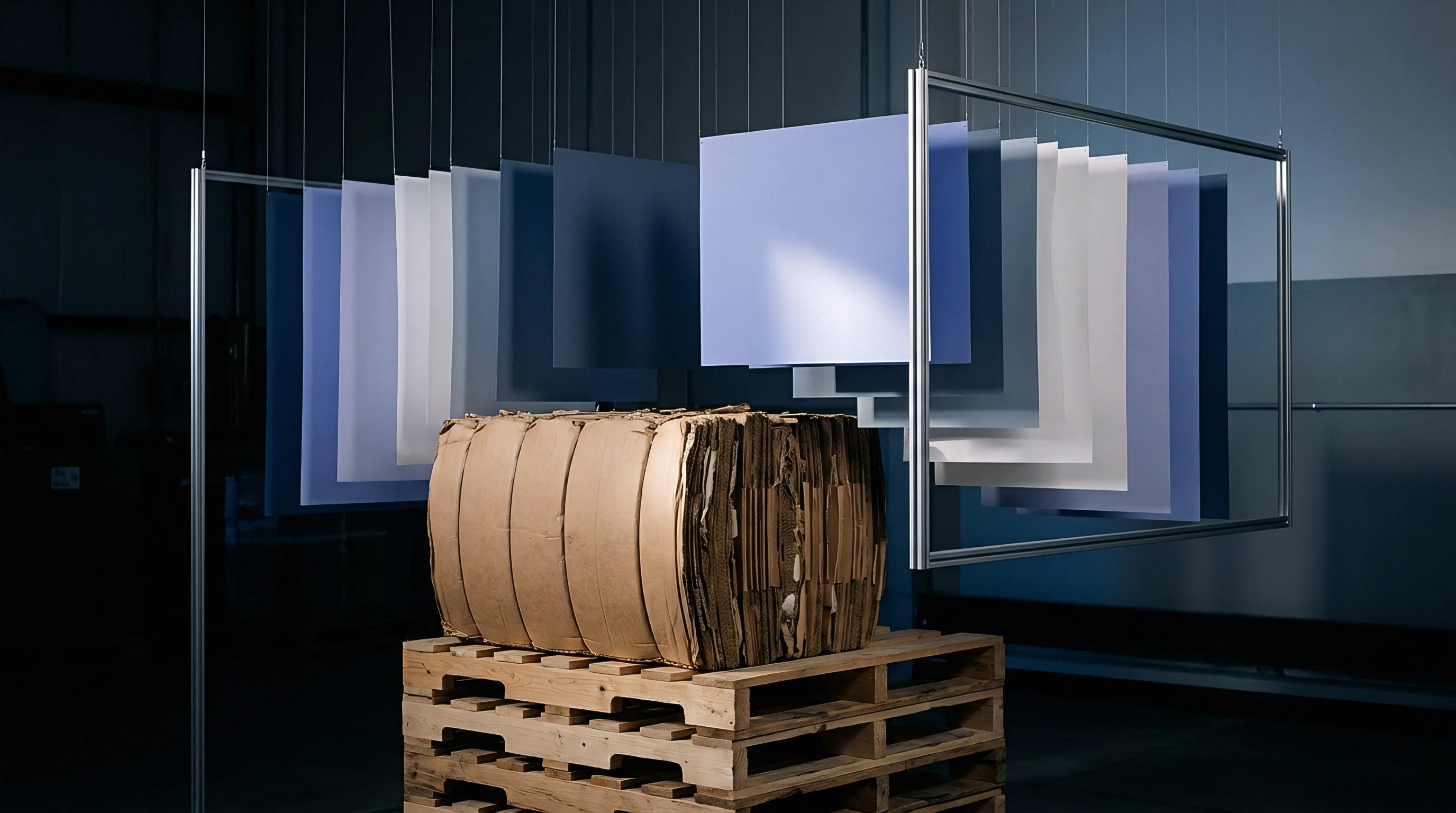
Environmental Chamber Conditioning Protocols
Accelerated climate testing places test specimens in controlled temperature and humidity cabinets for standardized duration intervals. Test samples undergo evaluation at twenty-three degrees Celsius and fifty percent relative humidity to establish baseline values, followed by exposure to forty degrees Celsius and ninety percent relative humidity. Subsequent 180-degree peel testing determines whether moisture degrades resin-to-fiber surface adhesion or internal ply cohesion.
Failure localized at the resin boundary indicates insufficient chemical surface priming or inadequate heat consolidation during coating application.
| Test Standard | Target Physical Property | Conditioning Environment | Typical Pass Threshold | Failure Indication |
|---|---|---|---|---|
| TAPPI T 541 / ISO 15754 | Z-Directional Tensile Strength | 23°C / 50% RH (48h) | > 150 kPa | Internal fiber cleavage within middle plies |
| ASTM D903 (Modified) | 180° Film Peel Adhesion | 38°C / 90% RH (72h) | > 1.8 N/cm | Clean resin detachment from top liner surface |
| TAPPI T 569 / ISO 16532-1 | Internal Bond Strength (Scott) | 23°C / 50% RH (48h) | > 130 J/m² | Delamination during high-speed scoring |
| ISO 535 (Cobb 1800s) | Long-term Water Absorption | 23°C / 50% RH base | < 15 g/m² | Liquid migration through pinholes or micro-cracks |
Rejection of delivered pallets occurs when internal bond strength drops below one hundred and thirty Joules per square meter following tropical chamber dwell testing.
Mill representatives frequently attribute board delamination to improper atmospheric equilibration in the printing plant rather than inadequate internal ply cohesion.

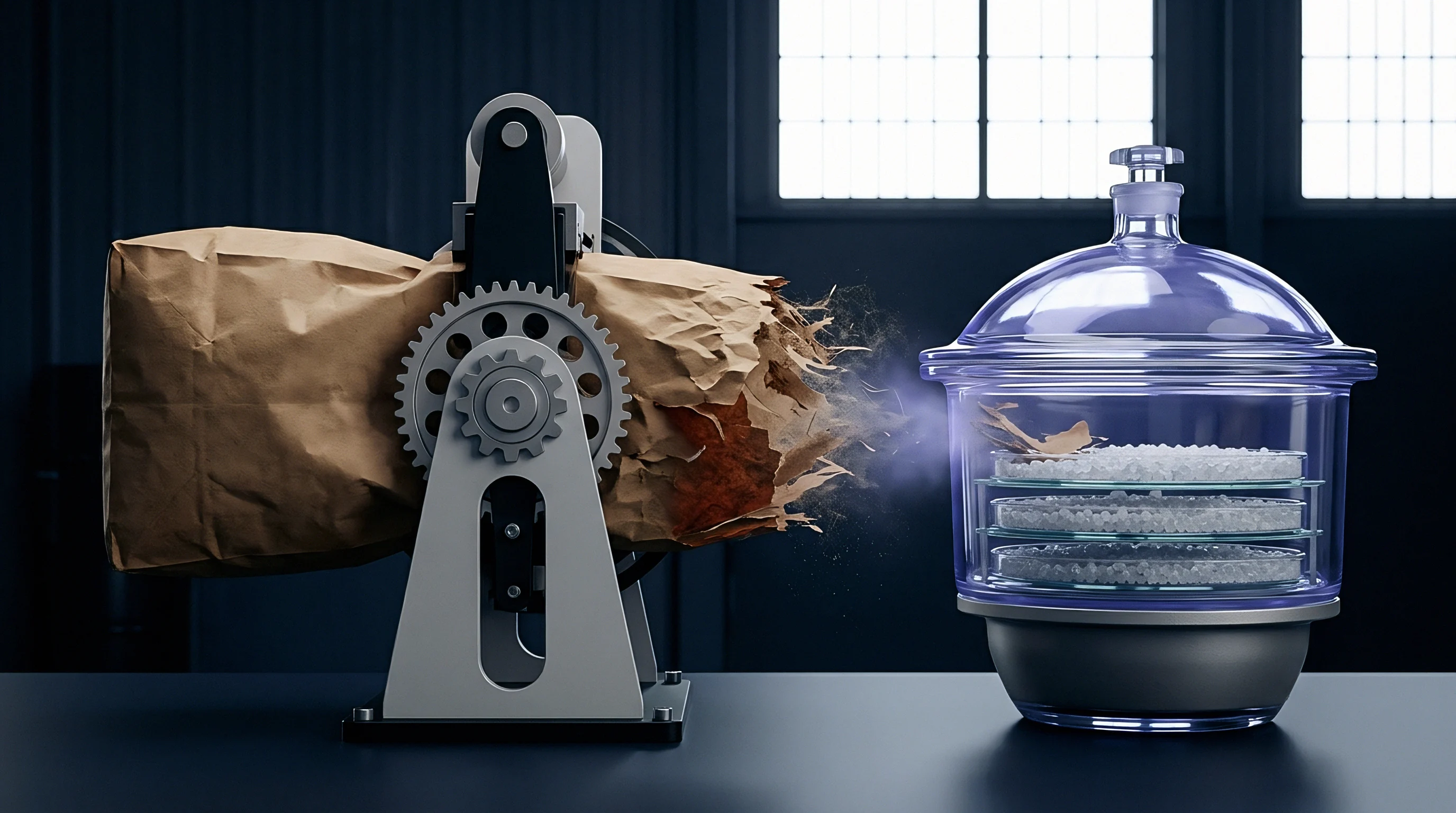
Score
Tooling geometry adjustments balance clean crease formation against structural substrate damage on high-speed packaging lines. Scoring rules require accurate clearance. Recycled boards carrying brittle acrylic or stiff polyolefin barrier coatings require precise creasing matrix selection to prevent surface film rupture.
Converting engineers select creasing rule width, male rule height, and female channel dimensions based on total sheet caliper, coating type, and internal fiber bond strength.
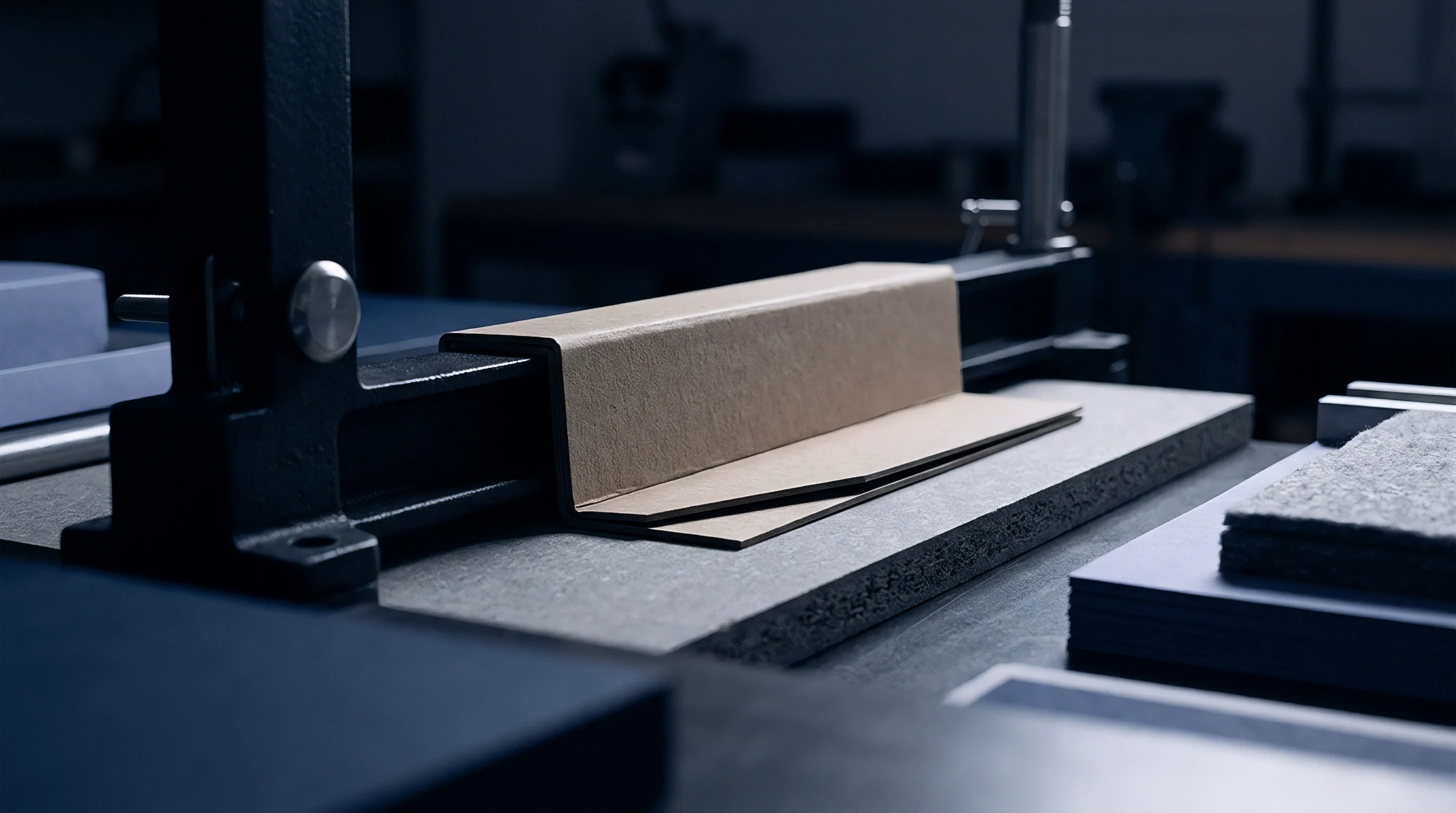
Matrix Channel Width Optimization
Female creasing channels establish the space into which male creasing rules force board fibers during blanking. Channel width equations for un-coated board multiply sheet caliper by one point five and add creasing rule width. Barrier-coated recycled sheets demand wider channel clearances.
Increasing channel width by ten to fifteen percent reduces shear stress along the coating interface during rule insertion. Wider channels prevent outer liner shearing, encouraging clean internal ply shearing without cracking the top-surface moisture barrier layer.
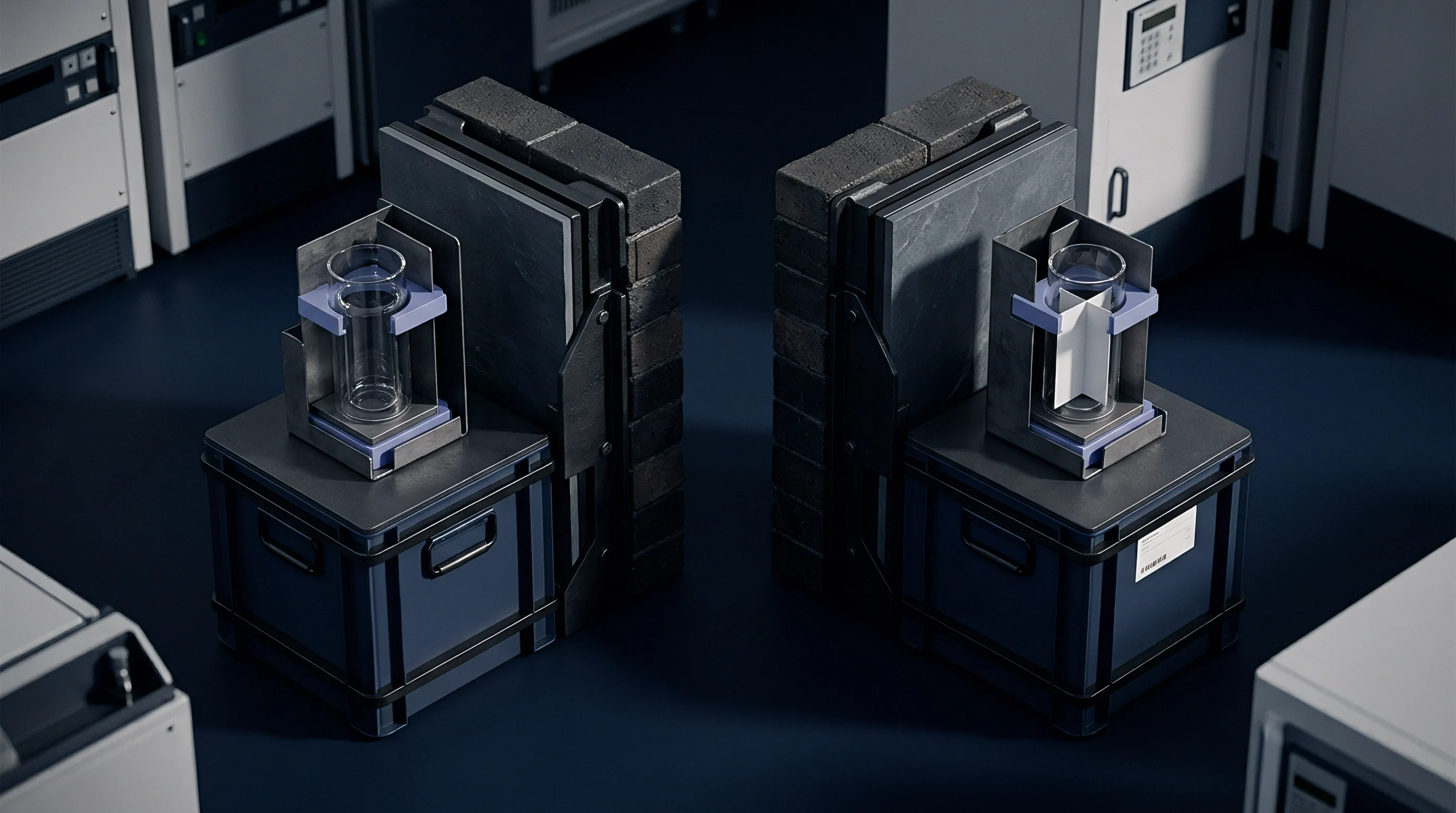
Creasing Rule Penetration Depth
Male rule height selection determines the exact percentage of board thickness compressed during the die-cutting stroke. Excessive penetration crushes under-liner plies completely, destroying internal shear strength and triggering premature delamination along the score line. Insufficient penetration fails to relieve outer liner tension, leading to top-surface film cracking when folded 180 degrees.
Machine operators adjust counter-plate matrix depth in increments of ten micrometers until folded samples show zero barrier film cracking and no visible internal ply separation.
- Caliper incoming barrier-coated recycled board lots across five width locations using a micrometer to establish base sheet caliper variance.
- Select a creasing rule thickness equal to board caliper, rounding up to the nearest standard point size for board weights over three hundred grams per square meter.
- Calculate female matrix channel width by multiplying board caliper by one point seven and adding rule thickness to establish clearance gaps for barrier board.
- Adjust counter-plate matrix depth until female channel depth matches board caliper within five percent tolerances.
- Run test blanks through the die press at half line speed and inspect folded edges under five-times magnification for surface film splitting or fiber linting.
- Increase crease matrix width by zero point one millimeter if outer polymer coatings show micro-cracking or tension delamination along major fold lines.
Incorporating ISO 12625-9 crease stiffness limits into purchase specifications legally obligates mills to replace board lots that crack during high-speed folding.
Outlay
Commercial packaging budgets balance baseline board raw material costs against potential downstream waste and environmental fee liabilities. Multi-ply recycled boards provide cost savings compared to virgin solid bleached sulfate (SBS) substrates. However, adding high-performance moisture barrier coatings affects net converting yield, scrap rates, and end-of-life recycling surcharges.
Procurement teams evaluate total cost of ownership by incorporating line waste percentages and regulatory fee categories alongside baseline tonnage pricing.
Extended Producer Responsibility Tax Calculations
European packaging directives penalize multi-material laminates by applying elevated modulated waste surcharges to non-monomaterial packaging structures. High eco-taxes penalize plastic films. Extruded polyethylene coatings exceeding five percent total package weight trigger high Extended Producer Responsibility (EPR) fee tiers under standard CEPI recyclability assessment guidelines.
Dispersion coatings formulated for repulpability allow boards to enter standard recycled paper waste streams, qualifying for lower eco-tax rates while eliminating plastic lamination surcharges entirely.
Total Financial Impact across Coating Systems
Landed package pricing incorporates board purchase cost, finishing pass costs, die-cutting spoilage allowances, and applicable environmental fees. Dispersion-coated recycled board carries higher initial chemical application costs at the paper mill compared to standard poly-extrusion. However, lower waste rates on high-speed folder-gluers and favorable recyclability fee classifications offset this initial cost difference.
Reduced delamination failure during transport protects brand equity and prevents costly product replacement claims.
| Barrier Technology | Base Material Cost (€/tonne) | Converting Waste Rate (%) | EPR Fee Category (CEPI) | EPR Surcharge (€/tonne) | Net Landed Cost (€/1000 packs) |
|---|---|---|---|---|---|
| 18 g/m² Extruded LDPE | 1,120 | 4.5 | Standard Non-Standard (Tier 3) | 280 | 42.50 |
| 12 g/m² Aqueous Dispersion | 1,340 | 2.1 | Fully Recyclable (Tier 1) | 45 | 38.80 |
| 15 g/m² Bio-based Polymer (PHA) | 1,680 | 3.8 | Compostable / Recyclable (Tier 2) | 110 | 46.20 |
| 25 g/m² PET Lamination Film | 1,450 | 6.2 | Multi-Material Non-Recyclable (Tier 4) | 420 | 54.10 |
| Calculated for standard 350 gsm CRB substrate, folding box format (0.05 m² blank size), run size 100,000 units. | |||||
Polymer film thickness above essential barrier thresholds increases eco-tax penalties without improving delamination resistance.
Selecting dispersion-coated recycled grades with tailored surface tension reduces net package cost while preserving required moisture protection across tropical supply chains.