Paper Stiffness
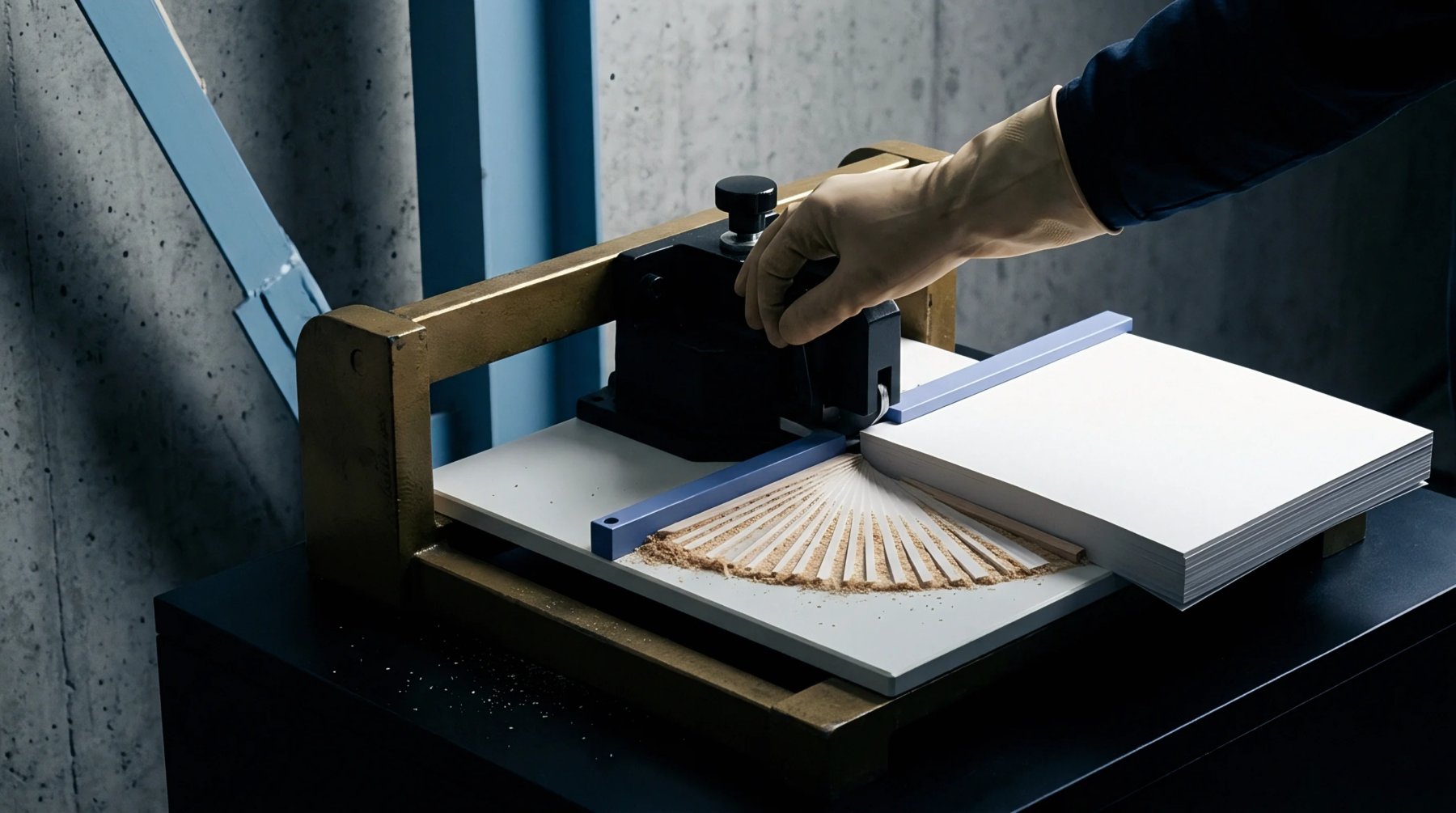
Paperboard testing defines the bending resistance of materials through a standardized force applied at a specific angle and length. The protocol known as iso 2493 evaluates the reaction of a sample when clamped at one end and deflected by a mechanical arm. This measurement determines how substrate sheets behave during mechanical feeding and vertical carton assembly.
Mills report this value in millinewtons to verify compliance with structural requirements for packaging units. Rigid products require higher resistance to prevent collapse while lighter folding boxes rely on controlled flexibility for high speed line performance. A specimen width of twenty-five millimetres is standard for these assessments.
Technicians use a constant angular velocity to avoid shock loading that generates erroneous peaks in data.
Resistance Mechanics
Bending forces depend upon the fibre orientation of the sheet along the machine direction and the cross direction. An instrument pushes the test piece through fifteen degrees of deflection while measuring the opposing force. Calibration weights ensure the accuracy of the load cell before every shift.
Materials undergo compression on one side and tension on the other during the process. This physical response provides the quantitative basis for calculating stiffness profiles across a production run. Variations in grammage or moisture content alter the outcome as fibre bonds respond differently to strain.
High density sheets show steeper resistance curves than porous alternatives. A consistent testing geometry prevents distortion caused by grip slippage at the clamping point. Standardized equipment isolates the internal friction of the board from the inherent resistance of the cellulose matrix.
Output Thresholds
Converting machinery demands predictable bending characteristics to avoid jams in automatic erectors. Variations beyond ten percent necessitate adjustments in crease depth to compensate for the altered force requirements. Packing lines experience downtime when substrate boards deviate from target stiffness values provided by the converter.
Uniformity allows for thinner materials to reach equal structural stability with heavier alternatives. Precise control of these bending metrics enables manufacturers to optimize material usage without sacrificing package integrity. Structural reliability hinges on the interplay between stiffness and the geometry of the final fold.