
Physical Marker Verification in High Density Polyethylene Recycled Resins
Physical markers in rHDPE provide deterministic spectroscopic proof of recycled content, verifying mass fractions against customs declarations and packaging laws.
Physical markers in rHDPE provide deterministic spectroscopic proof of recycled content, verifying mass fractions against customs declarations and packaging laws.

Multi-site kraft paper networks reconcile physical process yield losses against certified volume balances through standardized mill conversion factors.

Statutory packaging mandates require explicit energetic yield deductions on chemical recycling mass balance claims to prevent non-compliance penalties.

Chromatographic uncertainty in high-lignin recycled board testing demands matrix-specific SPE cleanup and isotopic standards to eliminate false oxirane peaks.

Analytical testing verifies physical furnish markers and migration safety, while administrative chain records prove legal recycled content claims.

Mass balance ledgers allocate administrative fiber credits across mill networks, but laboratory microscopy governs physical batch compliance at customs borders.

Verify paperboard certificates by matching invoice claim text, product scope codes, and valid supplier registry entries before receiving inventory at the dock.

High yield pulp mass balances fail when mills exclude white water solubles and moisture variation, exposing buyers to chain of custody audit liabilities.

Auditing fiber ratios combines ISO 9184 furnish microscopy and ash testing with strict FSC and PEFC invoice-level mass balance chain of custody reconciliation.

Substantiating packaging recycled content claims requires reconciling mass balance ledger credits with physical chemical marker test results to withstand European Union border enforcement audits.

Auditing multi-site packaging board ledgers demands deducting real conversion scrap from credit balances before issuing cross-site certification claims.

Paperboard mass balance accounting requires deducting real converting process scrap and moisture variations from credit ledgers to prevent invalid claims.

Statistical lot verification protects packaging buyers by tying standardized sample testing directly to batch acceptance quality limits and contract settlement terms.

Aqueous barrier coatings on food contact paperboard require accredited migration, extraction, and permeation testing matching real food simulants and shelf temperatures.

Mass balance in converting requires rigid intake invoice verification, yield-adjusted fiber ledger deductions, and segregated chemical barrier accounting.

Paperboard import compliance depends on linking physical lot numbers directly to accredited chemical assays and verified chain of custody certificates.

Verifying imported packaging compliance requires auditing chemical migration reports, chain-of-custody scopes, and declarations of conformity before customs clearance.

The domestic importer of record bears strict legal liability for printed packaging claims and absorbs all customs fines when declarations lack supporting technical files.

Calibrating process marker attenuation requires site-specific mass loss factors to defend mass balance credits across multi-site chemical recycling chains.

Dynamic multi-phase matrix conservation models track dissolved lignin and carbohydrate degradation products across pulping, washing, and packaging compliance gates.

Polymeric coatings block recycled board NIAS migration when layer thickness, crosslinking density, and pinhole frequency meet specific mass transfer criteria.

Coupling non-linear moisture diffusivity with GAB sorption models provides accurate microfibril barrier shelf-life qualification under humid transport conditions.

Crosslinked microfibril barrier qualification requires dynamic vapor sorption fitting to prove moisture resistance and verify regulatory compliance.
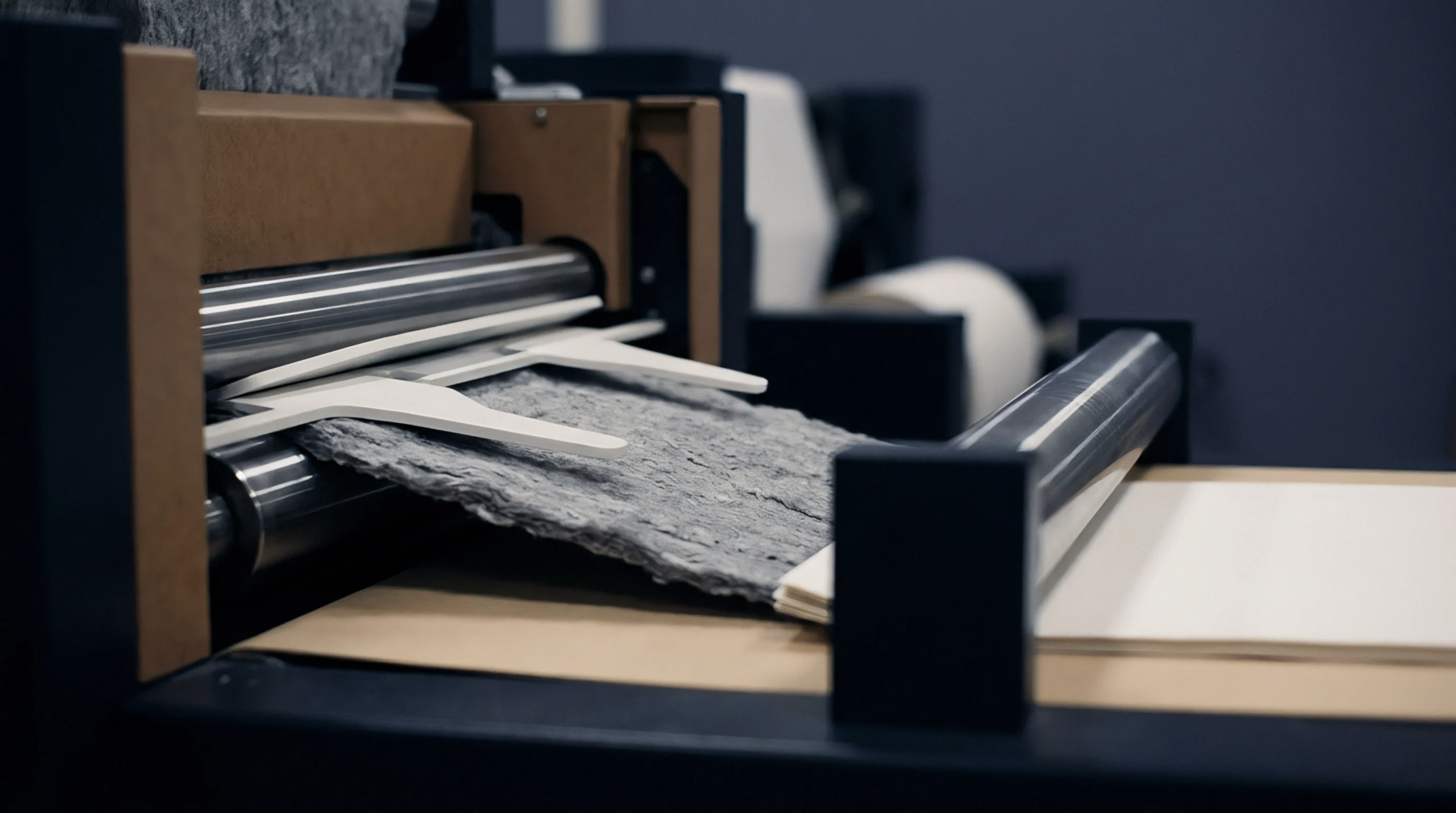
Viscoelastic transport modeling predicts humidity-driven micro buckling in recycled fluting to protect containerboard compression strength.

EUDR geolocation mandates require plot-level spatial coordinates for virgin fiber while exempting recycled inputs, demanding mass-balance segregation at the vat.

EUDR compliance overrides central certification credit banking by mandating physical batch segregation linked directly to harvest plot geolocation polygons.

Hexenuronic acid inflates softwood kraft pulp kappa numbers by 0.86 units per 10 micromoles, demanding targeted acid hydrolysis to protect bleach yield and landed fiber value.

Verify paper chain of custody codes on public scheme registers, match invoice line-item claims to product group scopes, and audit site schedules to prevent import holds.

Dynamic climate chamber testing under cyclic relative humidity isolates mechanosorptive creep failure modes that standard static equilibrium conditioning miss.

Verify MOSH and MOAH compliance in recycled fibre packaging using accredited HPLC-GC-FID testing, validated functional barriers, and complete declarations of compliance.
Expertise is a utility, not a secret. sentiention™ publishes its working knowledge as open reference: intelligence layer covering the materials it sources, the markets it enters, and the reference that serves both.