
Standardizing Chromatographic Peak Integration in Food Packaging Safety Testing
Standardized chromatographic peak integration parameters eliminate measurement bias to ensure food packaging migration data withstands regulatory audits.
Standardized chromatographic peak integration parameters eliminate measurement bias to ensure food packaging migration data withstands regulatory audits.

Selecting food simulants for paperboard barrier compliance relies on matching food fat profiles while avoiding matrix wicking through single-side cells.

Polycyclic aromatic hydrocarbon breakthrough across bio-based packaging barriers depends on polymer free volume, crystal structure, and temperature-driven Fickian transport kinetics.

Functional barriers prevent chemical migration from paperboard into food by limiting permeation below zero point zero one milligrams per kilogram over shelf life.

Polycarbonate polyurethane synthetics prevent barrier delamination and foil fatigue under retort conditions through superior hydrolytic and thermal stability.

Validating polyethylene migration models requires verifying polymer density, migrant initial concentration, and empirical diffusion coefficients against bench testing.

Polymeric barrier selection demands balancing moisture vapor and grease holdout against die creasing strain, food contact migration limits, and repulpability yields.

Track chemical degradation products across papermaking loops using validated extraction mass balances to satisfy food contact limits and border clearance dossiers.

Accurate polyolefin migrant diffusion modeling requires calibrating Piringer matrix parameters against density, temperature, and layer swelling profiles.

Mathematical diffusion models calculate NIAS migration through polyolefins using Piringer parameters to verify food contact safety without physical testing.

Sub-ppm mass accuracy and collision-induced dissociation resolve isobaric photoinitiator cleavage products from polyolefin oligomers below regulatory limits.

Elevated wet-end temperatures alter micro-sticky glass transition dynamics, driving colloidal coalescence that demands strict chemical passivation and verified migration limits.

Gas chromatography mass spectrometry screening isolates residual photoinitiators in laminate films, verifying compliance with food contact migration limits.

Boundary tolerances for deinked pulp require batch testing under DIN EN 16995, limiting MOSH below 24 mg/kg and MOAH below 0.5 mg/kg with verified barriers.

Harmonized testing combines combustion ion chromatography screening with targeted LC-MS/MS migration into Tenax to verify recycled board under PPWR limits.

Verify physical furnish dockets and chemical marker assays rather than invoice credits to substantiate post-consumer claims in folding boxboard packaging.

Verify functional barrier continuity on creased board corners using DIN EN 13676 and Tenax GC-FID to eliminate chemical migration risks and customs detention.

Enforce accredited pre-shipment migration testing and upstream indemnity terms to avoid costly customs holds and redelivery penalties on food contact laminates.

Verify lamination adhesive curing and test fatty food simulants to prevent chemical migration non-conformance in multilayer flexible packaging.

Determining migration compliance relies on exact food simulant testing, functional barrier verification, and complete analytical records across all converter tiers.

Physical marker identification in recycled HDPE uses heat-stable rare earth or inorganic tracers to verify PCR content and food-contact compliance in container walls.

Real-time mid-infrared tracking of acrylate vinyl depletion at 810 cm-1 enables automated lamp power control to ensure migration compliance on high-speed packaging lines.

Mitigate mass spectrometry interferences in high-lignin paper migration assays using solid phase clean-up, isotopic dilution, and multidimensional separation.

Gas phase migration from recycled board requires continuous functional barriers to halt volatile non intentionally added substances escaping fiber pores.
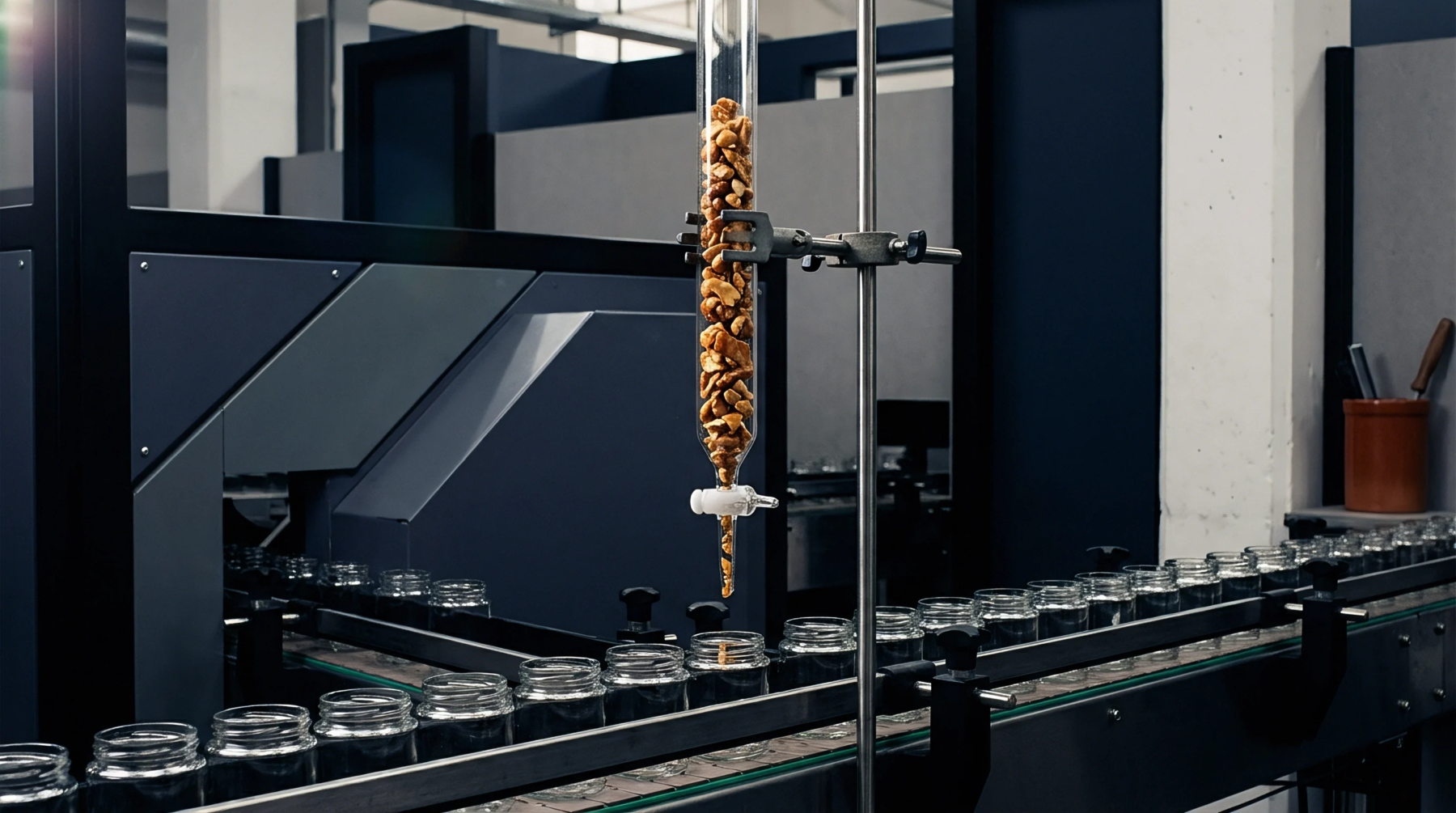
Audit declarations by matching raw chemistry recipes to migration test reports under actual food contact conditions instead of accepting unverified mill statements.

Non-targeted high-resolution screening isolates unknown migrants from aqueous paper coatings to guarantee toxicological compliance below threshold limits.

Mass balance credits from chemically recycled barrier films apply exclusively to the synthetic polymer fraction, never across composite paperboard fiber.

Packaging dossiers for recycled paperboard require LC-GC-FID and HRMS testing verifying MOAH below 0.5 mg/kg and uncharacterized NIAS below 0.01 mg/kg.

Verify paperboard food contact compliance through ISO 17025 migration reports matching exact converting geometries under European surveillance rules.

Chemical failure of declared recycled paperboard at customs triggers strict importer liability for terminal demurrage, cargo destruction, and statutory fines.
Expertise is a utility, not a secret. sentiention™ publishes its working knowledge as open reference: intelligence layer covering the materials it sources, the markets it enters, and the reference that serves both.