
A Converter Certificate That Does Nothing for an Uncertified Mill
A converter's chain of custody certificate cannot retroactively grant certified status to packaging made from uncertified paper mill substrate.
A converter's chain of custody certificate cannot retroactively grant certified status to packaging made from uncertified paper mill substrate.

Substrate selection fixes structural caliper, web trim yield, repulpability, and EPR eco-modulation fee tiers, governing net landed carton costs.

FSC and PEFC prove auditable timber origin and mass-balance fiber accounting; they do not prove food safety, chemical purity, repulpability, or EUDR compliance.

Aligning packaging redesign cycles with PPWR recyclability milestones requires qualifying substrates 36 months before regulatory enforcement dates.
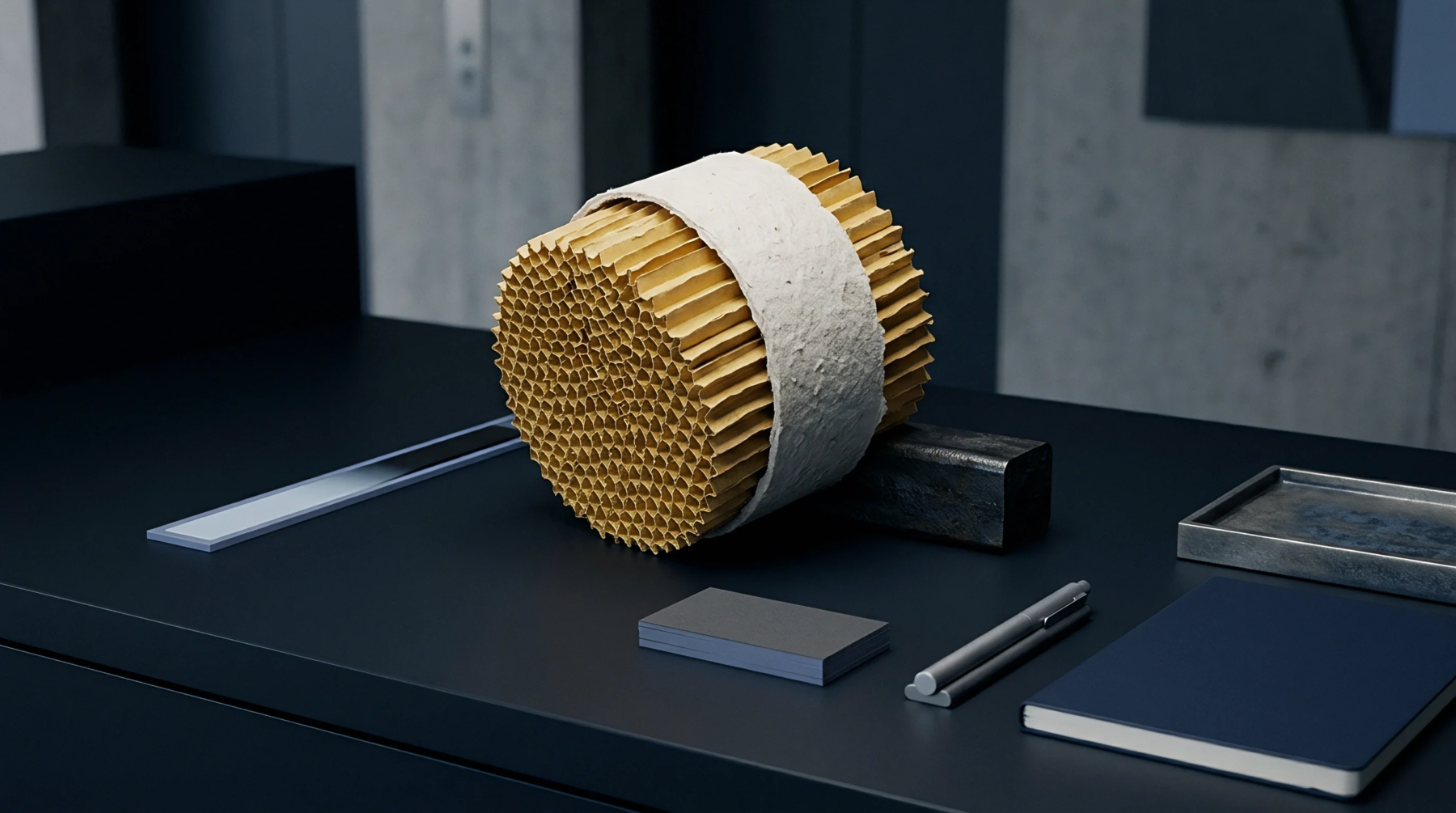
Recycled paperboard packaging requires verified functional barriers and HPLC-GC-FID test dossiers to prevent gas-phase MOSH and MOAH food contamination.

Dynamic ambient relative humidity accelerates creep collapse in corrugated boxes far beyond static moisture limits, requiring dynamic SCT safety factors in structural engineering.

Modified solid simulant Tenax TA testing under EN 14338 verifies gas-phase MOSH and MOAH migration from recycled paperboard without false-positive wax interference.

Microfibril moisture binding follows GAB sorption kinetics where mesopore condensation above M0 plasticizes fiber networks, requiring crosslinking to preserve barriers.

Chemical migration testing for dispersion coated board requires single-sided extraction cells and post-crease migration proofs to account for score-line breaks.

Verify paperboard wet end additive retention using dynamic drainage jars and extraction GC-MS to ensure food contact compliance and prevent converting failures.

Auditing food contact board certificates requires verifying laboratory test simulants, thermal parameters, and surface ratios against real package converting limits.

Verify MOSH and MOAH compliance in recycled fibre packaging using accredited HPLC-GC-FID testing, validated functional barriers, and complete declarations of compliance.

Polymeric coatings block recycled board NIAS migration when layer thickness, crosslinking density, and pinhole frequency meet specific mass transfer criteria.

Dynamic multi-phase matrix conservation models track dissolved lignin and carbohydrate degradation products across pulping, washing, and packaging compliance gates.
Aqueous barrier coatings on food contact paperboard require accredited migration, extraction, and permeation testing matching real food simulants and shelf temperatures.

Chromatographic uncertainty in high-lignin recycled board testing demands matrix-specific SPE cleanup and isotopic standards to eliminate false oxirane peaks.

Resolving multi layer migration liability requires linking batch trace numbers to accredited specific migration reports and contract indemnity clauses.
Extractives and migration testing requires matching food simulants, extraction solvents, and analytical thresholds to specific regulatory contact conditions.

Evaluating paperboard barrier food contact declarations requires verifying specific migration limits, functional barrier continuity, and total NIAS disclosures.

Aligning packaging redesign schedules with European recyclability deadlines requires twenty-four months to pass repulpability tests, tool lines, and secure EPR compliance.

Food contact safety for recycled board requires functional barrier proof and complete chain of custody documentation down to invoice line items.

Preserving softwood galactoglucomannan during kraft cooking through redox chemistry increases pulp yield by three percent while reducing refining power.

Mitigating matrix interference in recycled fiber extraction requires silver nitrate chromatography and epoxidation to separate target hydrocarbons accurately.

Functional adsorptive barriers or barrier coatings halt mineral oil vapor migration in recycled paperboard to maintain food contact compliance.

Harmonizing chromatographic integration parameters and baseline SOPs eliminates inter-laboratory migration testing variances for food packaging compliance.

Subtractive baseline harmonization removes biogenic hydrocarbon noise, preventing false MOAH failures in recycled paper food packaging compliance.
Functional barrier coat weight and thermal stability determine high-temperature hydrocarbon vapor migration limits in recycled paperboard food packaging.

Microfibrillated cellulose moisture sorption degrades barrier performance at high humidity, requiring chemical cross-linking and verified compliance dossiers.

GAB isotherm parameters determine microfibril moisture sorption capacity and establish precise water activity thresholds for barrier packaging compliance.

Poly(2,6-diphenyl-p-phenylene oxide) replaces liquid simulants for paperboard, preventing fiber collapse during compliance migration testing.
Expertise is a utility, not a secret. sentiention™ publishes its working knowledge as open reference: intelligence layer covering the materials it sources, the markets it enters, and the reference that serves both.