
Spot UV against Hot Foil at the Break Even Run Length
Digital spot UV beats hot foil stamping on setup costs below 3,400 B2 sheets at 5% coverage, beyond which low foil area costs surpass high fluid burn.

Digital spot UV beats hot foil stamping on setup costs below 3,400 B2 sheets at 5% coverage, beyond which low foil area costs surpass high fluid burn.

A converter's chain of custody certificate cannot retroactively grant certified status to packaging made from uncertified paper mill substrate.

Soft touch lamination scuffing stems from micro-layer shear deforming under friction, resolved by specifying nano-composite film chemistry and strict gloss drift limits.

Substrate selection fixes structural caliper, web trim yield, repulpability, and EPR eco-modulation fee tiers, governing net landed carton costs.

Each added pass adds 24 to 48 hours of lead time through mandatory inter-pass drying, thermal stabilization, tooling lead times, and offline queue staging.

Moving certificate risk onto suppliers requires contract clauses that link claim validity to invoice codes, batch migration reports, and full indemnity for border holds.

Changing stock grades alters micro-porosity and light scattering, shifting ink holdout and dot gain, requiring immediate press curve and ink film adjustments.

Stack thermal buildup causes substrate shrinkage and mechanical expansion, driving cold foil register drift across continuous production shifts.

Verify chain of custody allocation ledgers by reconciling raw fiber dry mass, mill yield factors, and timestamped credit balances against outbound invoices.

Regulatory enforcement detains unverified paper packaging at borders, placing absolute financial and chemical compliance liability directly on the importer of record.

Micro-porous paper coating capillary dimensions govern dynamic ink vehicle filtration rates, ink setting speeds, press energy consumption, and total converted sheet yield.
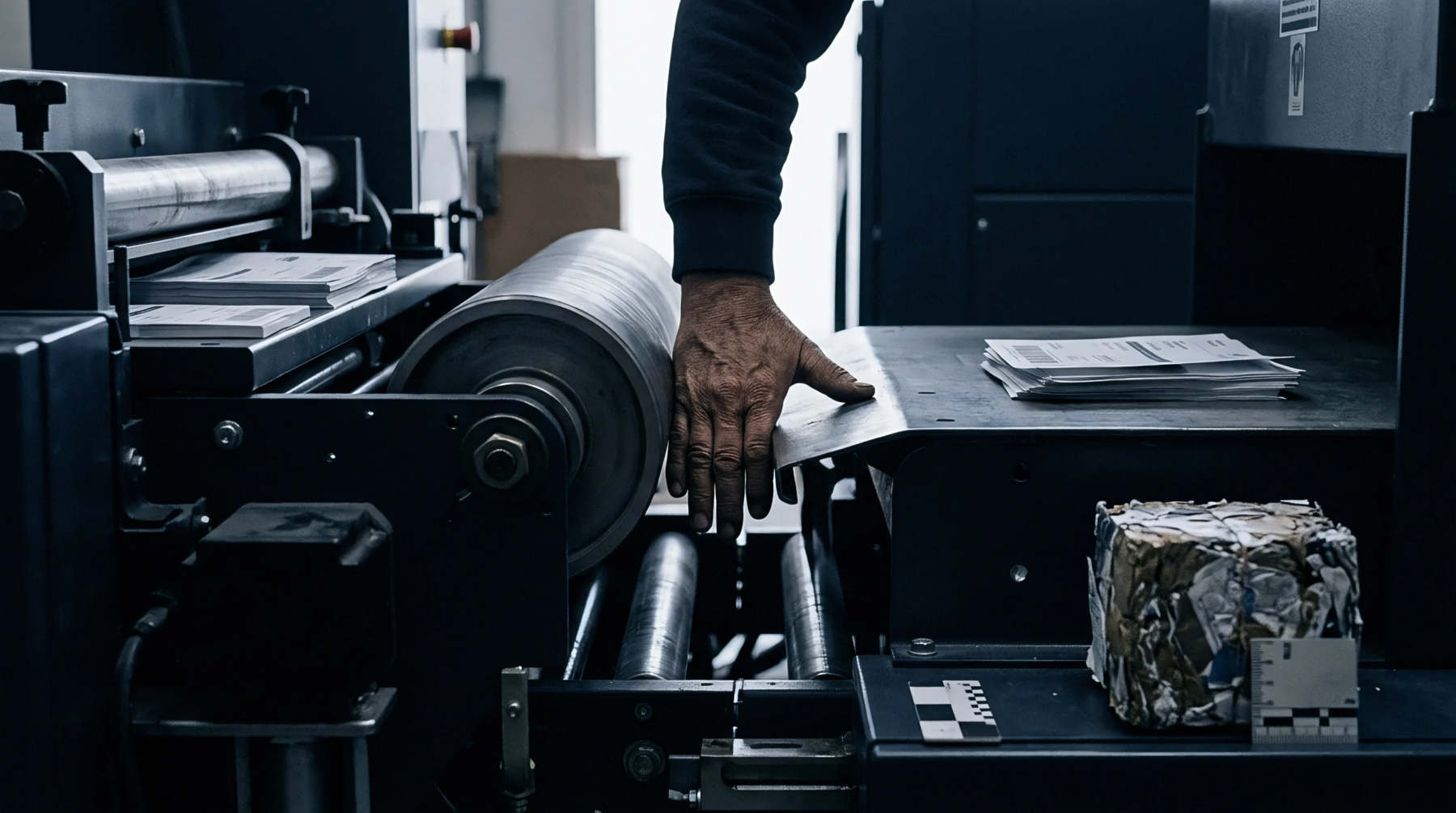
Primary statutory liability for EU packaging waste surcharges sits with the domestic importer or brand owner, requiring verified technical files to prevent customs holds.

Verify mass balance claims by auditing dry-fiber yield calculations, credit window expiry dates, and scope lines before printing claims on packaging.

Modulated packaging fees penalize synthetic laminates on paperboard, requiring dispersion barriers or thin extrusion layers to maintain circular fiber recovery.

Radiant UV lamp infrared energy and mechanical nip friction strip paperboard surface moisture, driving hygrothermal curl and score cracking that require cold-mirror optics, UV-LED arrays, or chilled impression rolls to preserve converting yield.

Cold foil inline vision systems maintain registration across shifts by matching strobe sensor geometry to substrate thermal growth and adhesive rheology changes.

Contractual pass-through mechanisms transfer eco-modulated EPR penalties upstream when substrate laboratory test data fails EN 13430 recyclability grades.

Matching substrate furnish and bulk to press stress secures structural integrity, optimizes print quality, and minimizes total landed packaging cost.

FSC and PEFC prove auditable timber origin and mass-balance fiber accounting; they do not prove food safety, chemical purity, repulpability, or EUDR compliance.

Aligning packaging redesign cycles with PPWR recyclability milestones requires qualifying substrates 36 months before regulatory enforcement dates.

Recycled fibre shortening and hornification limit bending strain, requiring wider matrix channels and virgin top layers to prevent score cracking.

Matt lamination cracks at the crease because silica matting inclusions reduce film elongation capacity, requiring expanded matrix channels to lower folding strain.

Retailers accept recycled content claims backed by lot-specific chain of custody transaction certificates, valid scope codes, and verified migration test reports.

Verify mill test certificates against ISO 2859 sampling on arrival; static swatches omit deckle variance, transit moisture creep, and food migration risks.

Unannounced paper grade substitution alters structural fiber bonding and surface chemistry, demanding dockside physical and chemical testing before press loading.

High-density refining and fluorine-free dispersion coatings block lipid migration and moisture breakdown where unrefined kraft papers fail under aggressive fills.

Lamination failure stems from dyne decay and score mismatch; precise surface energy matching and matrix sizing prevent debonding and lower EPR packaging costs.

Verify credit allocation ledgers by auditing dock scale moisture corrections, empirical conversion yield factors, and the rolling 24-month expiration limit.
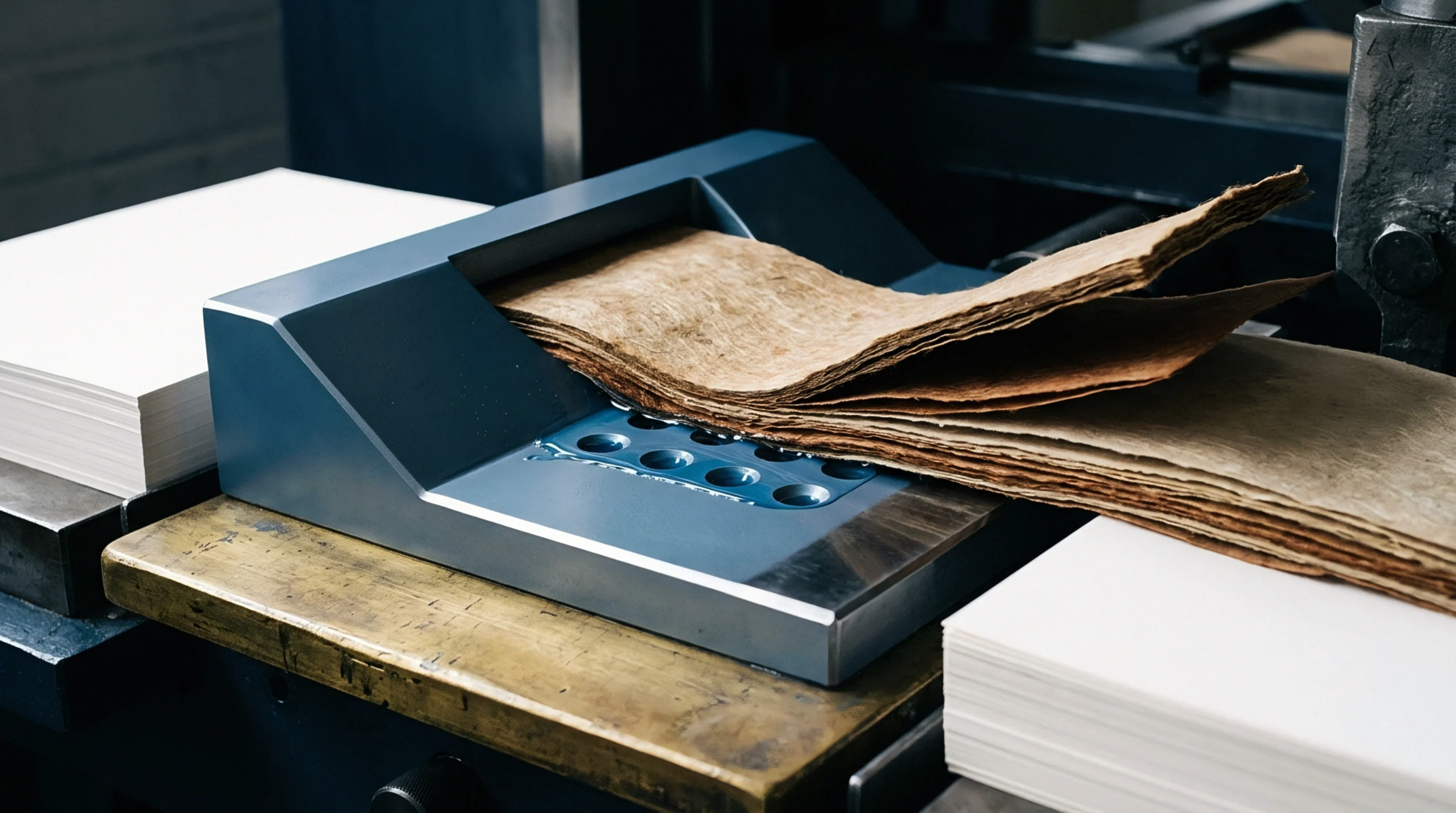
Virgin hardwood sizing requires balancing high surface hydroxyl density against AKD and ASA steric interference to maintain internal bond and Cobb holdout.

Polypropylene lamination crease failure is prevented by expanding female matrix channel width to one point seven times board caliper plus rule thickness.
Expertise is a utility, not a secret. sentiention™ publishes its working knowledge as open reference: intelligence layer covering the materials it sources, the markets it enters, and the reference that serves both.