Mechano Sorptive Creep Strain Derating for Secondary Fiber Packaging Design
Mechano-sorptive creep rapidly weakens recycled packaging in fluctuating humidity, requiring explicit derating factors in compression design calculations.

Mechano-sorptive creep rapidly weakens recycled packaging in fluctuating humidity, requiring explicit derating factors in compression design calculations.
Dynamic shear degradation limits UV resin velocity at 280 m/min to prevent oligomer scission, balancing resin costs against full EPR fee savings.

Recycled containerboard loses up to 45% compression strength under constant 85% RH; specify ISO 2233 derated SCT metrics to prevent static stack collapse.

Optical profilometry quantifies score elevation variance down to sub-micron resolution, identifying die wear and coating micro-fractures before carton assembly.
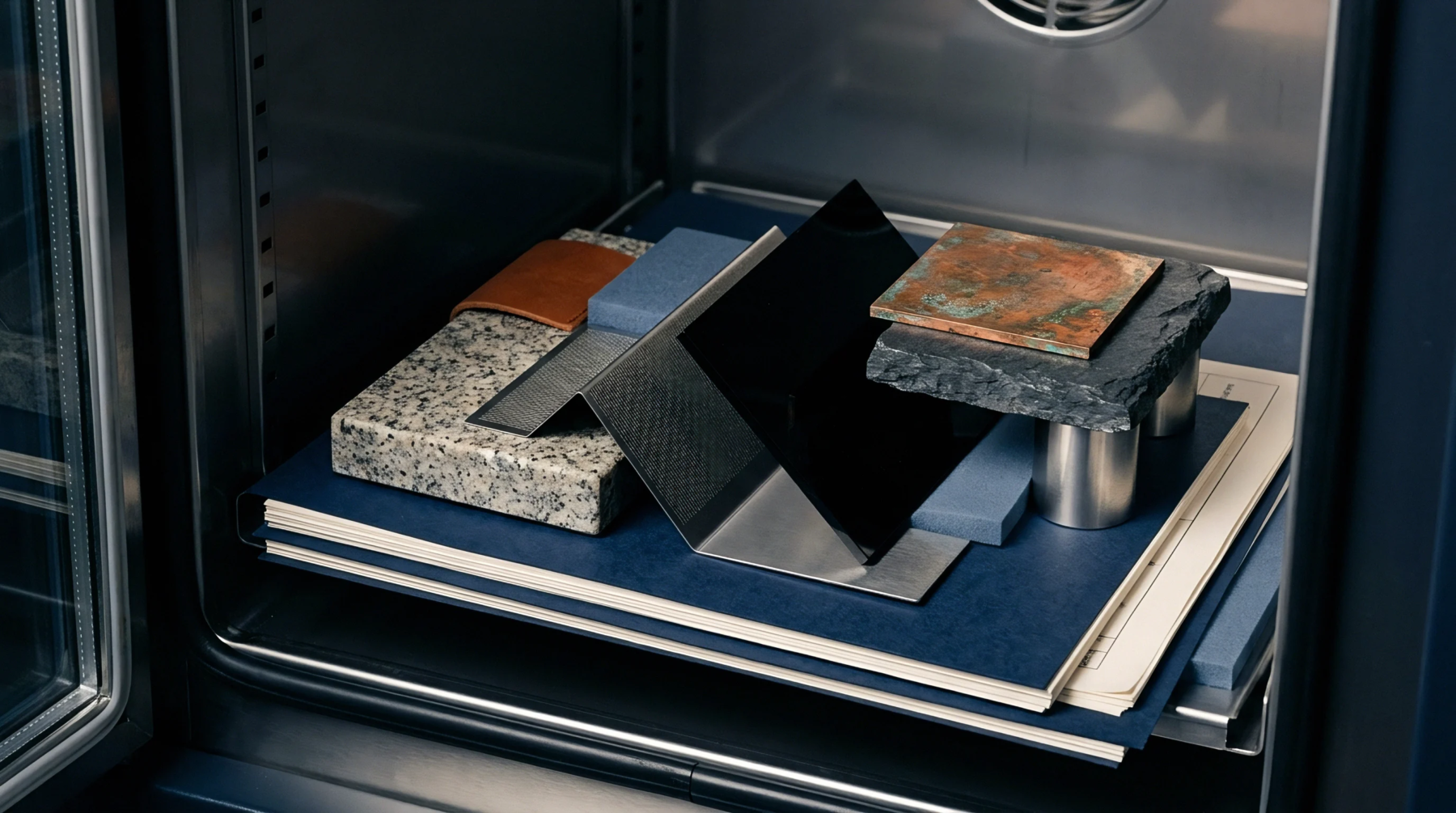
Accelerated creep buckling protocols require cyclic humidity chambers and parallel platens to predict thin boxboard stacking failure under dead loads.

Dynamic high-speed shear delamination across mechanical board cores occurs when strain rates exceed interfacial starch adhesion, requiring dynamic shear specification over static Scott bond values.

Cyclic microclimates degrade recycled paperboard inter-ply shear strength through moisture expansion mismatch and starch bond mechanical fatigue.

Balancing middle ply mechanical pulp freeness preserves sheet caliper and bending resistance while controlling delamination under high-speed scoring.
Low transverse shear modulus in foamed cores reduces effective bending stiffness and causes early compression collapse on short spans.

Dynamic relative humidity cycling accelerates compressive creep in recycled corrugated substrates, requiring specific safety factor derating to prevent failure.
Core bulk retention during shoe press dewatering requires asymmetric pressure profiles and controlled temperature to prevent mechanical pulp lumen collapse.

Dynamic relative humidity accelerates corrugated compression creep via mechano-sorptive softening, requiring environmental safety factor multipliers up to 2.5.
Microfibrillated cellulose moisture sorption degrades barrier performance at high humidity, requiring chemical cross-linking and verified compliance dossiers.
Functional barrier coat weight and thermal stability determine high-temperature hydrocarbon vapor migration limits in recycled paperboard food packaging.

Tenax TA vapor capture combined with LC-GC-FID and chemical epoxidation provides defensible separation of volatile MOSH and MOAH fractions in paperboard.

Selecting ductile resin binders with glass transition temperatures below minus five degrees Celsius prevents coating micro-cracking during paperboard crease folding.

Optimizing multi-ply boxboard caliper requires balancing mechanical core thickness against chemical skin elastic modulus to maximize bending stiffness per unit weight.

Rate-dependent cohesive zone models prevent high-speed converting delamination by accurately predicting paperboard interlaminar shear failure at production speeds.

Rapid shear creasing requires tailored interply delamination toughness to prevent liner fracturing while reducing folding torque on high-speed lines.

Verification of recycled paperboard food contact compliance requires LC-GC-FID testing for MOSH and MOAH migration alongside verified functional barriers.

Primary creep kinetics dictate corrugated box stacking life under static relative humidity, requiring empirical power-law modeling for safety margins.

Predicting paperboard delamination requires balancing Z-direction shear strength to permit core separation while preventing outer liner tensile fracture.
Predicting package panel bulge demands measuring multi-ply out-of-plane shear stiffness C44 via ultrasonic wave dispersion to prevent high-speed line failures.

Paperboard flexural rigidity depends on the cube of caliper, requiring exact ISO 2493 or TAPPI T 489 instrument alignment and strict 23°C/50% RH conditioning.

Mathematical diffusion models quantify NIAS transfer through polyolefins, enabling rapid, low-cost compliance validation for flexographic food packaging.
Chromatographic testing via LC-MS/MS verifies photoinitiator specific migration limits in printed barrier packaging to maintain compliance.

Static headspace gas chromatography quantifies retained printing solvents below standard thresholds through thermal equilibrium calibration and retention index verification.

Dynamic temperature and moisture transfer algorithms coupled with inline pyrometry eliminate optical sensor drift on high-speed recycled board lines.

Recycled fiber laminates experience accelerated creep under transient vapor flux, requiring increased structural safety factors in humid supply chains.

Heat embossing above lignin glass transition temperature locks paperboard relief depth, while controlled dwell time minimizes post-press viscoelastic creep.
Expertise is a utility, not a secret. sentiention™ publishes its working knowledge as open reference: intelligence layer covering the materials it sources, the markets it enters, and the reference that serves both.