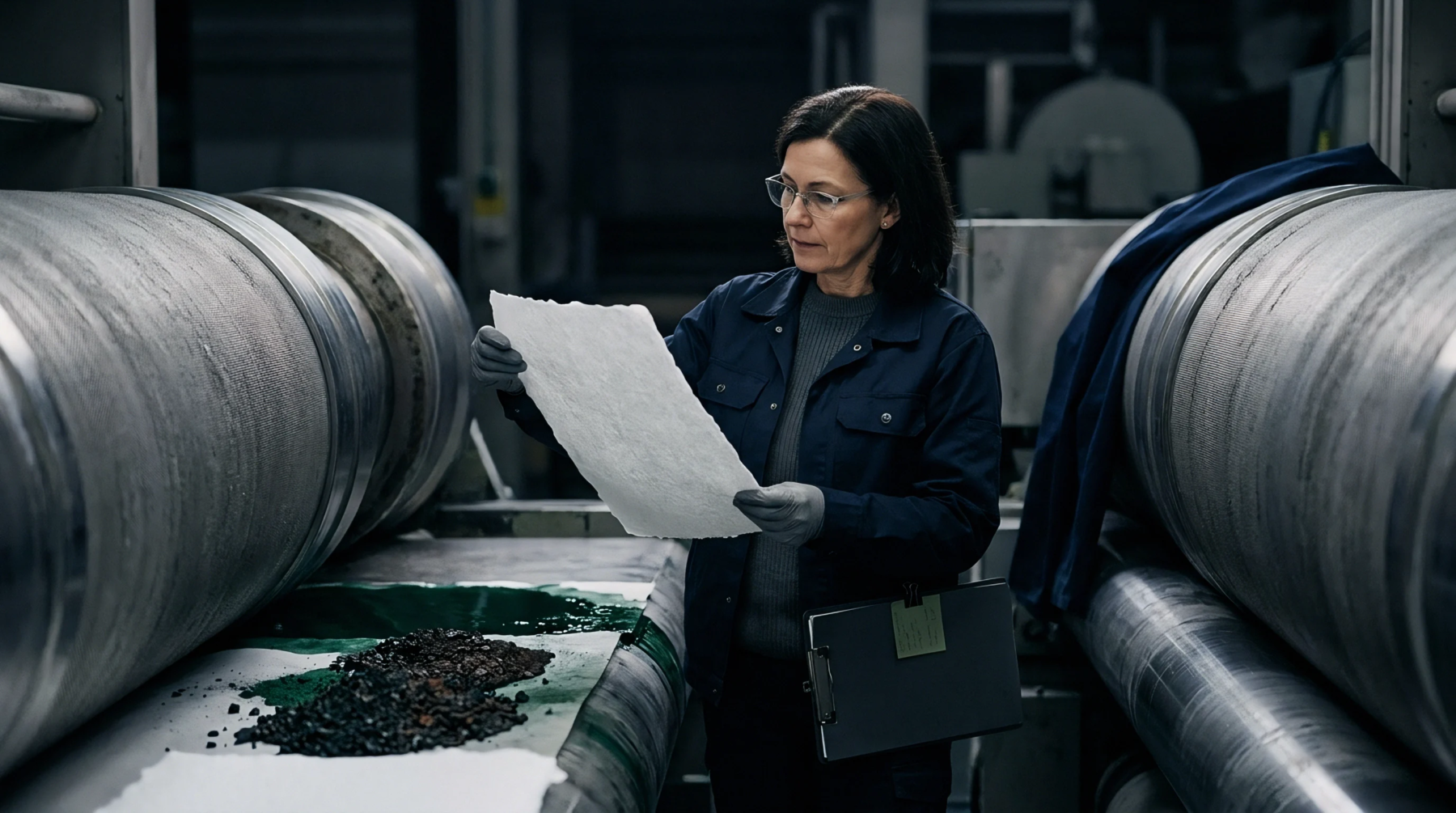
Verifying Mass Balance Recycled Content Claims in Packaging Freight Dossiers
Cross-border packaging verification demands matching site-specific credit ledger balances to commercial bills of lading before paying invoices.

Cross-border packaging verification demands matching site-specific credit ledger balances to commercial bills of lading before paying invoices.
Real-time platen bed deflection correction eliminates crease depth variance across wide formats, preventing high-speed packaging jams and cutting tooling wear.

Select creasing channels for laminated folding boxboard using wider channel factors to protect surface polymer films from tensile rupture during folding.

Polymer barrier coating performance relies on balancing extensional viscosity to prevent misting with rapid thixotropic recovery to eliminate pinhole defects.
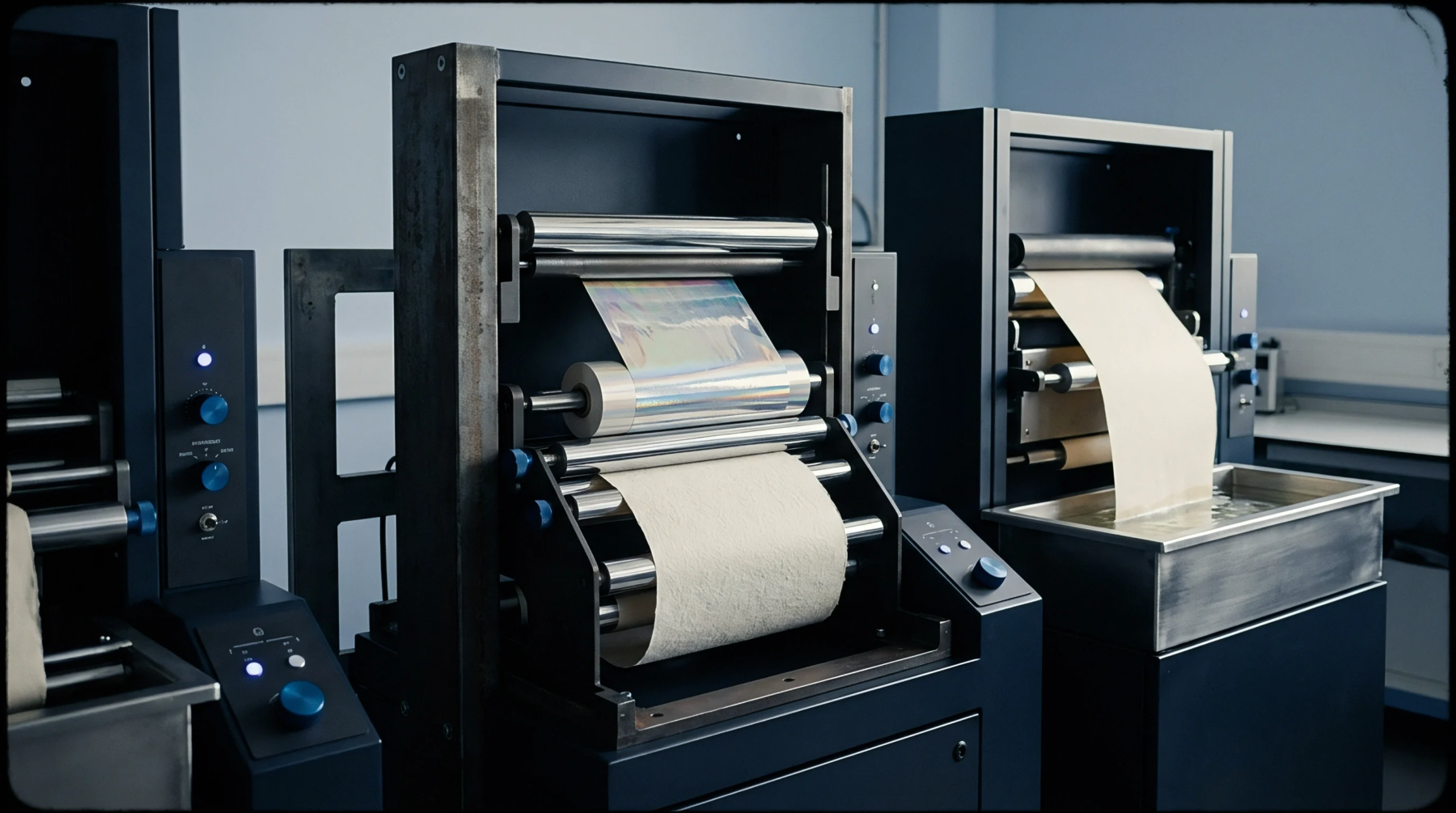
Piecewise Direct Standardization eliminates cross-machine headbox ash sensor drift by mathematically matching optical sub-bands to preserve target sheet ash.

Inline wet end NIR accuracy relies on rigorous grab sampling, robust multivariate scatter correction, and continuous laboratory oven-dry offset tracking.

Boundary lubricant depletion during high-speed packaging stems from mechanical wiping exceeding diffusion replenishment, demanding non-migratory slip selection.

Analytical mass balance frameworks require deducting flotation froth, screening rejects, and ash losses from gross recovered paper to verify recycled content claims.

Recycled paperboard chemical compliance demands specific migration testing via Tenax and LC-GC-FID to quantify MOSH MOAH transfer before signing declarations.

Optical specular light scattering drops as varnish micro-roughness exceeds wavelength dimensions, requiring precise rheological control and coat weight to maintain target gloss.

Sorption hysteresis and internal buoyant convection degrade lower-tier corrugated strength in sealed cold-chain pallets, demanding moisture-resilient virgin fluting.
Thermal gradients across stretch-wrapped pallets drive internal vapor to cold perimeters, causing condensation that cuts box strength by over forty percent.

Dynamic stiffening at rotary converting speeds forces delamination failure modes, requiring tuned counter clearances to protect outer carton liners from rupture.
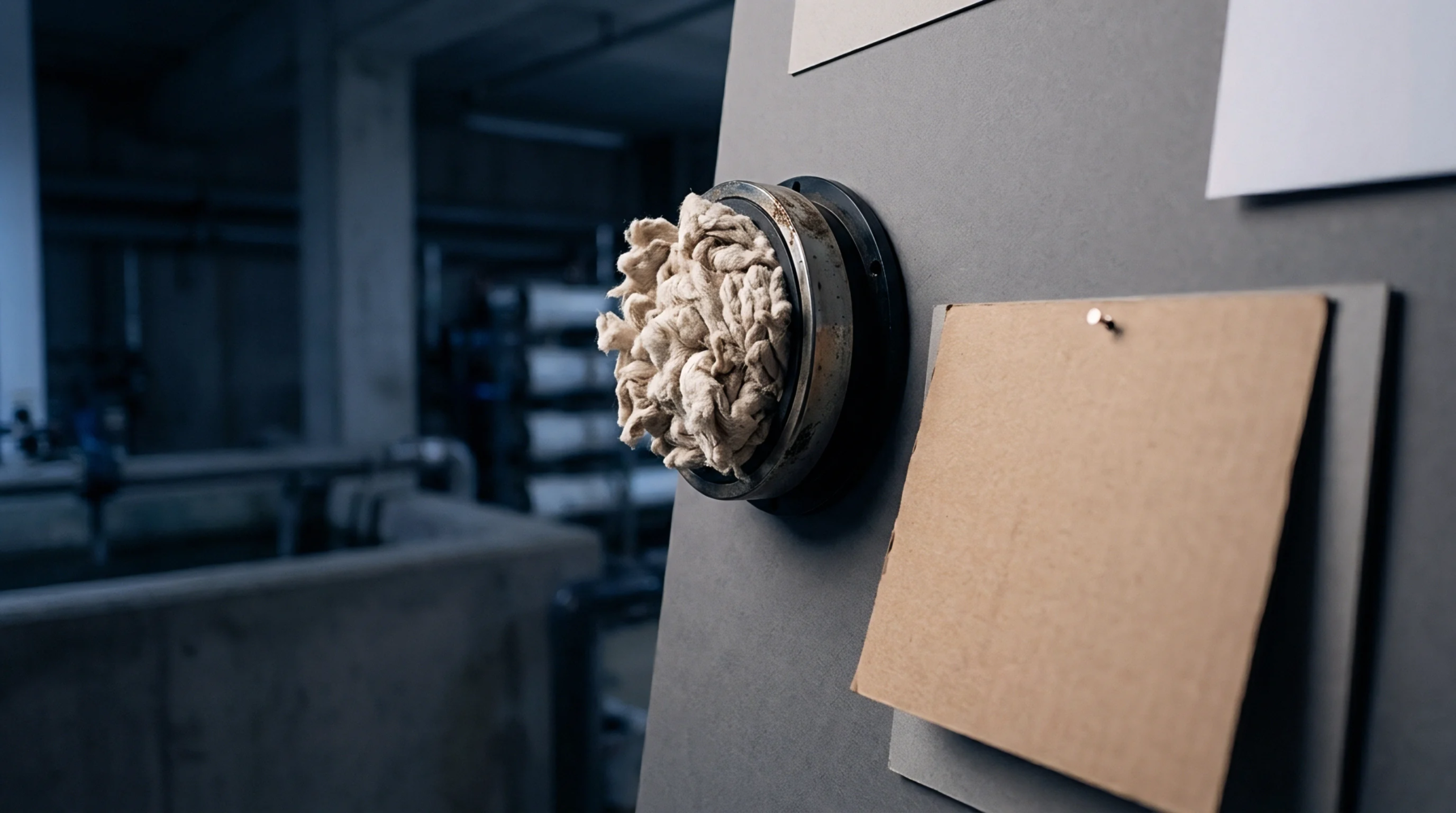
Paperboard recycled claims require matching chain of custody certificates, mass balance ledger reconciliation, and certified converter invoices.

Quantifying dissolved acrylic micro-stickies in closed water loops requires 0.45-micron phase separation followed by solvent extraction and total organic carbon verification.

Laboratory screen slot dimensions dictate macro-stickie separation efficiency, requiring standardized 0.10 millimeter slot width calibration to calculate accurate area yields for packaging recyclability certification.

Friction cycles mechanically strip oxidized surface layers and accelerate polar group reorientation, causing rapid dyne loss across polyolefin films.

Chemithermomechanical core compliance modeling predicts time-dependent box compression decay under changing humidity by coupling viscoelastic Prony series with shear kinematics.

Dynamic Mechanical Analysis quantifies z-axis caliper loss under dynamic converting loads to prevent carton collapse and protect structural bending stiffness.

Resolving paperboard index discrepancies requires separating temporal publication lag from transit moisture gain by reconciling billed weight to bone-dry fiber mass under ISO 287.

Unbundling conversion costs from multi-fiber furnish indices and applying yield loss factors prevents supplier margin creep in paper contracts.

Structure pulp pass-through clauses by isolating virgin fibre ratios, applying bilateral deadbands, and linking quarterly adjustments to verified mill furnishes.

Qualification requires proof that plastic-laminated paperboard leaves under ten percent dry residue on a two-millimeter sieve after twelve weeks of composting.

Dynamic creasing impact compresses internal pore air into transient pressure spikes, reducing effective shear strength and causing high-speed ply blowout.

Quantitation of hydroxycyclohexyl phenyl ketone breakdown products requires HS-GC-MS targeting cyclohexanone below 0.01 mg/kg to prevent set-off food contact breaches.
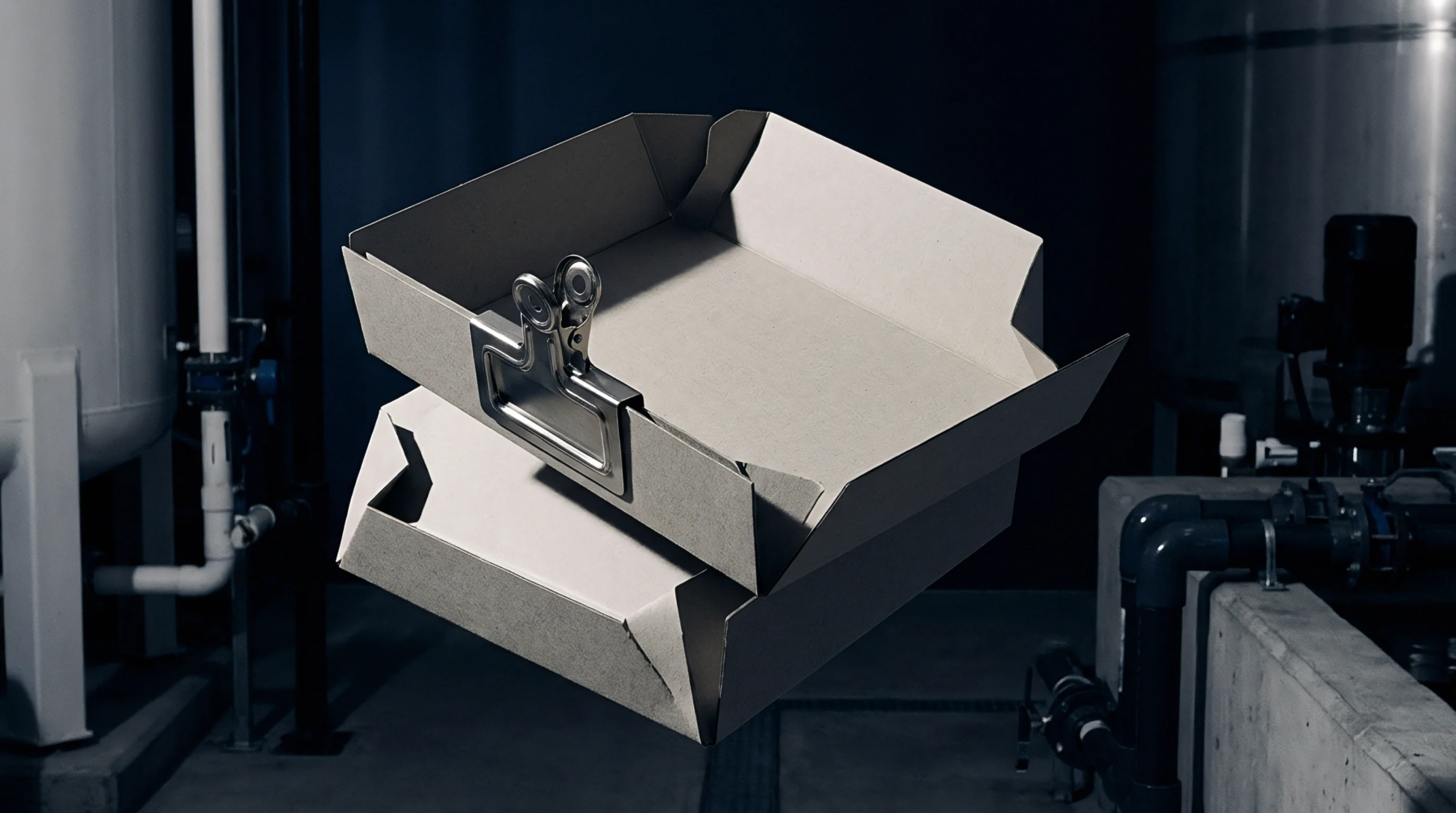
Dynamic strain rate hardening increases Z-direction stiffness during high-speed die cutting, demanding wider matrix channels to prevent crease cracking.

Non destructive laser thermoelastic mapping measures subsurface micro delamination dynamics in high speed barrier board scores without damaging surface coatings.

Matrix channel width equals creasing rule thickness plus board caliper multiplied by grade constants ranging from 1.4 for SBB to 1.7 for WLC.

Acoustic impedance profiling detects multi-layer film debonding by measuring ultrasonic phase inversion and amplitude jumps caused by air voids at polymer boundaries.

Recycled paperboard specific migration testing demands solid simulant Tenax or validated substitute media to prevent fiber breakdown and false analytical results.
Expertise is a utility, not a secret. sentiention™ publishes its working knowledge as open reference: intelligence layer covering the materials it sources, the markets it enters, and the reference that serves both.