Thermodynamic Flory Huggins Modeling of Amide Migration in Polyurethane Laminations
Flory-Huggins thermodynamic modeling predicts slip amide migration across polyurethane adhesives, preventing laminate bond failure and seal contamination.

Flory-Huggins thermodynamic modeling predicts slip amide migration across polyurethane adhesives, preventing laminate bond failure and seal contamination.
Dynamic carrying capacity in recycled board depends on ultrasonic cross-direction elastic stiffness and cyclic creep resistance, not static burst strength.
Polyolefin slip additives migrate along concentration gradients to form weak boundary layers that terminate adhesive crosslinking and cause delamination.
In situ optical coherence profiling reveals that Marangoni convection transports silica to the coating surface within eighty milliseconds before gelation.
Non-targeted high-resolution screening isolates unknown migrants from aqueous paper coatings to guarantee toxicological compliance below threshold limits.
Cross direction bending stiffness scales with the cube of ply thickness, while short span compression governs vertical carton stack strength under ISO 9895.
Confocal Raman depth profiling maps overprint varnish thickness and cure conversion across ink interfaces with micron-scale chemical precision.
Select high-bulk folding boxboard using caliper-derived yield arithmetic and verified crease recovery ratios to run stable on high-speed cartoning lines.
Paperboard migration testing requires solid adsorbents or single-sided extraction cells to evaluate chemical transfer without destroying cellulosic matrix integrity.
Maintain overprint varnish circulation velocity above 0.8 m/s with yield stress over 0.5 Pa to prevent silica dropout, cell plugging, and gloss drift.
Dynamic strain limits require subtracting hygroscopic expansion from mechanical elongation to maintain converting web stability across relative humidity swings.
Resolve chemical recycling and paperboard chain discrepancies by splitting polymer barrier mass balance credits from fibre transfer ledgers on every invoice.
Mass balance credits from chemically recycled barrier films apply exclusively to the synthetic polymer fraction, never across composite paperboard fiber.

Dynamic moisture gradients across coated cartonboard slash bending modulus well before reaching equilibrium, demanding transient rather than static design.
Aqueous ink vehicles dissolve interfibre hydrogen bonds within milliseconds, dropping cross-direction stiffness over 40% and driving web misregistration.
Packaging converters track certified fibre through transfer, percentage, or credit accounting, deducting production broke before issuing verified invoice claims.
Dynamic strain velocity embrittles recycled multi-ply board, requiring widened crease channels and derated insertion speeds to prevent score line delamination.
Establishing auditable mass balance thresholds requires moisture-deducted fiber yields, verified conversion losses, and batch-specific ledger debits.
Optimizing high-speed board converting requires nonlinear viscoelastic models that tune matrix clearances and nip temperatures to microsecond dwell times.
Controlled wet-end starch dosing between 6 and 9 kg/t maintains Scott bond at 180 to 240 J/m², preventing score cracking and delamination at high press speeds.
Customs tariff exposure for chemically treated paperboard derives from exact resin-to-pigment ratios shifting classifications between HS 4810, 4811, and 4819.

Z-directional tensile variance in multi-ply recycled board stems from uneven wet consolidation, high ash, and poor starch cooking, causing severe converting failure.
Verifying paperboard claims demands cross-referencing public scope codes, validating invoice credit lines, and securing plot-level forest origin documentation.
Controlled transverse shear delaminates the middle ply into sliding plates, lowering folding torque and protecting outer coated liners from tensile fracture.

Verify Scott Bond above 120 J/m² and ZDT above 220 kPa under ISO 187 conditioning to prevent blanket delamination and score splitting on recycled cartonboard.
Real-time moisture migration models calculate edge vapor ingress to predict dimensional expansion and box compression decay in sealed paperboard pallets.
Packaging dossiers for recycled paperboard require LC-GC-FID and HRMS testing verifying MOAH below 0.5 mg/kg and uncharacterized NIAS below 0.01 mg/kg.
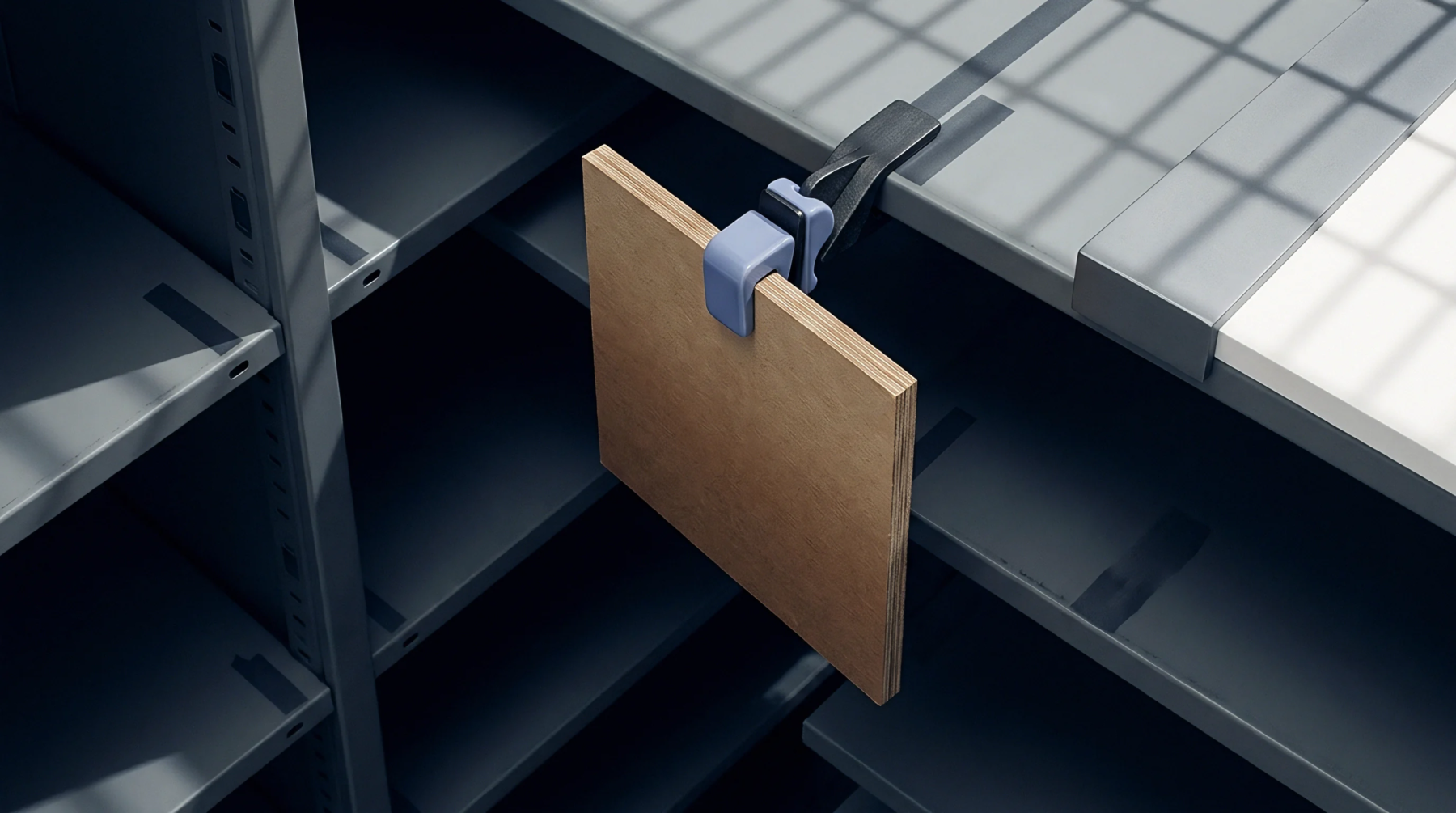
Managing hygroexpansion in multi-pass laminating requires balancing substrate moisture, tension, and barrier symmetry to stop curl and register failures.

Water ingress depresses barrier layer glass transitions below ambient storage temperatures, triggering plastic deformation and interfacial delamination under web tension.

Maintain board equilibrium moisture between 50 and 55 percent RH to prevent anisotropic fiber expansion, sheet fan-out register drift, and score cracking.
Expertise is a utility, not a secret. sentiention™ publishes its working knowledge as open reference: intelligence layer covering the materials it sources, the markets it enters, and the reference that serves both.